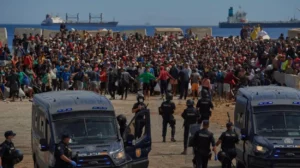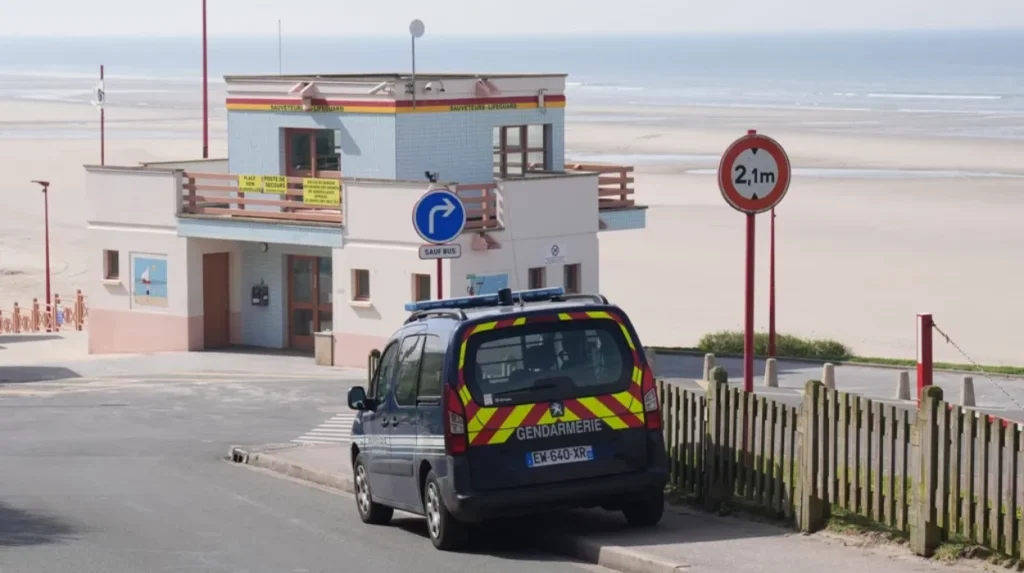
The English Channel has become one of the most complicated operation theatres in Europe where the humanitarian rescue and border enforcement duties overlap in the constant political pressure. This structural tension is manifested in the deadly event in the vicinity of Équihen-Plage in April of 2026, where four individuals lost their lives in a failed attempt to board a small migrant boat. French officials confirmed that the victims were carried away by fierce currents and they had no chance to make it to the boat and 38 others were saved and at least one had to be taken to a hospital immediately. The fact that the ship went on with its crossing to the United Kingdom, as emergency services salvaged the survivors depicts the disjointed nature of the response efforts across jurisdictional and operational lines.
Institutional framing of responsibility in immediate aftermath
Formal reactions of both France and the United Kingdom were in a common interpretative line. The authorities of the UK termed the fatalities as a tragedy associated with criminal smuggling rings, whereas French officials focused on ecological risks and dangers of trying to embark offshore. The prefecture of the Pas-de-calais reported that the victims were already quite deep into the sea when rescue efforts were called, an aspect that highlights how quickly the danger becomes too large to be dealt with by coordinated response systems. This framing is indicative of a more general institutional tendency to allocate responsibility between smugglers, environmental circumstances and operational constraints and not to locate it in one chain of accountability.
Legal obligations and operational realities at sea
International maritime law and shared rescue duties
The coastal states under the international maritime law, such as the SAR Convention and SOLAS are bound by the law to organize search-and-rescue missions and help people in distress at sea. Such commitments are enhanced by anticipation of collaboration among neighbour states in the overlapping search areas like English Channel. Nevertheless, legal obligation into practical implementation is still skewed. The ambiguity in jurisdiction, the high speed of vessels, and conflicting priorities between interception and rescue are often associated with the delay of interventions until a vessel has entered high-risk transit stages.
Persistent coordination gaps despite institutional frameworks
An independent investigation in 2025 reviewing previous Channel fatalities found that the failure to coordinate on a systemic level was a factor in preventable deaths, especially when there was a mismatch between risk detection and response time. This discovery is still reverberating in 2026, as new cases are similar in their developments. Delays or misunderstanding in the identification of priority rescue targets may be created by operational fragmentation between the French and UK border agencies even in the area of asset deployment. What then follows is a system that has its legal duties well spelled out but tactical implementation is at the mercy of the situational clarity that is usually lacking in swift crossings.
Policy evolution and the persistence of fatalities
Post-2022 policy tightening and unintended consequences
Both France and the UK have increased border controls, extended maritime patrols and enhanced collaboration in the fight against smuggling networks since the 2022 migration and supply-chain disruptions. Nevertheless, in spite of such efforts, Channel crossings have not decreased and UK statistics show that over 41,000 people crossed the Channel in 2025 alone and thousands of others did the same in early 2026. Such insistence implies that the enforcing-based strategies have not radically changed the dynamics of demand or the working motivation of smuggling networks. Instead, they have added to risk displacement, bringing embarkation to much greater distances at sea and exposing the population to more risky, overcrowded ships.
Smuggling networks and adaptive risk engineering
The government always blames the deaths to smuggling gangs which plan trips to avoid being caught and carrying as many people as possible. In the case of the Équihen-Plage, the French authorities explicitly attributed the deaths to the environments provided by such networks whereby the embarkation was made in risky currents which were familiar to the local authorities. Nonetheless, the adaptive quality of these networks makes it hard to enforce them. With higher levels of surveillance towards shorelines, the point of departure moves towards less visible areas, exposing more individuals to the risks of maritime before any intervention by the state can be taken.
Accountability and political framing across the Channel
Divergent narratives between London and Paris
The politics surrounding the deaths of the Channels still remains different between the UK and France. British officials tend to overstate the influence of criminal organisations and use lethalities as the arguments of the necessity of more potent deterrence and bilateral enforcement cooperation. French governments, although sharing the message of alarm on smuggling, emphasize on the operational risks, environmental factors, and the lack of resources. This drift has influenced the process of assigning accountability following every incident, whereby responsibility is spread among various players instead of establishing institutional accountability towards loss of life.
The challenge of defining preventability in 2026
The theme of preventable deaths has been more and more prominent in discussion of investigations due to the previous Channel tragedies. An investigation that preceded it found that a number of deaths would have been prevented by better coordination and sooner action, which is still used to guide policy discussion in 2025 and 2026. But even real-time determination of preventability is complicated. When ships are already in the ocean or the passengers are lost in the powerful currents, operational limitation and policy failure are hard to define especially when the enforcement and rescue activities are simultaneously under way.
Data trends and evolving risk profile
Crossing volumes versus fatality concentration
The number of channel crossings is still large, despite the fact that there are periodic fatalities. The consistent nature of the more than 40,000 crossings each year is an indication that deterrents measures have not significantly decreased the number of attempted crossings. But the number of deaths is still comparatively low in relation to overall crossings, which places a statistical tension between the high volume movement and intense moments of high-risk behaviors. Analysts observe that this trend is indicative of a system in which danger is not distributed uniformly but rather concentrated in certain stages of the process like embarkation and offshore transfer.
Shifting geography of risk exposure
The topography of crossings too has changed, the embarkation points moving along the length of the northern French coast as a result of the pressure of the enforcement. This movement exposes them to uncertain tidal areas and powerful tides as witnessed in the case of Équihen-Plage. The further the departure points are in relation to predictable surveillance corridors, the smaller the window to effect effective intervention. This dynamic implies that the reduction of risk by enforcement may not be inevitable but can potentially reorganise the location and timing of such risk.