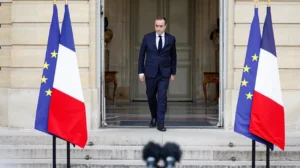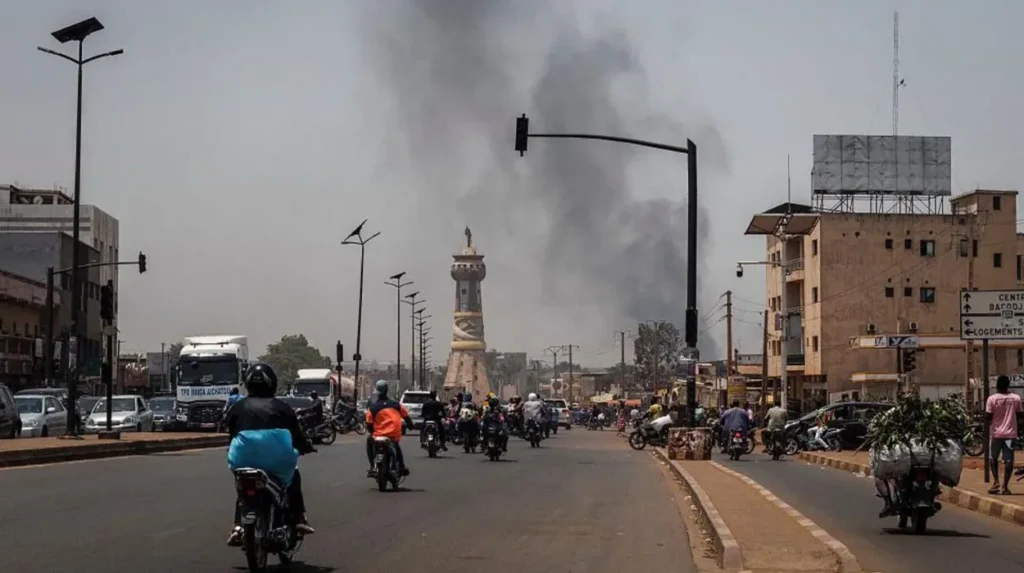
The Mali evacuation warning issued by France is more than a mere precautionary consular call; a re-evaluation of how foreign powers understand state power in Mali. By asking its citizens to empty the streets and limit movement, when Paris tells its citizens to leave as quick as possible, it is sending the message that the acceptable operational risk threshold has been passed. When governments feel that the host state is unable to provide even minimum-security levels, such language is usually only seen when governments feel that even that is not guaranteed.
This threat is also institutional in nature since France has traditionally served as the major foreign security ally to Mali. With the French forces drawdown and transition into alternative alliances, Paris continues to have a diplomatic presence and intelligence visibility. The evacuation guidance decision indicates that the channels are no longer effective in reassuring people, indicating a systemic and not sporadic decline.
Security crisis trajectory since 2025
It is based on a trend that has been brewing through the years concluding in 2025 when insurgent tactics have transformed into an economic upheaval as opposed to a fight over territory. This change re-established the influence of the war on the ruling regime and the city life.
Fuel blockade and economic pressure
Late in 2025, the al-Qaeda-related jihadist groups staged a fuel blockade that disrupted supply lines to Bamako. This strategy turned the war into a siege of an economic nature, with impacts on the production of electricity, transport, and business. In insurgents showing capability to project power into the economic lifelines of the capital, they did so by targeting logistics corridors, and not individual military positions.
The infrastructure of Mali was also weak as revealed by blockade. Lack of food was contagious and society was becoming frustrated, the state was finding it hard to keep its head above water. The crisis was not just logistical in nature but it transformed the perception of state competence and resilience.
Urban vulnerability and capital exposure
The 2026 events show that the insurgent groups have graduated to the indirect pressure level to direct urban targeting. The symbolic and administrative center of power was challenged by the coordinated attacks in Bamako and the surrounding areas, indicating the willingness to put the centre to the test. This is a great upsurge since the tradition is that capitals are the most secure nodes in weak states.
The psychological aspect of conflict is modified by the vulnerability of cities. Violence in the capital affects the confidence of the citizens, investors and foreign partners alike. The evacuation warning by France is in line with this change that recognizes that the risk is not geographically confined anymore.
Junta authority under pressure
The leadership of the armed forces in Mali is in a twofold dilemma because it has to control the operations and at the same time ensure political legitimacy. Both of these dimensions have been stressed by the events of 2025 and 2026.
Military claims versus operational reality
The junta has continued to insist that they are still in command highlighting operations against and victory in the battlefield. That story is however complicated by the reports of high profile casualties and continued insurgent gains. The demise of the senior leadership, including the essential defense leadership has cast doubt on continuity of command and coherence in strategy.
These inconsistencies between formal communication and actual state of affairs can undercut credibility. In systems dominated by military, legitimacy can be based on the perceived effectiveness in the provision of security. A weakening of that perception makes political authority weaker.
Governance challenges and public trust
In addition to military factors, governance has been limited by the crisis. This has disrupted economic activities, lacked services, and restricted movements in the urban centers. Such tensions build up to larger discontent especially where the expectations of a better security under military rule are not fulfilled.
This loss of trust is indirectly reflected in the Mali evacuation alert issued by France. Outside actors are likely to tune their risk measurements on security measures and stability of governance. Reduction in either of the dimensions can cause precautionary actions.
Armed actors and evolving alliances
The insurgency and separatist networks that are becoming more and more overlapping in Mali shape the conflict landscape. This overlap makes the analysis and response more difficult.
JNIM and tactical coordination
Jama Nusrat al-Islam wal-Muslimin (JNIM) has become a key participant, capitalizing on both the ideological unity and flexibility of operations. Cooperation with separatist groups is reported, showing that there is a pragmatic attitude toward alliances, and that ideological differences are set to the side in the meantime.
This coordination increases the geographical coverage. The concerted efforts enable groups to strike on several fronts at the same time, and this puts strain on the resources of a state and makes defensive planning more difficult. It is also an indication of a degree of strategic maturity that has a challenge to traditional counterterrorism models.
Separatist dynamics and territorial claims
The Tuareg separatist organizations present a different range of complaints based on the historical marginalization and seeking autonomy. Their cooperation with jihadist forces does not always imply ideological convergence but represents a tactic convergence with a common enemy.
This two-tiered warfare- ideological insurgency and separatist feelings- turns into a multidimensional threat space. It makes single-track solutions ineffective and makes any negotiated settlement more complex.
External partnerships and shifting security models
The shift towards new security partners has been one of the characteristics of the recent policy direction of Mali. The results of this change are, however, controversial.
Russian involvement and expectations
The involvement of the Malian government in the Russian security assistance was explained as a step to self-sufficiency and efficiency. Russian forces and contractors would have offered the strong counterinsurgency and stabilize quickly.
However, in 2025 and 2026, the expectations do not seem to be completely fulfilled. Ongoing insurgency and territorial dynamism means that the foreign assistance has not resulted in the ultimate operational advantages. Such discrepancy between anticipation and reality has domestic and international ramifications.
Limits of external security solutions
This dependence on outside actors underscores a structural issue of larger concern: the boundaries of outsourced security. Although foreign aid may help to increase capacity, it will not be able to replace institutional resilience and local legitimacy. The case of Mali also shows that external aid can only help to alleviate symptoms but not the underlying causes unless there are proper internal governance structures in place.
This limitation is highlighted by the evacuation warning of Mali by France. This implies that despite the external support, the security environment is such that traditional assurances are not enough.
Regional implications and Sahel stability
The Mali crisis is not a stand-alone crisis; it is a continuation of a larger trend that is afflicting the Sahel region. The risks and consequences are enhanced by the cross-border dynamics.
Spillover risks and regional networks
The presence of armed groups in Mali have links with other neighboring states such as Burkina Faso and Niger. These networks help to transport fighters, resources and tactics. Consequently, due to instability in Mali, the challenges may easily become regional.
Spillover potential has an impact on trade paths, migration, and security alignment. The governments that are adjacent should consider the fact that some similar strategies might be duplicated in their territory, like economic blockade or city attacks.
What the warning reveals about state resilience?
France’s Mali evacuation warning ultimately serves as a diagnostic tool for assessing state resilience. It reflects a convergence of factors: weakened security control, economic disruption, and contested legitimacy.
The warning indicates that the crisis has moved beyond episodic instability into a structural phase where governance, security, and public confidence are all under strain. It also highlights the interconnected nature of modern conflicts, where local dynamics are influenced by regional and international factors.
As Mali navigates this phase, the key question is not only whether it can restore order but how it can rebuild a system capable of absorbing shocks. The trajectory of the Sahel suggests that resilience will depend on more than military solutions; it will require a recalibration of governance, partnerships, and strategic priorities.
The unfolding situation leaves observers considering whether the current warning is a temporary response to heightened risk or an early indicator of a longer-term redefinition of security expectations in the region, where the line between crisis and normalcy continues to blur.