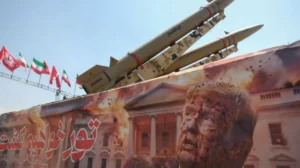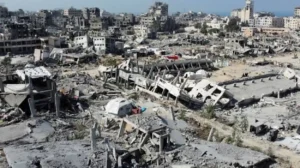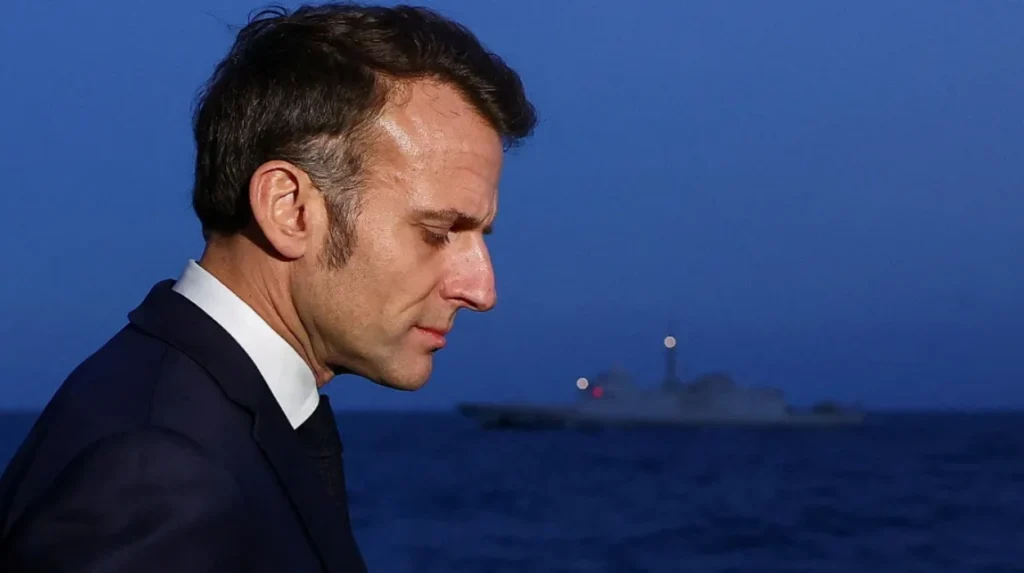
The questioning of U.S. Middle East war policies by France on the far-right becomes more direct, a significant change in French traditional historical association with the American conservative thinking on foreign policy. The critique of the Washington policy, especially that of the leader of the National Rally, Jordan Bardella, has become clearer based on the perceived contradictions in how the Trump administration is waging the Iran-centered war and extending it regionally.
Bardella in 2026 asserted that U.S. goals were completely capricious, noting that policy positions seemed to be changing at an alarming rate without strategic momentum. His description indicates a larger effort to situate American decision-making as unstable with the far-right of France acting as an agent of predictability in the global security context instead of ideological values with U.S. political leaders.
Strategic Distance From Washington’s War Conduct
Far-right France doubts U.S. war methods in the Middle East not as a denial of American power but as a reassessment of its war methods in connection with European interests. This change portrays a growing unease with the perceived instability in U.S. military and diplomatic decision-making.
Criticism Of Tactical Inconsistency
The lack of continuity in the operational approach of Washington highlighted by Bardella is a point of criticism. His contextualization implies that the direction of policy can change quickly leaving the state allies that have been accustomed to predictable security structures in the dark.
Under this reading, U.S. interventions in the Middle East are perceived as less of a long-term strategy and more of a reflexive action, driven by immediate political factors. This perception is the foundation of the argument by the National Rally that the European states should not passively accept the repercussions of the external policy instability.
Emphasis On European Interest Protection
The right-wing discourse is becoming more and more linked to foreign-policy criticism with domestic economic issues. Bardella has also posited that the Middle East is unstable and this directly impacts on European energy markets and household prices, especially by disrupting the maritime trade routes.
Connecting war strategies with the economic pressure within France, the National Rally restructures the geopolitical criticism as the question of national buying powers and economic independence. This helps the party to contextualize the foreign-policy stances into concrete domestic issues.
Energy Security And Regional Stability Concerns
The far-right in France challenges the U.S. strategies of war in the Middle East, in part, through the prism of energy security, especially in terms of having strategic chokepoints, like the Strait of Hormuz. Any harm to these routes is considered to have immediate spillovers on European inflation and industrial competitiveness.
Strait Of Hormuz As A Strategic Flashpoint
Bardella has underscored that freedom of navigation in major sea routes is crucial to European stability. According to his framing, any escalation that threatens to block and destabilize these routes is a threat to the resilience of French and European economics directly.
Such an issue represents a general change in European political language, in which regional tensions are evaluated in terms of supply-chain vulnerability, rather than just military or ideological aspects.
Economic Spillover Into Domestic Politics
The messaging of the National Rally links foreign military interventions with internal economic pressure. All the downstream effects of the strategies of foreign intervention are energy price volatility, inflationary pressure, and industrial competitiveness.
Such connection enables the party to claim that the U.S. war strategies have oblique yet quantifiable impacts on the French households, and support its more general political story of economic independence and protectionism.
Legal Framing And War Conduct Criticism
The far-right in France challenges U.S. Middle East war policies based not just on the strategic considerations but also on the basis of legal and procedural limits. Bardella has emphasized that the military actions should not be uncontrolled by legal theories that may escalate beyond control.
Call For Structured Military Engagement
Though he advocates vigorous action against the Iranian activities in the region, Bardella has severally opined that the operation should be commensurate, and within the law. He has characterized the Iranian state as being repressive and destabilizing, but he has insisted that action should be taken within the framework of clear rules of operation.
This bi-polar posture enables the National Rally to be tough on issues of security threats and at the same time, condemn what it considers to be improvisational escalation by Washington.
Concerns Over Escalation Without Coordination
One of the common tropes in right-wing criticism is the panic about disjointed decision-making among allied powers that adds to the risk of unwanted escalation. Bardella has cautioned that a lack of coordination in the Middle East may bring about increased instability to Europe.
This interest is an effort to establish France as a stabilizing factor with a call of controlled participation as opposed to a responsive military build-up.
Domestic Political Strategy Behind Foreign Policy Criticism
The far-right in France doubts the U.S. war politics in the Middle East as a strategy in a larger domestic agenda to redefine its image. The National Rally has been striving to project itself as a party that is ready to govern in the event of complex international crises.
From Ideological Alignment To Sovereignist Framing
Traditionally, some members of the far-right in Europe expressed ideological support of U.S. conservative leadership. But this alignment is now more conditional and interest-based in 20252026.
The critique that Bardella levels at the war strategy of Trump is an indicator of a new kind of pragmatism based on sovereignism, where alliances with other nations are measured in terms of national utility and no longer in terms of ideological ideals.
Domestic Economic Narrative Integration
The critique of foreign policies is becoming more and more a part of domestic economic communications. The National Rally relates war behavior to inflation and energy prices, relating global conflicts to personal economic interests in France.
This aspect makes the party more attractive to voters who are mainly interested in the cost-of-living issues but not geopolitical alignments arguments.
Broader European Far-Right Realignment
The far-right of France doubts the U.S. Middle East war policies in a trend more European, to re-evaluate transatlantic dependency. Nationalist parties in Europe are becoming cautious of being drawn too far to erratic foreign policies.
Diverging Views Within European Nationalist Movements
In several European countries, far-right parties have begun differentiating their positions from U.S. policy directions. While some continue to support strong transatlantic ties, others emphasize autonomy in security and energy decision-making.
This divergence reflects a broader fragmentation in what was once a more ideologically unified nationalist camp in Europe.
Shift Toward Strategic Autonomy Narratives
The emphasis on strategic autonomy has become more pronounced in 2025–2026 political discourse. Even right-leaning parties are increasingly framing foreign policy through the lens of national resilience and economic stability.
France’s far-right position fits into this evolving narrative, where independence from external policy volatility is presented as a core governance principle.
Evolving Relationship With Global Power Structures
France’s far-right questions U.S. Middle East war tactics in a way that reflects a broader rethinking of global alliances. The focus is shifting from ideological alignment to operational predictability and economic impact.
This repositioning suggests that future debates in French politics will likely center less on whether to support allies and more on how that support should be structured and constrained. The National Rally’s critique of U.S. war tactics may therefore signal not only a foreign-policy stance but also a long-term attempt to redefine France’s place within an increasingly fragmented global order.
As geopolitical instability continues to shape energy markets, security alliances, and domestic politics, the question raised by France’s far-right is not only about U.S. military conduct but about whether European states can afford to remain dependent on external strategic rhythms that no longer follow predictable patterns.