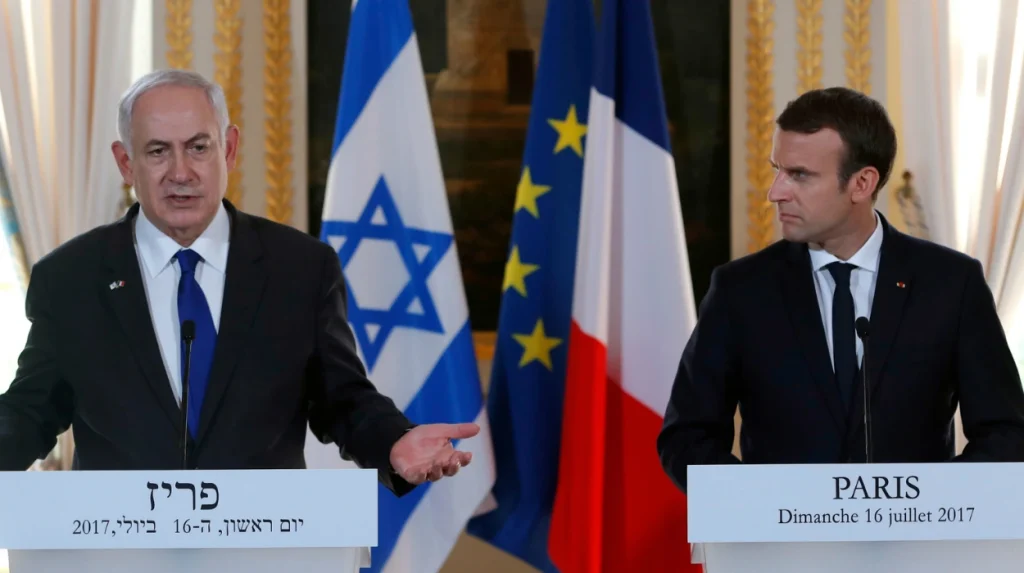
The situation between France and Israel escalated in Syria on November 30, 2025, when the charge d’affaires of France Jean-Baptiste Faivre urged Israel to honor the sovereignty and territorial integrity of Syria. His words were only two days after an Israeli attack in Beit Jinn, which is situated in the suburbs of Damascus, killed 13 civilians and injured dozens. The fact that the site is near the Golan buffer zone gave credence to the message of France that cited the Disengagement Agreement of 1974 that controls military behaviour between Israel and Syria.
French authorities presented their view on the basis of the old traditions of the UN and said that the growing popularity of Israel in the region would destabilize Syria during the process of the post-Assad transition. Faivre insisted that regional actors had to act in order to enhance peace and stability, the call of which had been previously echoed by Foreign Ministry spokesman Pascal Confavreux. On November 19-20, Confavreux threatened to sue Israeli troops in presence within the areas of Syrian separation as blatant contraventions of the accord of 1974.
Diplomatic friction was also caused by Israel in the recent past in the form of political signaling. The visit of Prime Minister Benjamin Netanyahu to the Syrian territory that is occupied by Israel earlier this month resulted in the Syrian, Jordanian, Qatari, and UN representatives condemning it and critics characterizing the visit as an unwarranted escalation. The recent intervention by France puts new questions on the border activities of Israel at a time when the Syrian transition governments are trying to stabilize their grip.
Escalation In Beit Jinn Highlights Civilian Impact Of Cross-Border Strikes
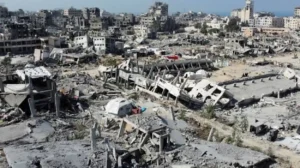
One of the bloodiest Israeli operations in Beit Jinn on November 28 was one of the last operations in the territory of the Golan Heights in 2025. According to the Syrian sources, 13 civilians were killed and dozens of them wounded. The strike was at the time of the early morning and it impacted both homes and emergency responders. France directly associated the event with its sovereignty issues, stating that the region is located close to the UN-patrolled separation line in which the breach has broader diplomatic implications.
Trend Of Intensified Israeli Activity Since Late 2024
Since December 8, 2024, Israel has carried out hundreds of airstrikes against Iran-aligned organizations and supply networks in Syria. However, UN officials stated repeatedly throughout 2025 that the push into separation areas represents a dangerous deviation from previously accepted boundaries. The UN Disengagement Observer Force warned that actions near the buffer risk destabilizing Syria’s political transition, particularly at a time when governance structures remain fragile.
Security Calculus And Post-Assad Uncertainty
Israel maintains that operations in southern Syria are necessary as Iranian-backed militias attempt to reconstitute supply lines toward the Golan. But French officials argue that Syria’s transitional authorities require space to rebuild national institutions without external military pressure. By citing the 1974 agreement, France seeks to apply a legal framework that predates the current political environment yet still carries binding obligations.
1974 Disengagement Agreement Tested By Modern Realities
The 1974 Disengagement Agreement established a demilitarized buffer between Israel and Syria, monitored by the UN. It prohibited heavy military deployment and required both sides to maintain distance from the separation line. France’s November statements emphasized that adherence remains essential to regional stability, regardless of Syria’s leadership changes.
France Reasserts Support For Separation Zone Integrity
Confavreux’s warnings in November reiterated that Israeli presence in restricted areas falls outside the agreement’s scope. France maintains that all parties must refrain from actions that could undermine Syria’s territorial unification during transition. This stance aligns with Paris’s longer effort to anchor Middle East diplomacy in quoted UN provisions, including Resolution 2254 on Syria’s political roadmap.
French Calls For Normalization Within Clear Boundaries
Paris has consistently supported eventual Israel-Syria normalization once political conditions stabilize. During the February 2025 Paris Conference, French diplomats endorsed confidence-building measures that assumed mutual respect for borders. However, France also warned in July 2025 that Israel should avoid unilateral military operations in Suwayda and other sensitive areas, arguing that such actions jeopardize political reforms.
Post-Assad Transition Shapes French Positioning On Border Conflicts
With Syria’s post-Assad authorities working through the early phases of political transition, France has elevated sovereignty in ways not seen since pre-2011 diplomacy. At the February 13 Paris Conference, France rallied states behind commitments to rebuild national institutions, reunify territory, and enhance counter-terrorism coordination. French officials repeated throughout 2025 that foreign military pressure undermines these goals.
France’s November 30 message connects the Beit Jinn incident directly to Syria’s transition challenges. French diplomats argue that cross-border escalations risk derailing negotiations between transitional leaders and local councils across southern provinces. The potential for friction between Israel and transitional authorities adds complexity to an already delicate environment.
Regional realignments also shape Paris’s broader calculations. In 2025, France threatened Israeli settlement expansion in the west bank, attacks in South Lebanon and tension at the UN over Gaza related talks. These problems result in a new diplomatic landscape that has many layers, Syria has become a new center again.
Wider Middle East Flashpoints Influence Syria Border Dynamics
France still remains at the centre of tracking the tensions between Lebanon and Israel. In late 2024 and early 2025, Israeli attacks on southern Lebanon killed civilians, which Confavreux criticized and called on them to comply with the framework of the ceasefire of November 27, 2024. Paris considers these events to be interrelated with the Syria file, and any futuristic development on either of the fronts could cause regional spillovers.
UN Concerns Over Netanyahu’s Syrian Visit Reinforce Scrutiny
In 2025, the UN spokesman Stephane Dujarric stated that the high-profile visit to Syrian soil by Netanyahu does not comply with the Security Council Resolution 2799, re-affirming the international refusal of the action of unilateral annexation. The visit was termed an illegitimate presence by the Foreign Ministry of Syria which violated the sovereignty. The remarks of November in France follow these preceding criticisms, and emphasize the continuity in law of diplomatic communications.
Cross-Border Risks Complicate Syria’s Transitional Stability
As the peacebuilding talks still persist, the French policymakers fear that an escalated Israeli actions will sabotage negotiations among the local councils, tribal leaders, and transitional ministries. According to the UN observers, there are increased tensions on the separation zone in 2025 casting doubt on whether the 1974 framework is able to contain the changing security pressures.
Syria’s Border Volatility And French Warnings Shape 2025 Diplomacy
The situation on France-Israel tensions over Syria intensifies towards the end of 2025, fueled by the civilian death count of Beit Jinn as well as rival views of old-established security arrangements.
The demand of France to have sovereignty and legal systems is in contrast to the changing threat levels by Israel, which generates an ever-increasing diplomatic gap. As Syrian transition authorities feed on the need to rebuild internally and regional actors reconsider their own roles, the resilience of the structure of separation of 1974 looks like a key question. Will diplomatic guardrails be strong enough to withstand changes in priorities or will border processes dominate the process of stabilizing post-Assad Syria will determine the next stage of the regional negotiation process.