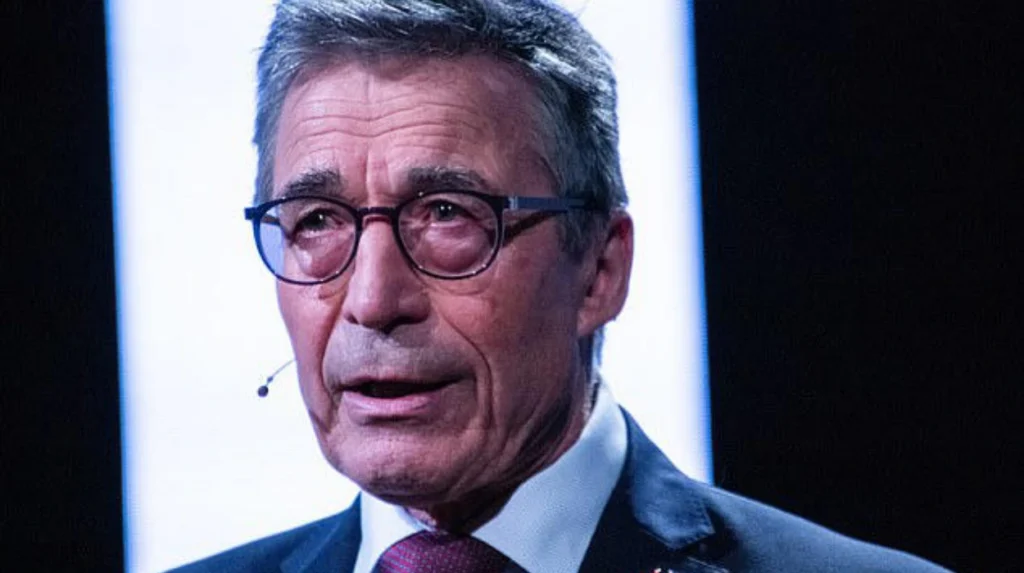
A striking call to arms has rippled through European capitals in recent days, voiced not by a sitting foreign minister or defence minister, but by a former NATO commander. Anders Fogh Rasmussen, who led the Atlantic Alliance from 2009 to 2014, has now argued that
“Britain and France should lead a ‘coalition of the willing’ to take responsibility for Europe’s defence without help from the United States”.
Positioning France as the lynchpin of a re‑imagined European security architecture, his remarks place Paris and its nuclear arsenal, military reach, and diplomatic weight at the heart of a potential pivot away from total dependence on Washington.
Rasmussen’s proposal is framed as a contingency, not a rupture: he insists that
“NATO remains the cornerstone of European and North Atlantic security”,
but adds that Europe must now construct a credible European pillar within NATO that can operate even if the United States scales back or rethinks its commitments.
At the core of this vision is an expansion of an existing 35‑nation coalition, originally created around Ukraine support, into a broader European defence group with its own decision‑making body led by France and the United Kingdom. The suggestion that France and Britain should lead efforts to ensure the defence of Europe without the United States marks a sharp rhetorical shift, one that squarely forces Paris to confront the gap between its self‑image as a global power and the institution‑building required to back that claim.
The political conditions that make a France‑led NATO plausible
Rasmussen’s argument is not being made in a vacuum of calm transatlantic trust. It is anchored in the turbulent political climate created by Donald Trump’s return to the White House and his repeated questioning of NATO’s core principles. Trump has dismissed the Alliance as a “paper tiger” and suggested that leaving NATO is “beyond reconsideration”, comments that have rattled European capitals and sharpened debates about European strategic autonomy.
Within this scenario, France emerges as a natural anchor. Unlike most European partners, France is not only a nuclear power, but also a country that has historically championed the notion of European strategic autonomy, even as it remains embedded in NATO structures.
The French government, under President Emmanuel Macron, has long pushed for a “more European pillar” within NATO, arguing that Europeans must “take charge of their own security” while still relying on the transatlantic framework. When Rasmussen names France as the core of a coalition of the willing, he is effectively giving political form to a French foreign‑policy ambition that has often remained abstract.
What a France‑led European NATO would actually look like
Currently, Rasmussen has proposed a strategic framework that serves as an outline for future action and does not have any treaty or formal alliance. The coalition he envisions is a coalition of the willing (all participants will act together), building off the existing UKR Support Group with 35 countries based in PARIS, with a new shared decision-making body guided by FRANCE and the UK.
Using this structure will allow NATO to remain intact for a time, will allow the US Government to continue to support NATO, and will allow for Europe to create an independent Command Layer that can plan and carry out Collective Defense Operations even if the US doesn’t politically support NATO.
While it is a sound idea, the practical barriers are enormous; FRANCE has nuclear capabilities and a large standing army, and they have an impressive network of military bases and partners worldwide, however, they don’t have the ruthless power projection capability that the US has. There are no other EUROPEAN countries that can provide the same level of Strategic Airlift, Integrated Command Systems, and Intelligence Infrastructure that currently holds NATO together.
How other capitals, especially within NATO, are responding
The response to Rasmussen’s proposal has not been unanimous either from the European capitals nor from various ministries within Europe. Presently, the Secretary General of NATO is Mark Rutte and he has continually maintained that
“Europe cannot defend itself without United States”
and that an entirely autonomous European defence is simply a “dream” unless conditions drastically change.
Rutte’s statements represent a realistic assessment of the capability balance as the U.S. is responsible for approximately 70% of total NATO defence spending and has around 100,000 troops in Europe providing a tangible deterrent which no European power can produce equivalent to.
Within this context, French officials have displayed cautious assertiveness in their official public statements. Both French government officials understand that Europe needs to have a stronger European pillar within NATO, and therefore, they have encouraged European nations to “take responsibility for their own security,” yet still operate within the transatlantic framework.
The delicate balance of promoting autonomy while reinforcing alliance cohesion mirrors the larger tensions within the French foreign policy between the Gaullist vision of independence and the practical reality of power. The challenge presented by Rasmussen’s proposal effectively challenges France by presenting both an opportunity for France to operate as the leading European nation within a NATO aligned to Europe yet it raises the question of the form of France’s leadership – will it be symbolic only or substantive.
The French political calculus: ambition, limits, and domestic constraints
From France’s political view point, Rasmussen’s request is both political and strategic trials. This provides an opportunity for French political leaders to resolve the difference between ambition and reality. This is based on the concept of European strategic independence, which implies a need for an independent European action when it is in Europe’s self interest.
Although French military spending is very high, it is nowhere near sufficient compared to the commitment an independent European-led NATO would require. The need for that funding will come from the fact that the United States has been providing France with military support through a series of military bases, an extensive intelligence network, and the capability of providing quickly deployable military forces.
Nationally, there are many in France who support the idea of France taking on a more active role as the military leaders of Europe. However, there are also many in France who oppose any attempt at European military cooperation for fear of expanding France’s military reach and being further involved in foreign conflicts.
The broader implications for France’s global posture
If taken seriously, Rasmussen’s proposal would mark a major change in how France is seen in the international order. The concept of a France-led European NATO puts Paris at the forefront of a new security paradigm that recognizes the end of US dominance while still functioning within the transatlantic framework.
At the same time, it raises questions about France’s relationship with the EU. While the EU has long sought to create its own security/defence dimension, political fragmentation and different national interests have inhibited progress.
A France-led European NATO could complement or compete with EU-led initiatives, depending on how they are coordinated. For a think tank focused on French political dynamics, this duality is important because it underscores the ongoing tension between nationalism and integration that continues to influence France’s view on European governance.
A test of French leadership in an uncertain Atlantic era
Anders Fogh Rasmussen’s call for Britain and France to lead a European NATO without U.S. help is not a declaration of a new alliance, but a provocative stress test for European security imagination. By placing France at the centre of a proposed coalition of the willing, he is forcing Paris to confront the gap between its self‑image as a major power and the institutional and military realities of actually leading a European‑centric defence order.
For French political affairs, the episode underscores a recurring theme: the ambition to shape Europe’s security destiny is consistent, but the willingness to pay the full political and financial price remains contested. Whether France rises to this challenge will depend not only on the decisions of any single president, but on broader debates about defence, sovereignty, and Europe’s future role in a world where the United States is no longer the undisputed guarantor of its security.