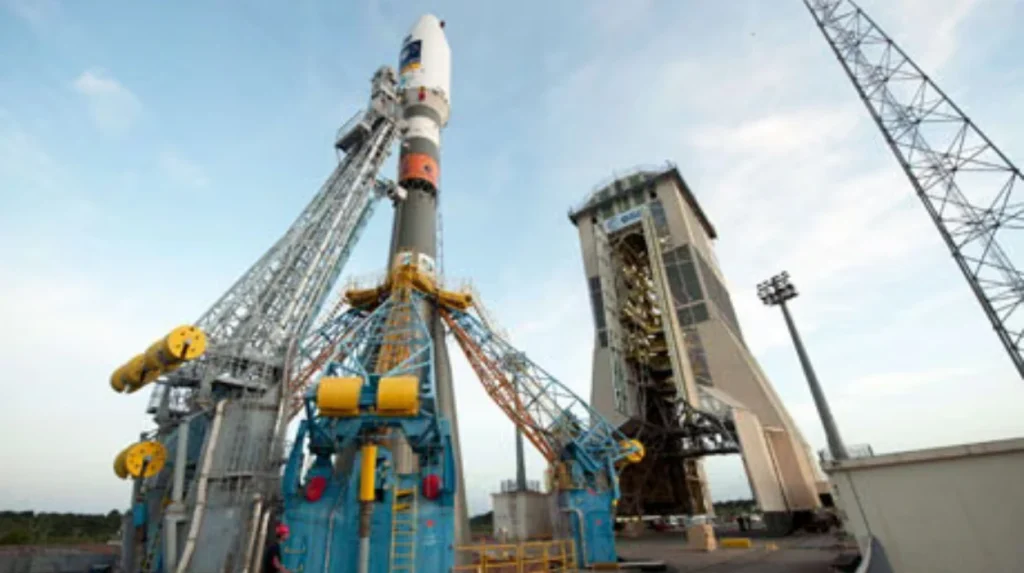
France is reshaping the protection framework of the Guiana Space Centre in Kourou by introducing collaborative drone systems into its security architecture. The initiative represents a shift from a model that relied heavily on ground patrols and manned aviation toward one that integrates autonomous monitoring with digital command systems. Officials connected to the French space agency CNES have linked the project to the broader Flexible, Digital and Sustainable programme, a multi-year modernization effort intended to transform how the spaceport operates.
The decision comes at a moment when the European launch sector is entering a more competitive and crowded phase. In 2025, policymakers across Europe warned that ground infrastructure supporting space missions would become a strategic asset requiring stronger protection, particularly as commercial launch schedules accelerate. Kourou’s expected increase in launch cadence, including missions linked to large satellite constellations and the introduction of Ariane 6 operations, has sharpened concerns about vulnerabilities that could disrupt a launch sequence.
France’s move suggests that the country views security not simply as perimeter defense but as a dynamic system capable of adapting to operational demands. By integrating drones into surveillance and response frameworks, authorities aim to create persistent situational awareness over the large and geographically complex spaceport environment in French Guiana.
Designing a collaborative drone surveillance network
The security concept being developed for Kourou revolves around a networked fleet of drones capable of operating in coordination with one another and with central command systems. Industry proposals requested by CNES focus on building a system that can patrol the spaceport perimeter, track sensitive equipment movements, and provide oversight during key phases of launch preparation.
The Guiana Space Centre spans a wide expanse of jungle terrain and industrial infrastructure, making continuous monitoring through traditional means challenging. Autonomous or semi-autonomous drones are expected to bridge this gap by delivering real-time imagery, environmental data, and alerts that allow security teams to react more quickly to anomalies.
Surveillance across a complex operational landscape
One of the core goals of the drone initiative is to improve coverage across areas that are difficult to monitor consistently through human patrols alone. The combination of launch pads, fuel storage zones, transport corridors, and satellite integration facilities creates a network of locations where disruptions could have cascading effects on operations.
Drones operating as part of a coordinated system can patrol these areas simultaneously and relay information to a central control hub. Security planners emphasize that such coverage becomes particularly valuable during periods when launch preparations intensify and the concentration of personnel and equipment increases across the spaceport.
Integration with existing manned security assets
The introduction of drones does not eliminate the role of traditional security measures. French Armed Forces units stationed in the region have long supported spaceport security with helicopters and other assets capable of rapid response. Aircraft such as Fennec and Puma helicopters have historically provided aerial monitoring, while additional air capabilities can be deployed during high-profile national missions.
The new drone system is expected to complement rather than replace these assets. By handling routine surveillance and early detection tasks, drones allow manned aviation and ground teams to focus on situations that require direct intervention or strategic oversight.
Real-time data and command coordination
Another defining feature of the system lies in its data integration. The drone network is intended to feed information into digital command centers capable of analyzing imagery, tracking movements, and coordinating responses in real time. This reflects broader trends seen in European security modernization efforts during 2025, where governments invested heavily in linking sensors, platforms, and analytics into unified operational environments.
Such integration may also enhance cooperation between civilian and military actors responsible for protecting the spaceport. Coordinated data sharing ensures that security decisions can be made quickly and based on comprehensive situational awareness.
Linking security modernization to wider transformation programmes
The drone initiative forms part of a broader modernization effort that extends beyond security alone. The Flexible, Digital and Sustainable programme focuses on digitizing operations across the Guiana Space Centre, improving efficiency while reducing environmental impact associated with launch activities.
Alongside this effort, France is implementing a separate upgrade programme aimed at modernizing infrastructure, including radar capabilities, satellite processing facilities, and energy systems designed to support long-term operations. Together, these initiatives reflect an integrated approach in which operational transformation and security enhancements evolve simultaneously.
Digitization as a security multiplier
Digitization efforts at the spaceport allow different technological systems to interact within a shared framework. Sensors monitoring infrastructure, environmental conditions, and logistics movements can be connected with the drone network to produce a detailed operational picture.
During policy discussions in 2025 about protecting critical space infrastructure, European officials emphasized that digital monitoring could reduce response times and increase resilience against disruptions. The Kourou initiative reflects these priorities by combining physical surveillance tools with data-driven oversight.
Infrastructure upgrades and operational resilience
Upgrades planned for the spaceport extend beyond monitoring systems. Investments in new radar installations, modernized facilities for satellite processing, and expanded energy infrastructure are designed to ensure that the site can support a higher tempo of launches in the coming decade.
Security planners view these upgrades as complementary to the drone network. Improved infrastructure increases operational resilience, while advanced surveillance ensures that the expanded capabilities remain protected from emerging threats.
Crisis management and launch phase protection
The value of drone surveillance becomes particularly evident during critical stages of the launch cycle. The period between rocket assembly and liftoff represents one of the most sensitive windows in the entire mission timeline. At that stage, even minor disruptions can lead to delays with significant financial and operational consequences.
Autonomous monitoring tools provide the ability to maintain constant oversight during these periods. Security officials expect drones to patrol launch zones, monitor access routes, and provide immediate alerts if unusual activity occurs near restricted areas.
Rapid response during high-risk windows
Drones can move quickly across the launch complex and provide visual confirmation of potential threats or anomalies. Their ability to relay real-time imagery allows decision-makers to assess situations without delay, reducing uncertainty during high-pressure moments leading up to launch.
In crisis scenarios, this rapid information flow supports coordination between security teams, mission controllers, and emergency services. The approach reflects lessons learned from earlier incidents across global spaceports where delayed detection contributed to operational disruptions.
Routine monitoring and operational efficiency
Outside of crisis situations, drones can also support routine monitoring activities that were previously labor-intensive. Inspections of facilities, oversight of construction projects, and verification of restricted zones can be performed more frequently without significantly expanding personnel requirements.
This operational efficiency aligns with France’s goal of maintaining strong security while supporting a higher launch cadence. The combination of automated monitoring and human oversight ensures that resources can be allocated more effectively.
Reflecting broader European security trends in the space sector
France’s initiative at Kourou mirrors a wider European effort to strengthen the protection of space-related infrastructure. During 2025 discussions surrounding the emerging European Space Shield initiative, officials highlighted the need to safeguard both orbital assets and the ground facilities that enable them.
The growing reliance on satellite networks for communication, navigation, and observation has elevated the strategic importance of launch sites like Kourou. As more governments and private operators depend on these capabilities, protecting the physical infrastructure supporting launches has become a key policy priority.
Addressing new categories of threats
One factor driving the shift toward drone-based monitoring is the recognition that low-cost technologies can pose significant operational risks. Small unmanned aircraft, for instance, have the potential to approach restricted areas or disrupt activities near launch pads if not detected early.
European defense planners in 2025 increasingly discussed how such threats might affect space operations. The Kourou project can be interpreted as a practical response to these concerns, providing a controlled environment in which new security methods can be tested and refined.
Potential influence on European space infrastructure
If successful, the drone-based security model implemented at Kourou may influence how other European space facilities approach protection strategies. Satellite integration centers, tracking stations, and emerging launch sites could adopt similar frameworks as part of a continent-wide approach to safeguarding critical assets.
This potential for replication has drawn attention from policymakers interested in building common standards across Europe’s expanding space sector.
The evolving balance between technology, security, and operations
France’s decision to introduce collaborative drones into the protection system of the Guiana Space Centre reflects a broader evolution in how states approach infrastructure security in technologically advanced sectors. Instead of relying solely on physical barriers and patrol units, the new model emphasizes layered monitoring, integrated data systems, and adaptive response mechanisms capable of functioning continuously.
As the launch industry continues to grow and competition intensifies among global space powers, the ability to secure ground infrastructure without slowing operational tempo will become increasingly important. The experiment underway at Kourou therefore carries implications beyond a single spaceport. It raises questions about how automation, environmental considerations, and security priorities will intersect in the next generation of space operations, and whether the model emerging in French Guiana could become a reference point for the broader European space strategy in the years ahead.