By 2025, Britain and France have unequivocally moved from a centuries-old confrontation to official co-operation in their bilateral affair. The relationship has grown to become a citadel of European diplomacy and security co-operation supported by centuries of conflict throughout the Hundred Years War to the modern day rivalry between countries on a colonial basis. With geopolitical turmoil taking off, the two nations are using shared values and strategy congruence to project power and control across the continent and further afield.
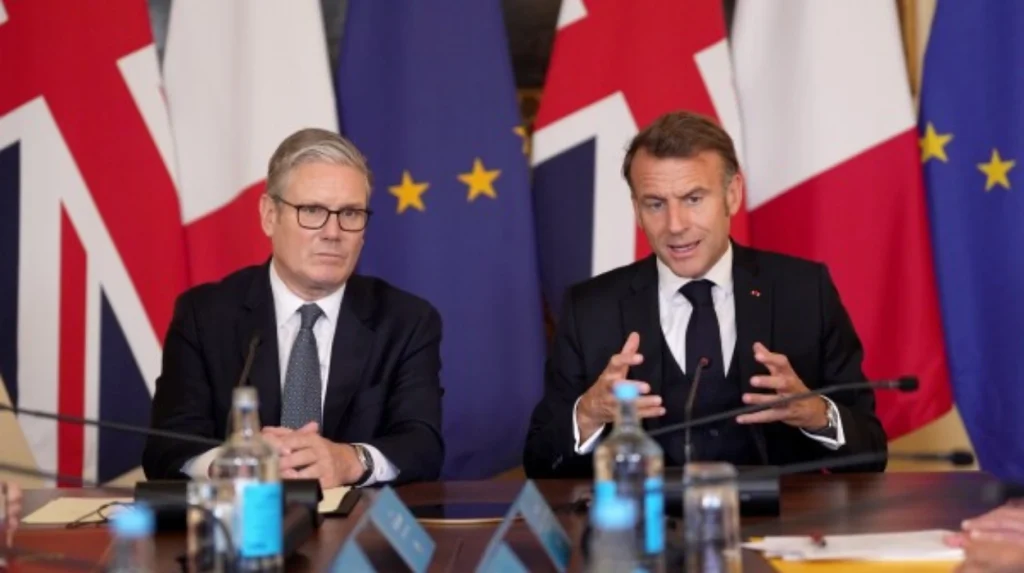
One moment of change came in July 2025, when the French President Emmanuel Macron paid a state visit to the United Kingdom during which he attended a summit meeting with Britain Prime Minister Keir Starmer. The summit yielded historic agreements, of which nuclear cooperation and migration policy are the most notable, which has seen common interests prevailing in the face of any residual Brexit tensions. Both leaders have focused on the fact that a strategic alliance between Britain and France is crucial to their personal defence as well as integration of Europe and the wider Atlantic alliance.
Strengthening Nuclear Cooperation Amid New Threats
The main results of the summit were the signing of the Northwood Declaration; this was the first treaty between the British and French that was signed specifically to work together on the nuclear policies of both countries. Independent nuclear forces are present in both of the countries, although a common Nuclear Steering Group was created as a result of the declaration. This committee will coordinate policy, improve interoperability, and allow mutual strategic planning if there are high-level crises.
The significance of this declaration lies in the timing. As the war in Ukraine rages on under Russia and there are uncertainties surrounding the American commitment to NATO’s nuclear defense in the future, European countries are seeking to intensify deterrence on their own. Macron described how the agreement “sends a necessary message both to our allies and competitors,” and highlights the importance of European autonomy in the nuclear domain. The statement follows previous frameworks like the Lancaster House Treaties but introduces deeper integration in strategic control and intelligence-sharing.
Expanding Joint Military Capabilities
Concurrently with the nuclear dimension, Britain and France have enhanced their conventional defence partnership. The Combined Joint Expeditionary Force (CJEF) is being reshaped as a more agile Combined Joint Force, capable of deploying rapidly and fighting on an adaptive scale of up to 50,000 troops. It is intended for high-readiness missions, such as conflict stabilization missions like a post-conflict Ukraine or Sahel crises.
Investment into cooperative defense technologies has also surged. The two nations are jointly developing the next-generation missile platforms and adding artificial intelligence to command and control systems. Cyber defense cooperation, which started with limited information sharing, now covers live scenario-based training to cooperative infrastructure projects. This is a more expansive definition of collective security in the era of hybrid warfare and cyber wars.
Migration Cooperation: Reframing Shared Challenges
Migration through the English Channel has long been Britain and France’s own thorn in the flesh. In response to repeated fatalities and proliferation of smuggling networks, the 2025 UK-France bilateral migration pact introduced a ‘one in, one out’ pilot program. Through this, the UK gets to deport some of the illegal migrants to France while also opening up controlled channels of humanitarian entry concurrently.
This is a departure from previous reactive policy towards a more integrated approach. The deal aims to dismantle trafficking networks, reduce the number of deaths at sea, and reconcile border control with humanitarian obligation. France’s Ministry of Europe and Foreign Affairs greeted the plan for “demonstrating that burden-sharing and coordination are not only possible but necessary.” The policy response is intended to be compatible with broader EU migration frameworks, though within the framework of UK sovereignty in the post-Brexit environment.
Enhancing Border Technologies And Coordination
With the migration agreement also comes added focus on technology-based solutions. The two nations are investing in new surveillance equipment, biometric data sharing, and Channel port and transit hub management of intelligence. Joint task forces conduct cross-border probes into individuals involved in people-smuggling operations and financial networks behind illegal flows.
Operational coordination also involves the deployment of joint mobile groups along vulnerable coastal areas in northern France and south-eastern England. This is in alignment with EU-wide operations to stem irregular migration through a mix of deterrence and lawful entry channels.
Broader Geopolitical And Economic Dimensions
Following Brexit and the changing global policy priorities of the U.S., France and Britain have taken steps to recapture their influence in Europe. The establishment of the “Entente Industrielle,” a two-nation industrial partnership deal, will be utilized to drive innovation in defense manufacturing, renewable energy, and advanced digital technology. Under the plan, joint-funded research and development facilities and cross-channel innovation hubs are to be set up with the aim of driving competitiveness in priority fields.
This rejuvenation also suggests a shared interest to further strengthen Europe’s voice in the international arena. In conjunction with Germany, the two countries are reviving the E3 foreign policy framework to confront challenges such as sanctions enforcement, supply chain safeguarding, and energy diversification in the aftermath of the Russia-Ukraine conflict and other shifts in international trade.
Navigating Divergences While Maintaining Unity
Despite the strengthened partnership, there are issues. France’s vision of EU strategic autonomy does not always harmonize so well with Britain’s post-Brexit foreign policy. Disagreements about trade facilitation, fisheries management, and some regulatory standards remain. The two governments have been inclined, though, to compartmentalize disagreement and focus on high-impact elements of cooperation.
Initiatives to depoliticize defense and security cooperation have been met with stepped-up institutional coordination between the UK Ministry of Defence and French Ministry for the Armed Forces. A new double forum initiated in 2025 facilitates regular dialogue among foreign ministries, defense leadership, and intelligence services, enhancing mutual understanding and coordinated response capability.
Future Pathways For Bilateral Cooperation
Britain and France’s foreign policy alliance is an example of pragmatic diplomacy in a fragmented world. Their collaborative security, migration, and industrial partnership strategy is a deliberate drift toward creating European strategic resilience at the cost of national sovereignty.
With operational synergy, shared threats, and forward-looking innovation, the two nations are rewriting the playbook on what is possible in a modern partnership between former rivals. Their cooperation underscores the need for adaptive alliances that transcend classic conflicts and engage with modern geopolitical ambiguity with purpose and solidarity.
While the world is confronted with great power competition re-emergence, climate uncertainty, and waves of migration, the Anglo-French alliance would effortlessly become the bedrock of European preparedness and global positioning. The health and longevity of this alliance will in the end rest upon the ability of the two countries to balance domestic political friction while adhering to a vision linked to collaboration and shared well-being.