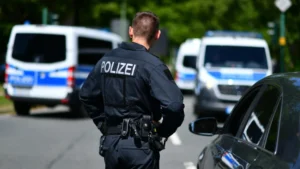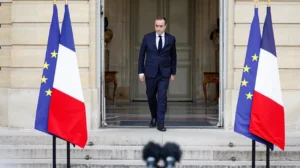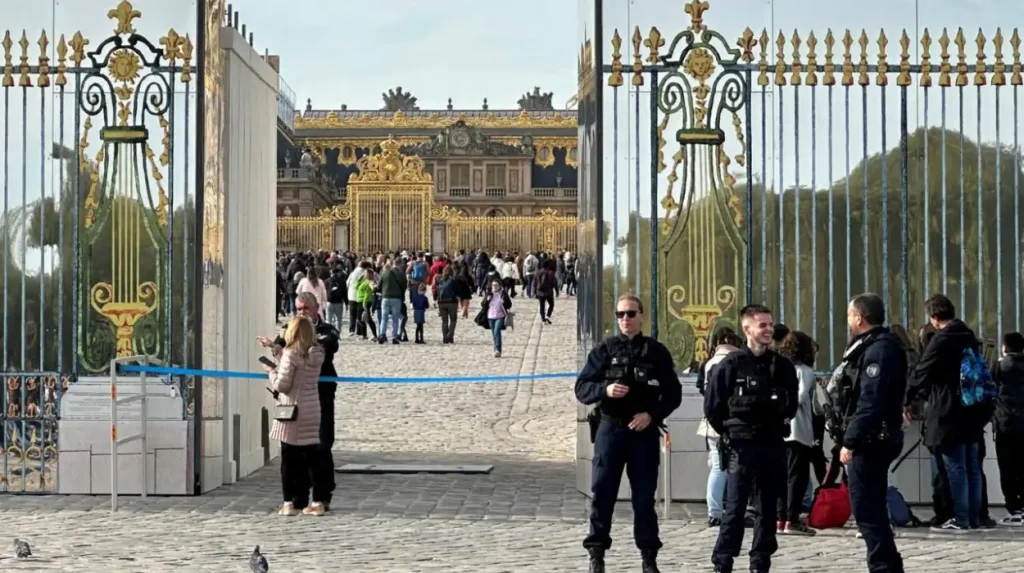
France Televisions, evacuation renewed the interest of the French on the trend of bomb threats against French media houses. It happened at 17:30 local time, when a live discussion on Ukraine was interrupted by alarms. France 2, France 3 and France Info also went to emergency programming shortly after presenter Jean-Christophe Galeazzi informed the audience that the broadcast was being terminated because of a bomb scare. The police cordoned off the place, sent dog teams, and finished an inspection of security in two hours, which proved there were no explosives present and no suspects.
The disruption was similar to a previous one on BFMTV November 15 where a caller was reportedly threatening to blow up the facility of a public broadcasting group at the end of the day. The newsroom evacuated and live airings stopped in excess of two hours. This has prompted the question whether media houses are being subjected to isolated hoax or they are being targeted to increase in the coming months when 2025 will be near completion.
Historical Patterns Indicating Rising Hoax Activity
France has been facing some periodical explosions of fake bomb threats over the last ten years, yet the latest trend has been the increasing frequency and exposure levels. The former statistics of the Justice Ministry registered 759 cases of fake bomb threats in 2021 and 670 in 2022. Following the October 2023 Hamas bombing and the murder of a teacher in Arras, the authorities reported a sudden increase in alarms, especially at the airports and schools. In the course of two weeks that followed, over seventy terrorist attacks were made at the airports, almost half of them leading to evacuation.
The momentum had not yet completely died off by 2025. According to internal security analysts, the number of hoaxes usually increases during times of geopolitical tension, and this is usually enhanced through social media mimicry. Numerous threats are caused by underage users of VPNs or temporary phone numbers, yet most calls are tracked by the detective using the digital footprint. Prosecutors have increasingly pursued charges such as premeditated psychological violence when evacuations disrupt thousands of people.
Security Protocols Responding To Media-Specific Threats
Public broadcasting headquarters represent high-value symbolic targets, prompting authorities to apply strict precautionary standards whenever a threat is received. France Télévisions and BFMTV both adhere to protocols requiring immediate evacuation, perimeter establishment, interior sweeps, and full suspension of operations until police confirm safety. Even with limited evidence indicating credible danger, security teams emphasize that media hubs remain uniquely exposed due to their role during political tensions and crisis reporting.
Operational Strain On Law Enforcement Units
Every media-related hoax draws the involvement of canine brigades, rapid-response teams, and anti-sabotage specialists. Police unions have voiced concern that frequent false alarms exhaust personnel at a time when France continues to monitor extremist threats and regional volatility. Interior Ministry officials warn that overuse of emergency deployments risks delaying responses to genuine incidents if several evacuations occur simultaneously.
Broadcasting Disruptions And Public Information Flow
For newsrooms, evacuation interrupts more than operations; it affects national communication capacity. During the France Télévisions incident, multiple channels lost live programming simultaneously. Editorial teams had limited options to pivot coverage remotely, reinforcing the vulnerability of studio-dependence. Analysts argue that media organizations may need to expand remote broadcast capabilities to withstand a future in which threats—whether false or credible—continue to test resilience.
Government Responses And Legal Measures In 2025
Despite disruptions, officials have not raised France’s national threat alert level. Interior Minister Gérald Darmanin reiterated that hoaxes remain distinct from verified terror plots, though they require full response until disproved. Authorities continue urging citizens to report suspicious behavior, noting that public tips have aided several recent arrests.
Judicial Penalties And Digital Tracing Capabilities
Courts maintain penalties of up to three years in prison and fines reaching €45,000 for false bomb threats. The digital investigation framework has expanded through 2025, allowing police to track communication patterns more efficiently, even when callers use anonymizing apps. Investigators increasingly combine telecom data with geolocation indicators, narrowing suspect lists within hours rather than days.
Air Transport And Infrastructure Exposures
Aviation has faced persistent hoax waves in parallel with media threats. Fifteen flight-related bomb hoaxes had already been recorded in 2025, part of 833 incidents since 2020. The Air Transport Gendarmerie reinforced “stress test” simulations earlier this year, recognizing that coordinated hoaxes could overwhelm airport security if they occur alongside genuine crises.
Media Outlets Assessing Structural Vulnerabilities
Broadcasting centers, particularly in urban locations like Paris’s 15th arrondissement, must balance open access for journalists with tightened perimeter controls. France Télévisions leadership reportedly began reviewing building entry protocols after the November 29 threat, though no structural breach was detected. Cybersecurity experts warn that future threats may increasingly involve digital infiltration rather than physical risk, especially if attackers seek to disrupt broadcasts silently.
Impact On Editorial Independence And Public Trust
High-visibility evacuations create uncertainty for audiences who rely on continuous information during unfolding events. Repeated interruptions may also prompt speculation about manipulation or censorship, even when disruptions originate from external hoaxers. Maintaining transparent communication about procedures without revealing sensitive security methods remains a core challenge for public broadcasters.
Pattern Recognition Across Institutions
Authorities have not confirmed any link between the BFMTV and France Télévisions incidents. Yet analysts observe that perpetrators often mimic recent events to replicate high-impact visibility. This possibility suggests that once a media evacuation receives national attention, similar threats may follow as opportunistic actors test the system.
Contextual Risks Within France’s 2025 Security Climate
The security apparatus of France still works under the pressure of international conflict, instability in the region, and domestic political polarization. The hoax wave coincides with more general fears, such as cyber-powered harassment, as well as misinformation campaigns against media credibility. Facing these bomb threats, policymakers position them as a destabilizing influence, and not a single criminal trend so that even a false alarm has to be dealt with with special care to prevent mass panic.
Similar to media threats, schools, local government offices and airports continue to remain popular targets, which demonstrates that threat makers take advantage of an easily visible weak point. Officials acknowledge that most of these instances are cases when an individual takes actions, but the overall effect is overwhelming to the national response system.
Evaluating Whether Hoaxes Reflect Escalating Risks Or System Gaps
The 2025 series of media-oriented threats is an even more significant question: are hoaxes just becoming more severe because of social replication, or are they indicating more of the weaker aspects of security infrastructure in France? The evacuation of prominent broadcasters in just a few seconds is extremely responsive, but the constant disturbances indicate that the system itself can be taken over by scale even when the situation is not truly at risk.
Officials stress the idea that preventive evacuations are final. Media executives, nonetheless, are looking more into other continuity options such as hybrid broadcast models and more remote operations, as they understand that they will always be the target of visibility.
With the renewed questions over institutional security in France as it nears its end of the year, the motives of these bomb threats remain speculative. Whether these interference are a one-time spurt or a shift to more advanced forms of intimidation, will determine how the media networks and national security agencies evolve with a landscape in which the line between hoaxing and threat is becoming harder to draw.