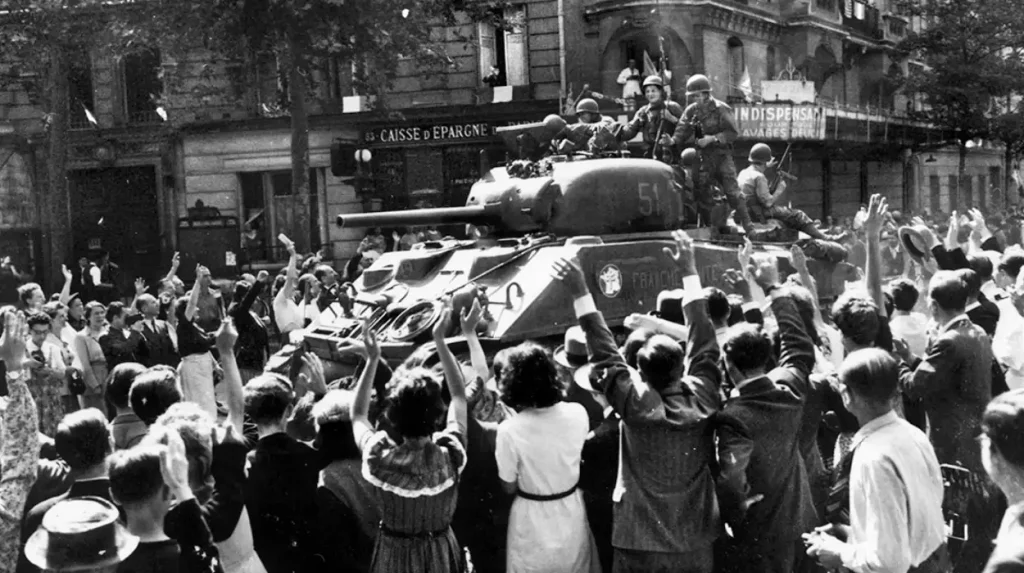
The establishment of the Vichy France in July 1940 was a great deviation to the normal war time alliances. With the rapid defeat of the French military by the Germans, the nation was split into two: the German-controlled north, and an in principle autonomous south under the rule of the Vichy government led by Marshal Philippe Petain. This government declared a truce with Germany and a policy of co-operation, thus finding itself in a threatened and disputed position over the Allies.
Allied forces, especially Britain and then the United States, had a hard time to establish their position towards Vichy France. The regime was said to be legitimate but was generally considered to have been under German influence. The British policymakers were especially interested in the strategic significance of the naval resources of Vichy and its occupation of the foreign lands. This doubtful atmosphere defined a contradictory type of relations between wary diplomacy, armed conflict, and subsequent denial of the power of Vichy.
Vichy policy under German influence
The policies of Vichy France were determined by both political need and ideological congruence. The government wanted to maintain national sovereignty but work in collaboration with the demands of the Germans. This, in practice, was the enactment of anti-Semitic legislation, the involvement in the deportation of Jews, and administrative and economic support of the German war effort.
Even with its cooperation, Vichy managed to maintain some autonomy and tried to impose French will where appropriate. The government of Petain did not want to get fully militarized by the Germans but was not able to avoid growing interference. Such a juggling act put Vichy at a distinct stage of Axis-oriented states that were not yet totally defeated and were not truly free.
The fate of the French Navy
Another very sensitive matter to the Allies was the status of the French fleet. The terms of the armistice allowed France to keep her ships on strict conditions. The British acted unilaterally because they were afraid that the ships would end up in the hands of the Axis. On July 3, 1940 British troops had stormed the fleet at Mers-el-Kebir in Algeria killing more than 1,000 French sailors. The operation undermined the Franco-British relationships and made Vichy more intractable and proved the complexity of making decisions during the war.
Administrative collaboration and internal resistance
In France, the policies by Vichy raised dissatisfaction. Those citizens who did not want to cooperate in the emerging movement gave more and more support to the Free French movement, which was led by Charles de Gaulle. Resistance networks were created, becoming more and more powerful as the war continued and the German occupation was tightened. These homegrown rifts were indicative of an even larger conflict between forced cooperation and sustainable national identity.
Colonial complications
The loyalties were different in the colonial territories. Other Vichy officials had not crossed over to Free France, but some of them defected. These changes formed an incoherent political landscape that complicated the Axis as well as the Allied strategies. Allied assistance to the resistance forces was a component of a bigger policy to destabilize the power of the Axis and wait till they could be liberated.
Key military confrontations involving Vichy forces
The Allies made an attempt to take over Dakar in French West Africa, Operation Menace in September 1940. This was meant to secure a presence of the Free French troops and deny the Vichy. The operation was however unsuccessful due to strong navy resistance by Vichy. The episode emphasized on how tricky it was to fight in a military with the Vichy forces without antagonizing French people.
The Syria-Lebanon Campaign
In June 1941, Allied forces attacked both countries, now controlled by Vichy, Syria and Lebanon. These places were strategically important both to the Axis and Allied operations. The campaign took several weeks and was severely fought with the Vichy forces. The Allies were able to stabilize the eastern Mediterranean flank with victory to leave the area in Free French control.
North African engagements
There were Allied and Vichy naval battles and coastlands fights at random intervals in the Mediterranean. These experiences illustrated how friends and enemies were hard to separate in wartime when there were gray situations. Vichy ports and supply routes were sometimes of Axis interest and raised the concerns of the Allies, to the point of preemptive action.
Allied diplomatic and strategic policy shifts
At first, the Allies adopted the two-track policy of partial involvement in Vichy in favor of Free French. This however changed over time. By 1942, the United States and Britain were beginning to acknowledge the leadership of de Gaulle more clearly especially as the resistance grew stronger in France and Vichy was becoming more overtly allied with Germany.
Operation Torch and its aftermath
In November 1942, Operation Torch broke through. In Algeria and Morocco, landings by Allied forces were met with the opposition of the Vichy forces but after short skirmishes, a large number of French soldiers changed sides. The campaign led to the failure of the control of Vichy in North Africa and put vital French military resources under Allied control. It also preconditioned this invasion of Italy and further weakened the position of Vichy in terms of its legitimacy.
De Gaulle and the consolidation of Free France
The position of Charles de Gaulle as the organizer of resistance and a viable alternative to the Vichy government became more and more prominent. His interim government, headquartered in London and then in Algiers, liaised with the Allied leaders and strengthened administrative control of the liberated territories. The results of this increased appreciation were the involvement of Free France in the restructuring of the French government after liberation.
The complex legacy of combat and collaboration
Military and political relations between the Allies and Vichy France cannot be reduced to the category of black and white. The government was an unwilling ally, debilitated by occupation and civil war, but guilty of pursuing the policies that served German ends. Allied forces at the same time had to deal with French forces with the need to maintain long-term relations with the people of France.
The fall of Vichy and historical reassessment
By 1944, freedom by the Allies of France made the Vichy regime unnecessary. And most of its leaders were either prosecuted or exiled, or lapsed into obscurity. The trials, the most famous of them being those of Petain and Pierre Laval, that occurred after the war, are the reason that caused the actions of the regime to be questioned again. The degree of its independence and guilt is still disputed by historians.
The narrative of Vichy France defies traditional accounts of the alliances in World War II. It shows the malleable lines between co-operation, opposition, and exigence. The military conflicts like the one in Dakar, Syria and North Africa, highlight the common interconnection between diplomacy and fighting in the quest to legitimize and assert control. With the development of historical knowledge, the experience of the Vichy France can be viewed as a reminder of how decisions of the war influence the memory of the nation and the international relations as well, across generations.