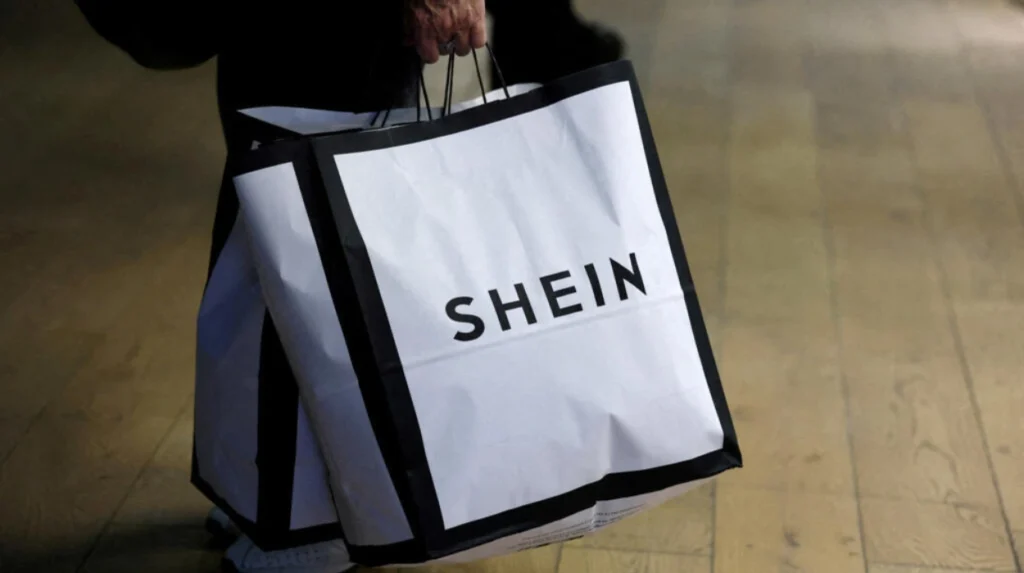
China has sharply criticised France’s newly enforced fast-fashion regulations, describing the measures aimed at platforms such as Shein and Temu as discriminatory and potentially inconsistent with World Trade Organization rules. Beijing has urged Paris to halt implementation and warned that it could take unspecified measures to protect Chinese companies if France continues with the policy.global.chinadaily.
The conflict puts environmental regulation, consumer prices, and international trade law into the heart of the emerging controversy between China and France. Paris claims that it regulates the business model responsible for too much launching of products, short life of clothes, and increased textile waste. Beijing, on the other hand, believes that such regulation establishes a double standard policy, targeting Chinese-invested cross-border e-commerce sites. French sanctions have started to become active from 1 September according to Law No. 2026-602 adopted on 8 July 2026. The law was approved after two years of discussion in parliament and can be considered as the most concrete attempt by Europeans to limit ultra-fast fashion marketplaces.technical-regulation-information-system.
Beijing calls measure discriminatory
China’s Commerce Ministry escalated its criticism on Thursday, 3 September, after the French financial penalties entered into force. Ministry spokesperson Huang Ling urged France to stop implementing the law and settle differences through dialogue.
Huang said the French measure was
“suspected of violating the non-discrimination principle of the World Trade Organization”
and called on Paris to establish a fair market environment for Chinese-invested enterprises.
The Chinese official also warned that France could face consequences if it persisted.
“If France insists on proceeding with the law, China will take necessary measures to safeguard the legitimate rights and interests of Chinese-invested enterprises, and France will bear all the consequences arising therefrom,”
Huang said.
The threat did not come with any specifics on any form of retribution. There has been no announcement yet by China on filing a case against France at the World Trade Organization (WTO) or on import or other sanctions towards French companies. Regardless, the statement marks an upgrade in the previous objections made by Beijing and leaves room for further action by Beijing. Beijing had previously objected in July over what it believed to be discriminatory measures set out by France’s Anti-Ultra-Fast Fashion Law, which created an imbalance in fair competition for China’s cross-border e-commerce platforms.
At the time, the Commerce Ministry said that environmental laws should not be used as an excuse to erect trade barriers and discriminate against foreign businesses. This position from Beijing is based on three main arguments. Firstly, the Chinese platforms are being targeted due to their business model and nationality. Secondly, the environmental argument does not justify why European companies with similar fashion business operations are less exposed to such measures.
What France’s law does
France’s law does not prohibit Shein, Temu or AliExpress from selling products in the country. Instead, it imposes additional environmental contributions on products linked to what the legislation calls “ultra-express fashion”.
This category has been defined in law on the basis of two general criteria – the presence of a large number of new product references in the marketplace and a lack of incentives for repairing products. The exact levels to be set out in the regulation implementing legislation have not been specified, leaving room for some uncertainty over how the law will apply to individual platforms and sellers.
The penalties will be collected under France’s extended producer responsibility scheme for textiles, household linen and footwear. This scheme is designed to ensure that producers and importers bear costs for collecting, sorting, reusing and recycling textiles that have become waste. The initial fee will range from €0.25 for products of minimal value like socks or boxer shorts to €12 for a coat. It will not exceed 50 percent of the product’s cost before VAT. This will increase incrementally, and it has been indicated by the government that the penalty could increase to between €2.20 and €20 per product by 2030. Other estimates have indicated a maximum of about €19.50 per item by 2030, though the legal provision allows for an increase up to €22 per item by 2030.
A reported illustration of the initial system is:
- Around €0.50 for underwear.
- Approximately €2 for a T-shirt.
- About €9 for jeans.
- Up to €12 for a jacket or coat.
The charge is calculated through a formula that considers the number of products offered, the speed at which new products are introduced, the selling price and the product’s repairability.
Why Shein faces greater pressure
The law is especially significant for Shein because its business model depends on an unusually large online catalogue and rapid product turnover. According to the company’s prospectus cited by Reuters, Shein’s product selection included more than two million items as of 31 March 2026. The company was adding approximately 4,700 new apparel styles each day.
Such is the scale that differentiates Shein from other traditional European fashion stores. Representatives pointed out that firms like Inditex Group’s Zara and H&M would not be affected to the same extent since they offer a smaller range of products online and have a lower rate of introducing new items. Temu might become liable as well since it works as a huge marketplace that connects buyers with many sellers, including clothing and footwear vendors. Its liabilities will be dependent on how French government authorities will attribute responsibility to the platform, sellers, importers or manufacturers.
It is one of the most significant legal issues of the new law. Cross-border marketplaces usually connect consumers with third parties-sellers, and products might be delivered directly from countries that are not in the European Union. Establishing who is liable for the environmental contribution may prove to be a challenging task when the manufacturer has no establishment in France. The law contains regulations about the authorized representatives of producers that are not established in France.
Advertising restrictions add to pressure
The French legislation goes beyond product fees. It also introduces restrictions on advertising and promotion for brands and products classified as ultra-express fashion.
A ban on advertising related to covered products and brands is scheduled to apply from 1 January 2027. The restrictions extend to commercial influence activity, meaning influencers will not be permitted to promote qualifying products or brands in exchange for money, free products, discounts or other benefits.
The law also addresses promotional activity provided without conventional payment. This is important because online retailers frequently use product gifting, affiliate links, discount codes and social-media partnerships to reach consumers.
Influencers who breach the relevant rules could face administrative fines of up to €100,000.
The advertising provisions could weaken one of the most important growth channels used by fast-fashion platforms. Shein in particular has built visibility through social-media creators, discount campaigns, targeted advertising and frequent online launches. A restriction on such promotion could affect consumer traffic even if the platforms remain legally free to sell in France.
Environmental case behind the policy
The rationale behind the French stance is linked to a larger European environmental issue. According to the data provided by the European Environment Agency, in 2022, European consumers purchased on average 19 kilograms of apparel, footwear, and household textiles per capita compared to 17 kilograms in 2019. Textile waste produced by EU member states reached 6.94 million tonnes in 2022, which translates into approximately 16 kilograms per person. Approximately 85% of the household textile waste has not been segregated in 2022 but has entered the mixed household waste flows for further disposal in landfills or incinerators.
At the same time, the EEA has estimated that 4% to 9% of textile products marketed in Europe are disposed of before ever being used. This results in annual destruction of between 264,000 and 594,000 tonnes of textiles. These numbers confirm that France is right when saying that the issue is not only the price at which individual clothes are sold. The issue is the scale and speed at which the entire production process works, forcing customers to perceive clothing as something disposable.
The European textile value chain generated an estimated 159 million tonnes of carbon-dioxide-equivalent emissions in 2022, according to the EEA. The agency has called for longer-lasting products designed for reuse, repair and recycling.
France is therefore presenting the law as part of a transition from a “take, make and waste” model to a more circular textile economy.
Consumer-price concerns
The policy’s main weakness is its possible effect on consumers. Shein’s French spokesperson, Quentin Ruffat, has previously said the penalties would push up prices for customers.reuters+1
This can turn out to be a political issue considering the fact that the low-cost platforms have attracted consumers who are struggling with inflation and purchasing power. Setting a charge not exceeding half the pre-tax sales price could have a huge impact on the cheap items where the environment cost is relatively equal to the original price. For instance, a €2 product charged €1 would be considerably costly before any additional costs such as VAT, shipping costs, and marketplace fees. This policy can end up reducing demand for cheap items; however, it could limit access to affordable clothing by low-income consumers.
The French government rejects the claim that the ultra-cheap prices are the actual form of consumer protection. Serge Papin, the commerce minister referred to Shein and Temu as “false champions of consumer purchasing power” because cheap products are poor quality and fail to meet standards. This debate reveals the political difference between the two countries. France determines affordability in relation to the total cost in the environment and society while China and the affected businesses determine affordability by the price paid by the consumers.
Trade dispute could widen
The dispute between China and France may continue into the next phase of WTO arguments over this case. Here the important issue will be whether the application of the French legislation is based on objective standards related to the environmental criteria or whether the law favors certain national interests and therefore is designed in such a way that it disadvantages foreign platforms. France can point out that there is nothing about the nationality of the platform in the law because it considers the volume of the products and the novelty rate.
Moreover, there is no prohibition of any import, and European retailers are not necessarily exempted from the rule. However, China can insist on the fact that the effect of the law is felt mainly by Chinese platforms, such as Shein and Temu, which are associated with the business model that was the reason for the adoption of the legislation. In this case, it might be easier for Chinese companies to prove that the law is discriminatory in nature. Moreover, it comes at the time when the European Union becomes more strict on waste textiles and producer responsibility.
France’s measure is more aggressive because it links contributions to the pace and scale of online fashion retail. Other European governments will be watching closely to see whether the penalties reduce waste, alter consumer behaviour or simply redirect sales to other platforms.