The release of two French journalists from prison by Togo concludes a highly publicized detention period that has proven to be a point of friction in an already deteriorating relationship between Lomé and Paris. The incident, which started when the French journalists were detained on July 27, 2026 in northern Togo, rapidly grew to become a debate over diplomatic and freedom of the press concerns, with the authorities claiming that it was not a matter of content or journalism. Two French journalists freed by Togo after spending over five weeks in prison, but the existing tensions persisting over media access, drone usage, and geopolitical shift towards Russia have not yet been solved.
The detention that sparked a diplomatic row
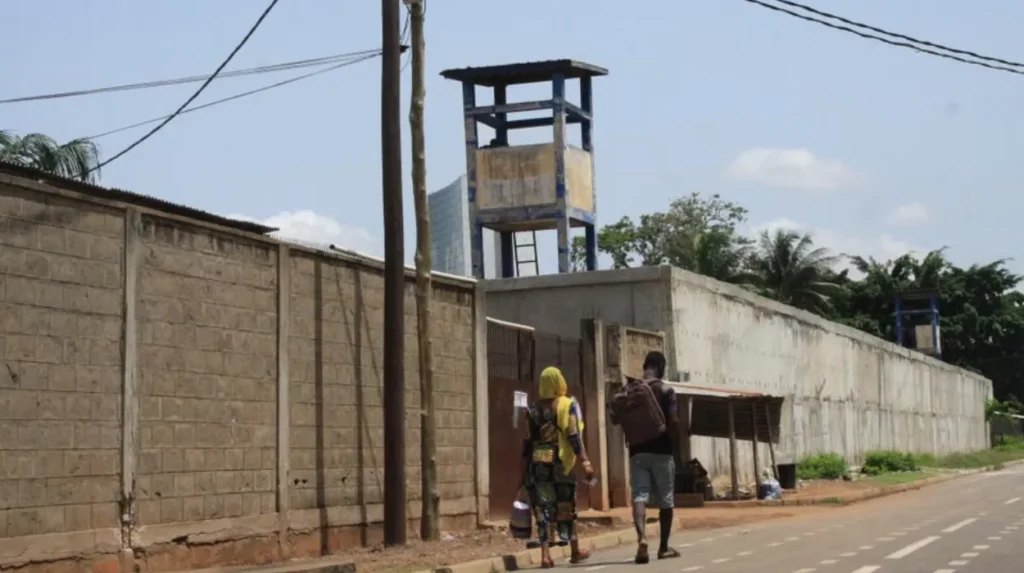
The three men—French documentary filmmakers Gaël Mocaër and Sebastian Perez Pezzani, and their Togolese fixer Fred Vedomey (also known as Komi Mawufémo Vedomey)—were arrested on July 27 while shooting an episode of Les Routes de l’Impossible (“The World’s Most Dangerous Roads”) for France 5, produced with Tony Comiti Productions. The arrest took place at Madjatom/Matchatom market in Binah prefecture, a northern area close to the Benin border and within roughly 80 km of the Savanes region, which is under a state of emergency due to jihadist incursions from Burkina Faso.
From the outset, the case was framed by Lomé as a matter of procedure and security. In their first detailed public statement on August 22, Togo’s Justice and Security ministries said the proceedings concerned
“compliance with administrative and security requirements”
and not the documentary’s content or press freedom. Officials emphasized that the justice system had “serious and consistent/corroborative evidence” against the crew, including allegations that they filmed in restricted areas and used a drone without declaring its characteristics in a security-sensitive zone.
The three men denied the charges. Their lawyer, Martial Akakpo, told local and international outlets that they were being reproached for alleged inaccuracies in an administrative process, not for journalism, and that they had the necessary authorization to shoot. This divergence—between a state narrative centered on security rules and a defense narrative centered on routine documentary work—defined the public debate for weeks.
What authorities allege: permits, zones and drones
There were specific accusations made by the Togolese authorities that influenced both the legal and political framework. Firstly, the Togolese officials argued that the filming permission issued on June 19 was in the name of the Togolese intermediary, Fred Vedomey, without the mention of the two French citizens’ names and occupations as members of a filming crew. In the opinion of the authorities in Lomé, the filmmakers from France did not ask for press accreditation and were not introduced as journalists in any of the papers that were provided, an issue that was used to support the position that their activities were not legalized. Secondly, there is an allegation that the filming was conducted beyond the areas covered by the permission, namely in the Savanes region and Binah prefecture, where security constraints apply.
Third, and perhaps most sensitive, Lomé said it had
“serious and consistent/corroborative evidence”
that the team used a drone in a security-sensitive area without prior declaration of the device’s characteristics. In a region where cross-border militant activity has prompted tight surveillance and airspace controls, undeclared drone operations are treated as a potential threat, not merely a paperwork oversight.
Together, these points allowed authorities to present the case as a straightforward enforcement action: a foreign crew operating in a restricted zone with undeclared equipment and incomplete documentation. For press-freedom advocates, however, the same facts looked like a disproportionate response that risked chilling legitimate documentary work.
A timeline of legal twists and health concerns
As far as the legal process is concerned, it started with the arrest and ended up with the release from custody. Having been arrested on July 27 in Binah, the three individuals underwent house arrest first, then provisional detention, and were officially charged with “false declarations” on August 17. Despite not sounding like a press-related crime, the vagueness of the accusation raised suspicions regarding the way in which the foreign journalists’ teams were treated in Togo. In addition, health issues were brought up in late August. Sebastian Perez Pezzani had to undergo house arrest for health-related reasons on August 20; Reporters Without Borders (RSF) claimed that he needed urgent medical care, thus increasing pressure on the government to provide him with proper assistance. However, it was only on September 1 that a decision was made by an investigating judge about the provisional release of Mocaër and Vedomey, with reduced judicial controls applied to Perez Pezzani to allow them to leave the country.
Their Togolese lawyer confirmed the development, and multiple outlets reported that they were expected to fly back to France on Wednesday evening, September 2. The judicial decision did not amount to an acquittal, but it effectively ended their physical detention and removed the immediate diplomatic friction point.
Press freedom concerns and regional media reaction
Despite Lomé’s insistence that the case was not about journalism, press-freedom groups and regional media bodies reacted strongly. RSF called the detention “unjustified and disproportionate” and repeatedly demanded immediate release, while also highlighting Perez Pezzani’s health needs. For RSF, the core issue was not only the length of custody but the signal it sent to foreign crews: that documentary work in northern Togo could quickly become a legal and security problem even with some form of authorization.
Within Togo, both the Patronat de la Presse Togolaise (PPT) and the Togolese Press Association condemned the arrest and feared that the event would damage the international image of Togo. These declarations highlighted the double preoccupation of the organizations: support for the media workers and worry that the event would further consolidate the idea that there is little room left for independent journalism in a country that was already being criticized for cutting off international broadcasting stations amid internal disturbances. The event also related to a different local issue. In late August, France 24 correspondent in Benin, Emmanuelle Sodji, found herself in trouble after reporting on the indictment of the journalists. This issue was interpreted by a union as an example of the general tendency of exerting pressures on media covering Togo.
France’s diplomatic response and consular engagement
Paris treated the detention as both a consular and a diplomatic issue. On August 19, Foreign Minister Jean-Noël Barrot said France was in contact with Lomé to secure the filmmakers’ release “as soon as possible,” and that consular officials had visited them several times to check on their welfare. The language was measured—avoiding direct accusations against Togo’s judiciary—but the message was clear: Paris expected a swift resolution and was monitoring the case closely.
The French stance had to balance two objectives: protecting its nationals and avoiding a public rupture with a government that was already drifting away from traditional Western partners. In that sense, the provisional release achieved Paris’s immediate goal without forcing a confrontational escalation. Yet the underlying dynamics—Togo’s security-driven media controls and its broader geopolitical reorientation—remained intact.
The wider geopolitical backdrop: Russia, the Sahel and media bans
The journalists’ detention cannot be separated from the broader deterioration in France–Togo relations. Over the past year, Lomé has moved closer to the Alliance of Sahel States (Mali, Burkina Faso, Niger), all of which have severed many ties with France and deepened links with Russia. In November 2025, Togo ratified a new defense agreement with Russia covering training, intelligence sharing, and joint exercises; Russian military equipment transited Lomé to Mali in July 2026, underscoring the practical dimensions of this shift.
Another area in which realignments have taken place is media policy. As early as June 2025, Togo suspended RFI and France 24 due to their allegedly one-sided coverage of a protest that killed at least five people in Lomé. This policy move by Togo, which attracted criticism from press freedom organizations, set the tone for treating foreign media organizations as political entities rather than independent media organizations. Against this backdrop, the arrest of a French documentary team in a sensitive security area could not have been easier to interpret as an indication of the same trend: the assertion of power by the Togolese state over who reports, where, and under what circumstances. The French media and media analysts portrayed the arrest of these journalists as another sign of growing mistrust between France and Togo. Even as the three men were freed, this structural tension characterized the relationship between the two countries.
What the release does—and does not—resolve
The provisional release resolves the immediate humanitarian and diplomatic crisis: the three detainees are free, able to travel, and no longer at the center of daily headlines. For Paris, it removes a pressing consular file; for Lomé, it defuses international criticism without requiring a formal admission of error.
But there are many questions that remain unanswered. Firstly, the charges of “false declarations” have been retained in law. This means that although the provision of provisional release does not mean a full acquittal, the process could be revisited if the government decided to continue with the investigation. The practical implication of this case is that it warns foreign teams that making videos in northern Togo, especially using drones, would be done through the scrutiny of the security regulations. It also shows that permits acquired through a local fixer might not save a journalist or producer from the consequences of alleged omissions or misinformation. Politically speaking, the case confirms a certain trend: the tendency of Togo to utilize administrative and security regulations to control the presence of foreign media in areas impacted by militancy across the border. This is the conclusion that needs to be drawn by journalists and producers.
The release marks a de-escalation, not a reset. Togo retains its security-driven approach to media in the north; France retains its interest in protecting its nationals and its media footprint; and the broader geopolitical drift toward Russia and the Sahel alliance continues. Future incidents—whether involving other foreign crews, local reporters, or equipment disputes—will test whether Lomé and Paris can develop clearer, mutually understood rules for media access in sensitive areas.