The war that erupted in February 2026 has left Iran’s economy battered, but the latest US sanctions push threatens to turn a severe downturn into a full-blown crisis. With inflation nearing 90%, oil exports at multi-year lows and the rial collapsing, Tehran now faces what Washington calls an “economic D‑Day” designed to choke off the financial lifelines sustaining its war effort.
A War That Never Really Ended
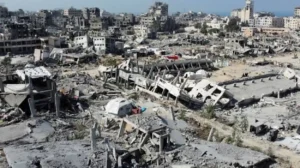
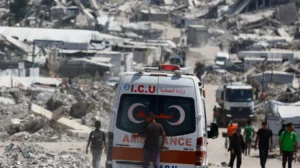
The Iran War of 2026 started with joint attacks by the US and Israel against Iranian nuclear and military facilities that led to the death of Supreme Leader Ali Khamenei and escalated into a war between other nations of the region. A ceasefire mediated by Pakistan was followed by a June Memorandum of Understanding which stopped major hostilities, however, the underlying issues regarding Iran’s nuclear program, the Strait of Hormuz and lifting of sanctions were not resolved. Despite the cessation of fire, the economic battlefield continued its operation. The war resulted in travel and trading disruptions on a global scale, including canceled flights throughout the Middle East and re-routed ships from the Strait of Hormuz and the Red Sea. For a country suffering from sanctions for years, war-induced supply shocks only made things worse.
“Economic Onslaught”: Anatomy of the New Sanctions
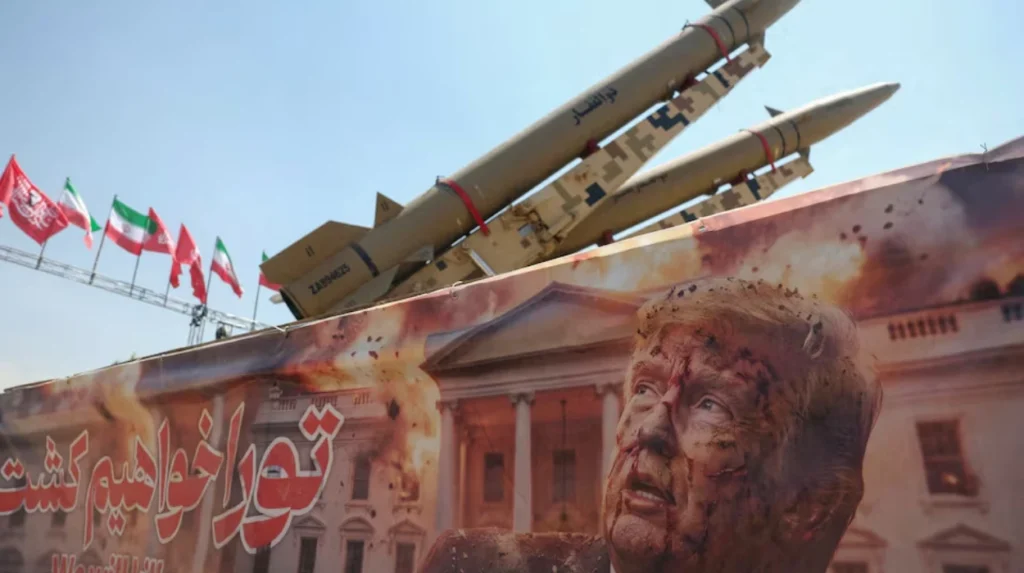
On 24–25 August 2026, the Trump administration announced what it termed an “economic onslaught” and “economic D‑Day” aimed at isolating Iran from the global economy. Treasury Secretary Scott Bessent said the package combines new sanctions with threats of secondary sanctions against countries that continue to provide Iran with an economic “lifeline.”
The Treasury Department designated nearly 60 individuals, entities and vessels linked to Iran’s procurement of nuclear and missile technology, and expanded sanctions authority to cover digital assets, gold, aviation, shipping and technology sectors. The State Department described the measures as intended to
“expose individuals and entities that enabled strikes against U.S. forces and allies”
and to
“restrict the revenue that the Iranian regime uses to attack its neighbors, support terrorism abroad, brutally oppress its own people, and hold the global economy hostage.”
Since Trump began his second term in 2025, the US has imposed Iran-related sanctions on more than 1,000 people, vessels and aircraft, including repeated rounds targeting shadow banking, money-laundering and sanctions-evasion networks. The latest move is framed not just as another sanctions round but as a systematic attempt to dismantle the financial architecture that allows Tehran to fund its military activities and sustain a war economy through shadow fleets and illicit petroleum sales.
Inflation, Currency Collapse and Trade Contraction
The official figures for the country provide a clear picture of how the war and sanctions have taken a toll on the Iranian economy. The Statistical Center of Iran reported that the inflation rate had reached nearly 90% as a result of inflationary pressures from the war, falling value of its currency and sanctions. In terms of historical context, according to Statista, the average rate of inflation in Iran was 50.86% in 2025. As the next round of sanctions was anticipated, the Iranian rial dropped to more than 2 million rials per one US dollar. The fall of the value of the national currency leads to an increase in the costs of imports, higher rates of inflation and loss of purchasing power of families, especially for food and medicines that require importing from abroad. Trade statistics show the economic downturn clearly.
During 21 March and 16 August 2026, when Iran’s fiscal year begins, non-oil exports stood at nearly $15 billion, while the imports amounted to $17 billion, a decrease in trade by 24% compared to last year. Previously, in March 2025 – January 2026, the total non-oil trade in Iran was $94 billion. Oil is the crucial element. In May 2026, crude oil exports reached their lowest level in at least six years and fell below 300,000 barrels a day due to the naval blockade of Iran by the US fleet that restricted access of Iran to its main export product. The US imposed sanctions on Iranian oil again; during the war, however, the US waived sanctions on oil shipments at sea in order to mitigate the energy crisis caused by the closure of the Strait of Hormuz.
Tehran’s Defiant Rhetoric Meets Economic Reality
Iranian officials have responded to the new sanctions with a mix of defiance and guarded pragmatism. Economy Minister Ali Madanizadeh said Iran is “fully prepared” for US sanctions and described them as an “economic terrorist attack,” adding:
“Our defence is no longer so defensive; the enemies should wait for an attack.”
The language signals a shift from purely reactive posturing to a more assertive stance, hinting at possible retaliatory measures that could target US interests or regional partners.
Iran’s Central Bank Governor Abdolnaser Hemmati acknowledged that oil exports have fallen amid war and sanctions but said authorities had prepared for revenue losses. That admission, while understated, confirms that Tehran sees the current pressure as more than temporary and is bracing for prolonged fiscal strain.
On the security front, the new head of Iran’s top security body warned that Tehran would view any country’s support for new US economic measures as an “act of war.” This warning is aimed less at Washington than at third countries—particularly in Asia and the Gulf—that might hesitate to cut economic ties with Iran under US pressure. At the same time, Iran’s president has defended a memorandum of understanding with the US as
“the best way out of the stalled conflict,”
indicating internal debate over how to balance resistance and diplomacy.
Iran has threatened both possible military responses and further reductions in oil exports from the Gulf in reaction to US economic measures. Such threats raise the risk of escalation at sea, where any disruption to shipping lanes could quickly translate into higher global energy prices and renewed pressure on an already fragile Iranian economy.
Secondary Sanctions and the China–Russia Factor
The threat of the use of secondary sanctions to punish countries for maintaining economic channels between them and Iran constitutes an important element of the new US strategy. According to Bessent, any country which allows its financial institutions, enterprises, airports or government agencies to cooperate with Iran will suffer “tremendous economic consequences,” without specifying exactly what countries would be targeted or the date after which this would happen. It is worth mentioning that the depth of Iran’s economic relations with China and Russia might create problems for the US in effectively isolating Tehran, even with secondary sanctions.
China continues to be one of the main purchasers of Iranian oil by employing secretive methods of shipment and transaction, while Russia has expanded its cooperation with Iran in the military and economic spheres since the start of the war. In this respect, the first sanctions list announced on 24–25 August does not include major Chinese financial institutions alleged of helping Iran with its oil business, suggesting a more measured response that could escalate in the future. Trump stated on Truth Social that “ANY country” helping Iran to smuggle oil, engage in swap lines, transfer funds, exchange houses, ship registries or front companies will suffer “tremendous economic consequences.”
How Sanctions Target the War Economy
The new sanctions are not just about punishing Iran’s leadership; they are structured to degrade the specific mechanisms that sustain its war economy. By targeting aviation, shipping, technology, gold and digital assets, Washington aims to cut off the tools Iran uses to move money, acquire dual-use goods and evade traditional financial controls.
The State Department and Treasury have repeatedly emphasized that the measures are part of a “maximum pressure” campaign to curb Iran’s ability to finance its military activities, procure weapons and ballistic missiles, and sustain a war economy through shadow fleets and illicit petroleum sales. Bessent has suggested that intensified economic pressure could lessen the need for new major military operations against Tehran, framing sanctions as a substitute for, rather than a prelude to, further kinetic action.
For Iran, this means that every channel it relies on to generate foreign currency—whether through oil smuggling, shadow banking, or technology procurement—is now under heightened scrutiny and risk of disruption. The result is a tightening squeeze on the very networks that have allowed Tehran to weather previous sanctions rounds.
What Comes Next: Escalation, Diplomacy or Stalemate?
As a result, the direct course leads towards economic pressure with the danger of further escalation in case of military retaliation from Iran and noncompliance by third parties of the US requirements. Any disruption to the shipping in the region or any attack on the US or allies’ property will start a new cycle of sanctions and military postures. On the other hand, the fact that a ceasefire was achieved and a memorandum of understanding signed gives a narrow window of diplomacy to work through the issue.
The threats for retaliation and defense of the agreement by Iran show that there are factions in the leadership of the country trying to evaluate the cost of confrontation and the risks of being seen as submitting to pressure. In terms of the world markets and policy making the key factors here are the flow of oil through the Strait of Hormuz, compliance of other large economies in imposing secondary sanctions and economic pressure leading to political pressure. With the current inflation in Iran reaching almost 90%, trade volume reduced by one-fourth and exports of oil at low multiyear levels, the war has already affected significantly the country’s economy; now the task is to make the load intolerable.