In a sternly worded communique on August 12, 2026, France along with 25 other countries and the European Union condemned the executions of protesters by Iran and demanded that the Iranian government stop executions and release all the prisoners that have been held arbitrarily. This is perhaps the first time when the international community has acted in such a coordinated manner against the regime in Tehran for its use of death penalty in relation to protesters, amid growing concern over a “campaign of intimidation” carried out via judicial executions.
French Foreign Minister Jean‑Noël Barrot announced the statement in Paris, underscoring the political weight behind the initiative.
“The EU and 26 countries condemned Iran’s executions of protesters in a joint statement,”
Barrot said, framing the declaration as a collective moral and legal rebuke rather than a symbolic gesture. The timing is significant: it comes amid a sharp spike in executions tied to national security charges and protests, and as international pressure builds for a more robust accountability mechanism for alleged crimes against humanity in Iran.
Sept mois après les crimes de masse commis à l'encontre du peuple iranien qui se levait pour réclamer la justice et la dignité, le régime continue de faire couler le sang en multipliant les exécutions.
— Jean-Noël Barrot (@jnbarrot) August 12, 2026
Cette répression insupportable et inhumaine doit cesser. Ses responsables… pic.twitter.com/mbHsDniWzz
The statement’s core demands and language
The joint statement is also remarkable for its clarity and comprehensiveness. Not only is it an expression of concern, but it outlines specific requirements as well as depicts the use of the death penalty as a tool to oppress basic rights and freedoms. According to the countries involved, they
“condemned in the strongest possible terms the ongoing executions of protesters and the use of the death penalty.”
These expressions do not leave any doubts concerning the attitude of the signatories. What is even more significant, the executions are related to the repressive measures used by Iran in other cases.
Thus, the countries said that capital punishment could
“never be justified to silence dissent, intimidate communities and punish individuals for exercising their human rights.”
This statement is especially noteworthy as it denies the official position of Tehran that the executioned people were guilty of serious offenses and underwent a fair trial.
The declaration also calls on Iran to “listen to its people” and take “meaningful steps” to ensure respect for human rights. While diplomatically phrased, this is a direct challenge to the Islamic Republic’s domestic legitimacy, suggesting that the state’s survival strategy—repression under the cover of wartime or emergency conditions—is unsustainable and internationally unacceptable. The signatories further demanded that Iran
“immediately end use of the death penalty and release those arbitrarily detained,”
tying the issue of executions to the wider problem of mass arbitrary arrests that has accompanied the protest cycles since early 2026.
Who stands behind the condemnation
The coalition behind the statement is broad and strategically significant. Alongside the EU, the co‑signatories include France, Germany, the United Kingdom, Canada, Australia, the Netherlands, Austria, Belgium, Cyprus, Denmark, Spain, Estonia, Finland, Iceland, Latvia, Lithuania, North Macedonia, Montenegro, New Zealand, Portugal, the Czech Republic, Romania, Slovakia, Slovenia, Sweden, Albania, and Ireland. This roster spans the EU core, key Anglosphere allies, and several non‑EU European states, creating a transatlantic and trans‑Pacific bloc that complicates Tehran’s efforts to dismiss the criticism as merely “European” or “Western.”
Kaja Kallas, the EU’s foreign affairs representative, has also shown her support for the declaration, lending more weight to the declaration because of the backing of the European Union. Through the joint declaration from the EU and various like-minded democracies, there is an attempt to ensure that enough pressure is placed to force action should executions go on.
The factual backdrop: a surge in protest‑related executions
The diplomacy takes place amidst a very grim set of facts. Based on UN data as referenced in media coverage, since March 19, 2026, there have been at least 56 people executed for national security charges, including 27 people who were executed in relation to protests earlier in the year, while more than 100 other people are reportedly facing the death penalty for similar charges. These numbers represent an alarming trend in terms of escalation, as they come close to matching the warnings issued by the UN’s rights chief about the rapid increase in executions and death sentences starting late February in response to escalating hostilities in the region.
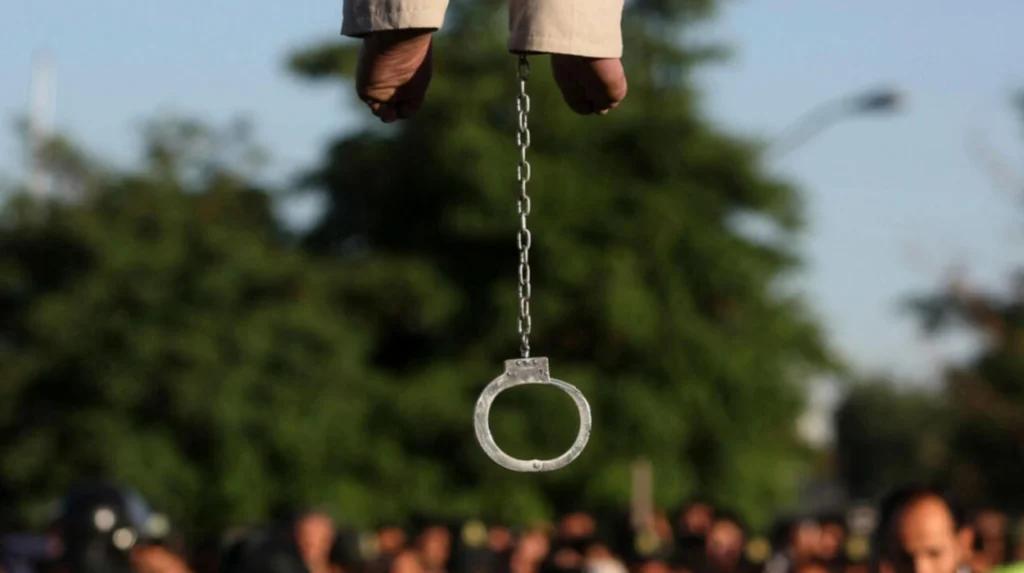
Rights groups have reported a number of cases which illustrate the political element of these proceedings. Amnesty International and other organizations have reported the use of execution and death sentences of dozens of people involved in protest-related offenses, some of whom have been arrested as children, with proceedings called extremely unfair, often marked by claims of torture and forced confessions. Public hangings that have taken place in places like Isfahan and executions carried out in prisons like Shahroud have been especially alarming.
UN independent experts have time and again urged Iran to put an end to all executions, whether related to protests or not, and also impose a moratorium on capital punishment with a view towards abolition. The threat is set against the backdrop of a long tradition of intimidation that seeks to deter any future mobilizations as well as punish past protests.
Tehran’s narrative: national security versus political repression
Iranian authorities have consistently framed these cases as matters of national security, charging protesters and dissidents with offenses such as “armed rebellion against the state” (baghi), “corruption on earth,” or “enmity against God” (moharebeh), and in some instances espionage.
The state-controlled media as well as official statements portray the executions as punishments in accordance with law, given the seriousness of the charges and the threat posed to the stability of the Islamic Republic. On the other hand, however, human rights organizations and UN experts claim that the trials have been conducted swiftly and unjustly with an intention to intimidate those who dissent from the regime. They refer to denial of access to independent counsel, the forced nature of the confessions, and the general and vague character of the charges as proof of the judicial system being politicized. The difference between the two narratives is the very core of the international disagreement, and it is this discrepancy which the declaration is designed to overcome.
The limits of diplomatic condemnation
Despite the fact that the joint statement represents an important diplomatic accomplishment, it nevertheless makes clear the shortcomings of the power of condemnations without any real consequences. While the wording is tough, it does not contain any information about new sanctions, referrals to international courts, and other actions which could change the cost-benefit calculations of the Iranian regime. At this moment, the statement acts mainly as a normative instrument: it provides a common position of key countries on the matter, isolates Iran diplomatically, and creates a basis for future actions if the situation escalates. Rights groups have urged to take the process to the next level by implementing practical measures.
Amnesty International and Human Rights Watch have appealed to exert coordinated diplomatic pressure on the regime, to establish an independent international justice system for Iran, and, in certain cases, to refer the situation to the International Criminal Court. United Nations human rights office and independent experts have denounced executions and raised concerns about the imminent danger of the situation, calling Iran to stop killings of protesters and allow outside investigation of the events.
What this means for Iran’s domestic trajectory
In terms of Iran’s domestic politics, the statement will likely do little to dissuade those hardliners who believe that repression is a necessary part of regime survival, particularly amidst the existing situation of increased regional tension and internal unrest. However, it does serve as a message for certain members of Iran’s political and legal establishment, whose activities are now under scrutiny and observation. This can matter in the long run because it increases the cost of repression in terms of reputation and complicates the process of conducting diplomacy, while at the same time strengthening the case for the imposition of targeted sanctions on those individuals responsible for the abuse. Finally, the demand for Iran to listen to its people goes far beyond the question of executions.
It recognizes the legitimacy of popular discontent, which has been behind the numerous protest movements, be they based on economic hardships and corruption or the desire to obtain political freedoms. By labeling the executions as attempts to silence the dissenting voices, the signatories take the side of protesters and their justification for questioning the legitimacy of the existing political order.
The road ahead: from words to accountability
However the key issue is whether this solidarity can translate into accountability tools. The joint statement sets out the framework for such actions, and its success will be determined by what comes next. These could involve further targeted sanctions on the judges, prosecutors, and prison officers responsible for executions related to protests; providing support for setting up an independent international fact-finding mission; and looking at ways to refer the case to the International Criminal Court, should more evidence come in regarding crimes against humanity. For now, the signal sent by Paris and its allies is very clear – the international community is not going to tolerate anymore treating Iranian executions of protesters as an internal affair.
By explicitly saying that
“such killing can never be justified,”
26 countries and the European Union have drawn a red line that Tehran will find harder and harder to cross without incurring additional diplomatic costs.