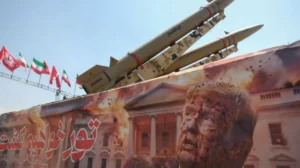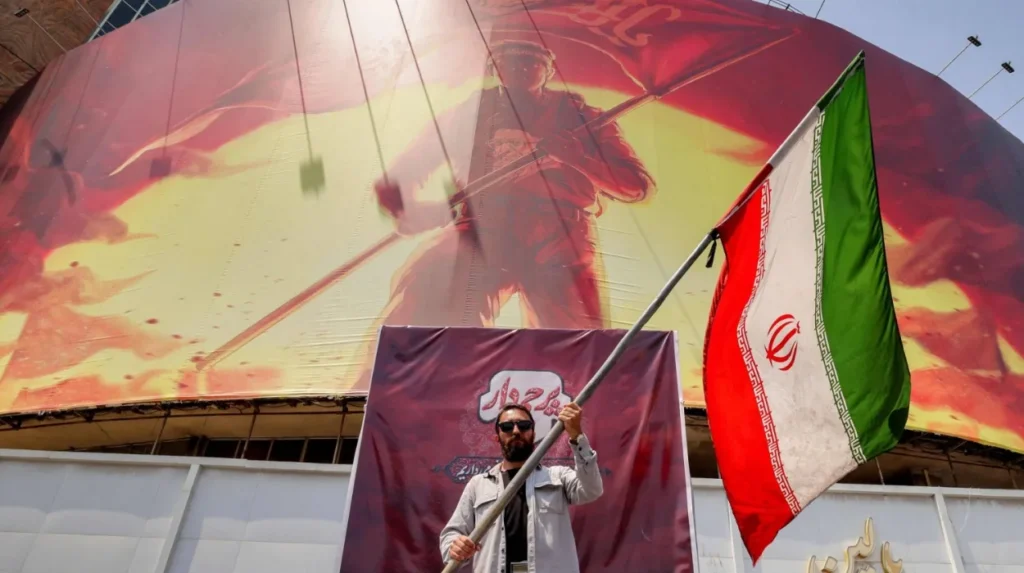
Iran has made clear that a potential agreement with Oman will not automatically restore normal shipping through the Strait of Hormuz. Tehran says the waterway will remain effectively closed until the United States accepts a series of political, military and economic concessions, turning a maritime dispute into the central bargaining point of a wider regional crisis.
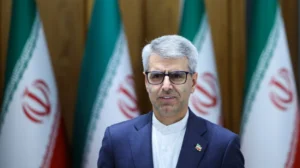
The Iranian foreign minister Abbas Araghchi noted that the negotiations over the temporary agreement with Oman about the ship passage were almost over, but underlined that the United States had nothing to do with the bilateral agreement. The agreement may create new routes for commercial vessels, but the point is that Iran believes the full passage is possible only after the end of the US naval blockade and aggressive actions in the region. The above-mentioned statement was made by Mohammad Bagher Zolghadr, the secretary of the Supreme National Security Council of Iran. The spokesman for Iran’s Revolutionary Guard also added that only in case the United States meets Tehran’s requirements the strait would be opened.
“The strait will not reopen until the United States corrects its behavior,”
Mohammad Bagher Zolghadr said.
The statements have sharply reduced expectations of an immediate return to normal shipping. Even if Iran and Oman sign their proposed arrangement, vessels could initially operate through restricted and politically supervised lanes rather than the unrestricted international traffic system that existed before the conflict.
What Iran wants from Washington
But Iranian claims go far beyond this issue. Iranian officials have demanded cessation of American threats against their country, the end of the naval blockade of their ports, payment of reparations for any damages caused by American military actions, and cancellation of economic sanctions imposed against Tehran. Iran also demands that Washington unfreeze its Iranian assets overseas and remove U.S. military forces from territories adjacent to Iran. In addition, Iran demands that America honor the commitments made in a memorandum of understanding signed in June, which it says were not honored by America. These claims demonstrate how Iran tried to leverage its position regarding control of a global energy bottleneck. Iran views this blockade, these sanctions and U.S. military presence in its region as part of a broader strategy of America aimed at weakening the Islamic Republic. But America views the reopening of Hormuz as an absolute prerequisite to guaranteeing navigation.
Iranian officials have repeatedly rejected the idea that the country should make unilateral concessions. Araghchi said there was no prospect of restarting wider negotiations while the United States continued to violate the June understanding. At the same time, communications between Tehran and Washington have reportedly continued through intermediaries.
This indirect diplomacy suggests that both sides still see a negotiated outcome as possible, even though their public positions remain far apart.
The proposed Iran-Oman shipping route
Iran and Oman, which sit on opposite sides of the Strait of Hormuz, are discussing a temporary route intended to allow selected commercial vessels to cross the waterway. Iranian Deputy Foreign Minister Kazem Gharibabadi said the arrangement could last between two and four months, with a substantial part of the traffic passing through Iranian territorial waters.
Under the reported proposal, inbound ships would use a route close to Iran, while outbound vessels would follow a route near Oman. Iran would retain a significant role in monitoring vessels entering the Persian Gulf, while Oman would oversee the exit route after receiving notification from Tehran.
A senior Iranian source described the principle under discussion as Iranian control over inbound traffic and visibility over outbound shipping, including the ability to intervene if necessary.
“This is the general idea currently being discussed,”
the Iranian source said.
The arrangement would reportedly be toll-free during the temporary period. That point is important because Iran has previously suggested that ships could eventually be charged a passage or service fee after the expiry of a 60-day negotiation period.
The United States has objected to any system that gives Iran effective control over international shipping. Washington wants ships to move without Iranian permission, Iranian tolls or politically selective restrictions. This disagreement over traffic management could prove as difficult to resolve as the wider dispute over sanctions and military forces.
A limited opening, not a full reopening
Iran has made a point of distinguishing between a temporary maritime channel and a full reopening of the strait. Gharibabadi added that even an agreement with Oman did not necessarily imply a reopening of the strait. Such a move gives Tehran the opportunity to grant some concessions to international vessels without giving away their main bargaining tool vis-a-vis the US administration. At the same time, the move poses practical problems with implementation, too. For example, the companies will have to be informed about the type of vessels that will be able to use the route and whether US and Israeli vessels will be denied access to the channel. In addition, the matter of protection needs to be clarified, including whether war risk insurers will cover the vessels. A mere political statement will be unable to bring traffic back to normal levels.
Why the strait is strategically vital
The Strait of Hormuz connects the Persian Gulf with the Gulf of Oman and the Arabian Sea. Its narrow maritime passage carries energy exports from Iran, Iraq, Kuwait, Saudi Arabia, Qatar and the United Arab Emirates to international markets.
According to the International Energy Agency, approximately 20 million barrels of oil passed through the strait daily in 2025, which accounts for about 25 per cent of global seaborne oil trade. In addition, the strait transported almost one-fifth of global shipments of liquefied natural gas, thus being very important for the production of electricity and industry as well as for Asia, where most of this LNG will be used.
According to the figures from the U.S. Energy Information Administration, the amount passing through Hormuz was more than one-quarter of global seaborne oil trade and one-fifth of global petroleum liquids consumption. Most of the exported oil passes through the strait and will be used in Asia, as such countries as China, India, Japan and South Korea are among its destinations, so disruption in the movement of oil would have a much greater impact on these countries’ refineries and power markets, as well as on transportation, than Western countries. Some alternative routes to transport the oil through Saudi Arabia and the United Arab Emirates can avoid some parts of the water route, but their total capacity is not enough to cover normal Hormuz shipping.
Shipping has nearly stalled
The conflict has already pushed commercial shipping close to a standstill. The International Maritime Organization reported that around 6,000 seafarers were stranded aboard hundreds of vessels during the July escalation. It also said that 136 ships and approximately 2,900 seafarers had been evacuated.
Only a small number of vessels have reportedly continued to transit the strait each day. Estimated oil flows fell to roughly 3–5 million barrels per day, compared with normal flows close to 20 million barrels per day.
The disruption has affected crude oil, petroleum products and LNG shipments. It has also raised insurance premiums for ships entering the region and forced some operators to delay voyages or seek alternative routes. A vessel that remains outside the strait can face significant financial losses, but entering the waterway exposes owners and crews to military and legal risks.
Markets responded positively whenever negotiators appeared close to an agreement, but those gains have been fragile. Oil prices climbed again when Tehran insisted that the strait would not reopen without U.S. concessions. Reports on August 10 indicated that uncertainty over the negotiations continued to influence crude prices.
Washington faces a difficult calculation
For the Trump administration, agreeing to Iranian demands could mean rewarding the exploitation of a strategic chokepoint. It could also affect the credibility of American sanctions and regional security guarantees. Refusing the demands would have significant economic and military repercussions, with the continued blocking of the Strait increasing the price of oil and LNG, affecting energy supply for Asia and putting pressure on the Gulf partners.
The United States thus has to decide whether to accept a partial and politically controlled reopening or to continue exerting pressure with the hope of getting Iran to abandon its demand for control at some point. Both options do not offer easy solutions. Iran too is vulnerable. Blocking Hormuz hurts Gulf competitors, but it limits Iran’s oil sales and increases the risks of military escalation. The more the Strait is blocked, the more likely it becomes that the Gulf countries, shippers, and key Asian buyers will agree to take action against Iran.
Gaza dispute deepens regional uncertainty
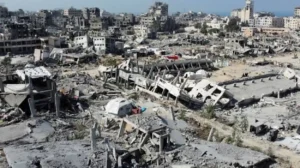
The Hormuz crisis is unfolding alongside a separate confrontation over Gaza. Israeli Prime Minister Benjamin Netanyahu rejected U.S. President Donald Trump’s 15-point Gaza plan and said Israel would not withdraw its forces until Hamas was completely disarmed.
The plan reportedly envisages the creation of a Board of Peace to oversee implementation, Hamas disarmament, an Israeli withdrawal and an international framework for Gaza’s reconstruction. Israel has objected to the proposed withdrawal timetable and insists that disarmament must be genuine rather than symbolic.
“Israeli forces will not withdraw until Hamas is genuinely disarmed,”
Benjamin Netanyahu said.
The disagreement exposes a broader problem in American diplomacy: Washington is attempting to manage several crises simultaneously, but its regional partners do not necessarily accept the same sequence of concessions. Israel wants security guarantees and the removal of Hamas’s military infrastructure, while Hamas has resisted surrendering its weapons without a clear Israeli withdrawal and political settlement.
The failure to bridge that gap could increase pressure on other fronts, including Lebanon, Yemen and Iraq.
Houthi attacks raise energy risks
The Houthi movement in Yemen has taken credit for an attack on an oil facility in southwestern Saudi Arabia. This group is allied with Iran and has been engaged in attacks on shipping interests in the Gulf and on Saudi and Israeli/Israel’s ally vessels before. The attack was made against a backdrop of military action by Yemen’s forces against the Houthis. The UN has indicated that any further fighting would complicate things as the conflict would be drawn into another area which is tied with the Red Sea, Gulf shipping and Iran-US conflict. The UAE has also stated that one of its ships had been attacked by an Iranian missile either in or near Hormuz. ADNOC has confirmed that more than a dozen of its ships have been attacked by missiles or drones since February when the war between the US-Israel alliance and Iran started, killing one crewman and wounding 20 others.
Turkey advances Kurdish peace initiative
The parliament of Turkey has made an effort to make a new peace process with the Kurdish militants. The legislation which has been passed through a parliamentary committee consists of a pardon-like provision for thousands of fighters, who are believed to be around 4,000 PKK members without being engaged in violence. It will be conditional on the PKK giving up on its armed organization and weapons. The crimes that involve intention to kill and life imprisonment will be exempted from the protection of this initiative. This effort may help end the longstanding conflict; however, it depends on many other factors.
The wider significance
Hormuz Strait problem is not confined to being a mere shipping controversy anymore. Rather, it is now part of the overall fate of U.S.-Iran relations, sanctions imposition, deployment of American troops, security of the Gulf region, Israeli conflict in Gaza, and even actions by Iran-backed groups. An Iran-Oman corridor arrangement may ease current pressures on energy markets, but it could equally institutionalize the control of the Iranians over part of the channel. Such an arrangement would be very delicate, subject to any further military incident, sanctions threat, and disagreements about access of vessels. What follows will be a decisive moment to see whether Iran and the United States could distinguish their maritime arrangements from their overall political quarrel. If that happens not to be the case, the strait will become partly navigable.
For now, Iran’s message is consistent: Hormuz will not return to normal simply because Oman and Iran agree on shipping lanes. Tehran wants the waterway’s reopening to be the price Washington pays for a wider settlement. Washington, meanwhile, appears unwilling to grant Iran the authority or concessions that would make such a settlement possible.