The latest effort by the European Union to prevent Russian fighters from entering its territory faces instant opposition from France, thereby revealing yet another fracture in the mechanism of sanctions within the union. This attempt at a political message towards Russia is now turning out to be an issue of jurisdiction, feasibility, and even mission creep towards a more general travel ban on Russians.
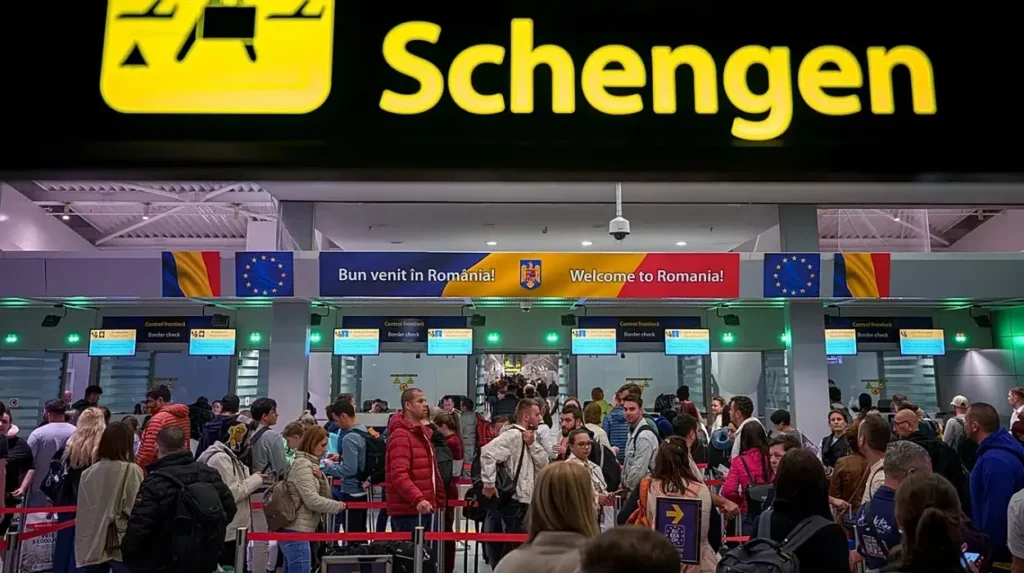
The main issue in question is that the EU is proposing to ban access to the Schengen Area for those individuals who were involved in combatant roles in Russia either currently or in the past. France, along with Italy, is expressing skepticism regarding both the legality and practicality of this decision. What makes this issue relevant is the fact that the situation arises at a time when the EU seeks to apply additional pressure to Russia without undermining the coherence of its own legal and administrative system. The issue is raised as part of the new sanctions package that the EU aims to adopt in the coming weeks.
The Proposal and the Pushback
This proposition would effectively deny entry into the EU for Russians who have been fighting in the war. The supporters of the measure consider it an obvious next step in terms of the security policy of the EU in response to the war waged by Russia against Ukraine. However, the representatives of France and Italy say that the implementation of such a provision is complicated and even problematic in a legal sense, as well as open to interpretation. The first question is related to the appropriateness of the provision in the context of its inclusion into the sanctions package. According to the information provided by the French diplomats, the visa issue is not a matter of sanctions but a separate issue.
The resistance is not simply procedural. It reflects a deeper concern that once the EU starts banning categories of Russian travelers linked to the war, the line between targeted restrictions and a blanket entry ban could become blurred. That is precisely what Paris and Rome want to avoid.
France’s Legal Concerns
France’s objections appear to rest on two pillars: legal consistency and practical enforcement. On the legal side, Paris does not seem convinced that sanctions are the right instrument for restricting travel by former combatants. On the enforcement side, it is unclear how member states would reliably determine who actually served in combat and who did not.
The verification challenge is not small. Such a measure would entail identification of persons through military service, active participation in war, or association with entities that might be hard to verify solely through travel documentation. This, to say, gives the French complaint more meaning than mere politics; it serves as a caution from the administrative perspective that such a measure will be hard to implement in 27 different states. The precedent issue should also be considered when it comes to the reluctance of France towards the measure in question. It is argued that such an approach, if taken, can give way to imposing even stricter measures for Russian citizens in general.
As one report summarized the French and Italian concern,
“Rome and Paris have cited legal and technical concerns over how the ban should be applied in practice,”
according to Euronews, reflecting the core issue at the heart of the dispute.
Italy’s Parallel Position
Italy too has adopted a similar position, placing itself firmly on the side of France instead of the belligerent factions within the EU. Rome is also troubled by the legal justification of the restriction as well as the possibility that its phrasing can open the door to a much wider application than what was intended. This is crucial because like France, Italy deals with many visa requests from Russia. A broad or ambiguous restriction might cause problems for the Italian government.
The Italian position also highlights the reality that EU foreign policy is often shaped by the least common denominator. Even when there is broad agreement that Russia should face pressure, states with large administrative burdens or legal concerns can slow the pace or force revisions.
According to reporting on the proposal,
“Italy and France are hesitant about a European Union proposal to ban former Russian combatants from entering the bloc,”
Bloomberg reported, underlining how the concern is shared at the top political level in both capitals.
Why the Measure Is Controversial
The debate does not only revolve around which foreigners may access Europe, but rather, it concerns itself with the use of sanctions as an instrument of foreign policy by the EU. Once a sanctions program has been put in place to govern the traveling status of certain individuals, then there is a risk that the application of sanctions would have exceeded its initial scope of asset freeze and sectoral sanctions towards becoming migration and visa regulation. This is precisely what some politicians mean when they claim that the matter should be handled separately. There is a difference in logic both legally and politically. Sanctions belong to the realm of collective foreign policy, whereas visa policy is a much more fragmented domain.
There is also a political communication issue. A ban on Russian combatants may sound narrow, but in practice it can be interpreted by critics and publics as a broader anti-Russian measure. France and Italy appear worried that even a carefully worded rule could become a symbol of discrimination rather than targeted accountability.
That concern was captured in another report, which said
“Rome and Paris fear the measure could open the door to a blanket entry ban on all Russian citizens,”
according to Brussels Signal. That is the political red line for both capitals.
What the EU Is Trying To Do
More broadly, this is all taking place within the context of the EU’s attempt to finalize a new sanctions package against Russia by the mid-July deadline mentioned in Brussels. The prohibition on fighting is just one part of a larger package aimed at keeping up pressure on Moscow while the war in Ukraine rages. This package is not being put together in a vacuum. The EU has been working on refining its sanctions policy for years to close any gaps while making the maximum political impression. But each new package raises the same old questions: How to punish Russia and its war machine without breaking the law?
That balancing act is becoming harder. The more targeted the measure, the more difficult it is to define and enforce. The more general it becomes, the more it risks crossing legal or political boundaries inside the EU. France and Italy are essentially saying the latest proposal has not found the right balance.
One Euronews report framed the situation as part of broader difficulties in the sanctions talks, noting that
“The EU wants to agree on a new round of measures targeting Moscow before 15 July, but the closed-door negotiations have difficult obstacles,”
showing that the Russian combatant issue is only one of several friction points.
The Numbers and the Stakes
This fact provides context; it also shows why the governments of France and Italy might be hesitant about backing a policy that would place additional burden on border administration, or even cause politically sensitive denials of entry into their territories. Finally, the proposal itself is important in its connection with the 21st sanction package that the EU has put in place regarding Russia. In fact, it is yet another part of a continuing set of restrictive policies towards Russia and not an isolated case. Sanctions policy has already become one of the key instruments that the EU uses to manage the situation created by the invasion of Ukraine.
In other words, there are both symbolic and practical implications here. On the symbolic level, the EU wishes to communicate that individuals linked to the war will not be treated like ordinary Europeans. But on a more practical level, the bloc needs to determine whether it is possible for it to clearly differentiate between people who support or oppose the war in order to withstand a legal and political challenge to its position. It is at the juncture between the two when sanctions proposals become weakened.
What Comes Next
While the most probable result will be the failure of the proposal to get fully accepted, there may be attempts on the part of France and Italy to make sure that it is watered down. France and Italy might seek to narrow the scope of the wording of the proposal, seek an alternative basis of the legal framework for it, or remove the ban on combatants completely from the set of sanctions. The final draft of the resolution might thus become weaker than the initial one.
The broader political lesson is that the EU remains united on the principle of pressure against Russia, but divided on the mechanics. France’s resistance shows that legal caution still matters, even in an environment where harder line positions are politically popular. Italy’s alignment with France also suggests that this is not an isolated objection, but a meaningful coalition inside the bloc.
For now, the dispute illustrates a familiar pattern in EU foreign policy: when the politics are clear, the law and administration become the battleground. And in this case, the battleground is not just about Russian combatants, but about how far the EU is willing to go in turning sanctions into a tool of border control.
The final shape of the policy will tell a lot about the current balance inside the EU. If the combatant ban is retained, it will show that the bloc is willing to accept legal complexity for political effect. If it is watered down or removed, France and Italy will have demonstrated that practical objections can still override symbolic toughness.
Either way, the issue has already exposed the limits of consensus in Brussels. It is a reminder that even in a moment of strong anti-Russia sentiment, the EU remains a coalition of governments with different legal traditions, strategic priorities, and domestic sensitivities.