A heated diplomatic row has erupted between Iran and France, where Iranian Foreign Ministry spokesperson Esmaeil Baghaei accuses French foreign minister Jean-Noel Barrot of being politically hypocritical in the wake of his controversial statement regarding the raging war between the US, Israel, and Iran. This diplomatic row that developed on June 19, 2026, is yet another example of the further deterioration of the relationship between Tehran and Western Europe with regards to the Middle East dispute due to the selective morality of the West.
This particular case happened at a time when Iran is negotiating with the US on the issue of a truce and sanctions removal from Iran; therefore, the statements made by France are very sensitive to the government in Tehran. The comments made by Mr. Baghaei were not ordinary protests; rather, they were an attack on what he termed as hypocrisy and deceit that had come to characterize French politics, with him drawing references from Molière’s 1664 play titled “Tartuffe.”
Barrot’s Original Comments Spark Iranian Outrage
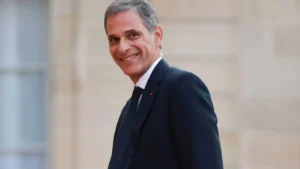
The statements made by French foreign minister Jean-Noel Barrot were what triggered this diplomatic conflict. In his comments regarding the war between Iran, the United States, and Israel, Barrot noted that the people of Iran are one of the major losers of this war, noting that they are stuck between being repressed and bombed. He also mentioned that the people of Iran are the major losers of the deal made between the United States and Iran; he describes Iran as a nation caught between oppression from their government and bombing from the United States and Israel.
However, in addition to his concerns regarding France’s involvement in the dispute, Barrot noted that the country does not wish to get involved in the conflict without due consideration. Nevertheless, the leaders of Iran understood the statement made by the French official in a different way, as meddling and not taking into account the fact that France itself is involved in the dispute. The statement about concern for the people of Iran coming from the French minister appeared to be especially provocative from the perspective of Tehran.
Baghaei’s Scathing Response Quotes French Political Culture
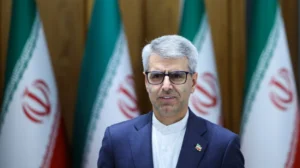
The reaction of Esmaeil Baghaei to the statements of Barrot was marked by great rhetorical power. In his speech, the spokesman for Iran stated that hypocrisy is an intrinsic element of the politics of France; it became trendy in accordance with the play written by Molière “Tartuffe” in 1664. It should be mentioned that this literary example was not used only as decoration but also proved the statement of Baghaei about double standard policies of France in international conflicts.
Monsieur le Ministre, L'hypocrisie demeure une marque de fabrique de la culture politique française – un vice qui, comme Molière l'a si justement observé dans son chef-d'œuvre de 1664, Le Tartuffe ou l'Imposteur, « est devenu à la mode ». Vous êtes resté silencieux – vous vous… pic.twitter.com/UUzQB79wWl
— Esmaeil Baqaei (@IRIMFA_SPOX) June 19, 2026
The attacks on the West did not stop there, as Baghaei proceeded by making accusations against the behavior of the French during the war period, claiming that the French had done nothing but stayed silent and complicit as Iranian cities were brutally bombarded and civilians massacred. The most cutting attack made by the spokesman concerned France’s selective conscience, where he accused that when it is in the political interests of your regime, your selective conscience springs to life and lectures the whole world about human rights.
The spokesperson of the Foreign Office of Iran described the statements made by the French minister as being hypocritical and duplicitous in nature in the context of French politics, reiterating that these were meddling statements which had overstepped the boundary of international diplomacy. The tone used by Baghaei indicated that the concern of France regarding the Iranian people was not genuine in nature but only a form of political maneuvering by France to further its own interests in the region.
Historical Context of Iran-France Diplomatic Tensions
This new diplomatic disagreement is not in isolation but forms part of a trend of declining relations between Iran and France that have been developing since 2025 and 2026. This new diplomatic controversy comes after a prior controversy that occurred on May 24, 2025, where Iran called in France’s charge d’affaires in Tehran to express their displeasure over statements that the Iranian government found to be offensive regarding a film being screened at the Cannes Film Festival by the foreign minister Barrot.
More significantly, the June 2026 controversy follows a major diplomatic confrontation in March 2026, when Iran’s Foreign Minister Abbas Araghchi publicly criticized French President Emmanuel Macron for failing to condemn what Iran described as the Israel-US war on Iran. On March 19, 2026, Araghchi accused Macron of diplomatic failure in addressing the Middle East conflict, marking an earlier high-level dispute between Iranian and French leadership that established the broader context for Baghaei’s more recent criticism of Barrot.
Moreover, the same pattern goes beyond France and involves European diplomatic problems at a wider level. On March 9 and 10, 2026, Iran also accused the President of the European Commission, Ursula von der Leyen, and the Vice-President of the European Commission, Kaja Kallas, of hypocrisy related to their claims about the West Asia conflict. The spokesman of the Foreign Ministry of Iran claimed that von der Leyen was hypocritical when she spoke during times of aggression from the US and Israel towards Iran.
Broader Regional Context: US-Israel-Iran Military Conflict
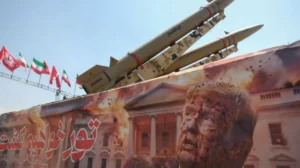
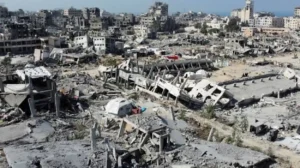
The diplomatic rift between Iran and France must be understood in the wider context of ongoing military warfare between the United States, Israel, and Iran. On March 7, 2026, U.S. and Israeli troops carried out strikes against oil storage units in Tehran, which can be seen as one of the biggest confrontations between Western nations and Iran in recent history. This act was one of the most serious military confrontations between Western nations and Iran.
Iran’s accusations of French complicity stem directly from this military reality. When Iranian cities were bombed and civilian casualties occurred, European leaders including France’s foreign minister did not publicly condemn the military actions or call for immediate cessation of bombardment. Only after the military operations concluded did French officials express concern about Iranian civilian suffering, which Iran interprets as hypocritical timing that serves political convenience rather than genuine humanitarian principle.
This situation has led to a complicated scenario wherein the citizens of Iran find themselves in a scenario that was described by Barrot of finding themselves under the oppression of their government and at the same time under the bombardment of outside forces. However, Iran does not agree with this depiction since the situation puts partial blame on the Iranian government without taking into account the aggression of the US-Israeli military operations that Tehran sees as the main aggression.
Current Negotiations and Strategic Implications
The timing of Barrot’s comments adds significant strategic sensitivity to the diplomatic clash. Iran is currently engaged in negotiations with the United States seeking both a truce in the ongoing conflict and relief from international sanctions that have severely impacted Iran’s economy. These negotiations represent a critical opportunity for diplomatic de-escalation that could potentially end the military conflict and restore economic stability to Iran.
The public statements from France during this delicate negotiation stage could be construed as a diplomatic action which would be interpreted by Iran as not helping the process but influencing the negotiations between the US and Iran in such a way as to benefit European strategy. Baghaei’s claim that the French become concerned when there is a political interest implies that Iran sees these statements as politically motivated.
The diplomatic spat also has some significance in the context of the overall relations of Iran with Europe outside of France. The fact that Iran is making these claims against the leadership of the European Commission indicates that the Iranians view the policies of the Europeans diplomatically as being in sync with those of the Americans and Israelis. This would certainly make it harder for Iran to conduct diplomacy on its own with individual European nations.
International Law and Human Rights Dimensions
The issue presents some basic problems of international law, human rights doctrine, and hypocrisy of Western humanitarian language. The charge of hypocrisy made by Iran lies in the fact that the West is interested in the problems of civilian population only when it suits its political purposes. In this context, the issue highlights a more general question regarding whether the West really cares about human rights or uses them as a means of political influence.
Barrot’s framing of Iranian citizens as victims caught between government repression and external bombardment reflects a particular perspective on the conflict that distributes responsibility between Iran’s government and external military forces. Iran rejects this balanced framing, maintaining that the primary responsibility for civilian suffering lies with US-Israeli military aggression rather than Iranian government policies. This disagreement over blame allocation represents contrasting interpretations of international law regarding the use of force and protection of civilian populations.
The diplomatic spat further illustrates the conflicts that arise between national sovereignty and international intervention. Iran sees the statements made by Barrot as unnecessary meddling that goes beyond the acceptable boundaries of diplomacy, whereas France believes it is justified to raise concerns regarding human rights and civilian safety. The basic difference between what constitutes an appropriate statement when commenting on internal affairs of another country is one of the major points of debate.