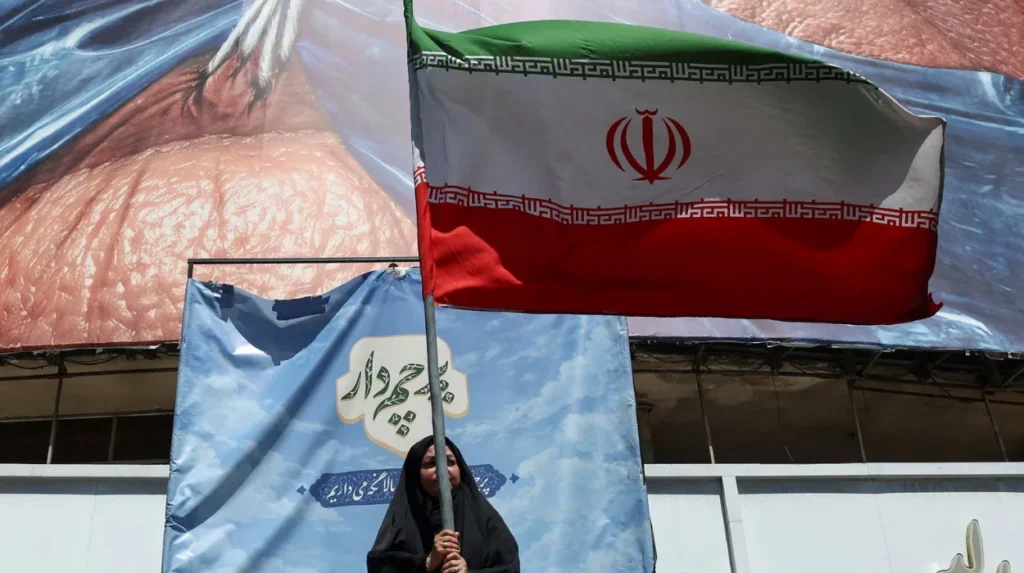
An important delegation from Tehran has now landed in Doha for talks involving both Iran’s top diplomats, who will discuss with their Qatari counterparts, as well as through backchannels, with United States officials, an era which could see the most significant attempt so far in bringing the ongoing conflict in the Persian Gulf region to an end. It is no secret that the team visiting Qatar comprises Iran’s most powerful individuals, thus indicating that the discussions would not be limited to preliminary matters, but to creating a practical framework for reaching a comprehensive deal regarding the key issues of securing passage through the Straits of Hormuz, nuclear enrichment, and unlocking Iran’s billions of frozen assets.
Who has arrived in Doha and why it matters
The Iranian delegation is headed by three prominent personalities whose inclusion underscores the significance of this event. The first is Mohammad Bagher Ghalibaf, who serves as the Speaker of Iran’s Parliament, is one of the most prominent Iranian conservatives and served in the Islamic Revolutionary Guard Corps in the past. This individual’s participation in these negotiations implies that any future deal reached between Iran and the other countries must have approval from conservative groups that have refused to make any concessions to the Western nations for some time now. Next, there is Iran’s foreign minister, Abbas Araghchi, who has been involved in previous rounds of negotiations concerning regional issues and Iran’s nuclear program. Lastly, Abdolnaser Hemmati, Governor of Iran’s Central Bank, is present in order to guarantee that economic benefits follow these political discussions.
The official Iranian news agency IRNA has framed the Qatar trip as “part of the diplomatic process,” a carefully neutral phrase that leaves room for both optimism and caution. By sending such a high‑level group, Tehran is signaling that it is ready to test whether a deal with Washington can be structured in a way that does not undermine its strategic autonomy or its claim to regional influence. At the same time, the presence of a central‑bank governor indicates that Iranian leaders are demanding not just political gestures, but specific, measurable outcomes in the form of sanctions relief and access to frozen funds.
Core issues on the negotiating table
These three intertwined aspects include: control of the Strait of Hormuz, the future of Iran’s nuclear enrichment process, and the financial framework under which billions of dollars of Iran’s money have been tied up. Sources in the region’s security community and news accounts in the West have suggested that one of the primary focuses of the ongoing discussions centers around the scaling down of naval maneuvers around the straits, still regarded as the most crucial chokepoint for global oil shipments. As reported in May 2026, the United States suggested lifting its naval blockade on shipments heading into and out of Iran if Iran itself removed its restrictions on maritime traffic in the straits area.
Parallel to this maritime element is the issue of Iran’s nuclear program. While the negotiators in Doha have been careful to avoid explicitly naming it, the concept of limitations placed upon the number and nature of Iran’s uranium enrichment facilities and the presence of stocks of enriched uranium is obviously still an underlying theme. On one side, Iranian representatives have stated that any agreement will have to take into account the country’s “legitimate rights” to pursue its nuclear program, whereas on the other, Western countries will continue to stress the importance of stringent measures for verification and limits of breakout capacity. The mere fact that negotiations are occurring indicates that both parties recognize the limited time frame available in which to reach an agreement before matters become too complicated again through new military developments or politics.
The $12 billion frozen‑funds demand
One of the most apparent aspects of the negotiation process is money. According to media sources within Iran, there have been claims made by officials that Tehran is asking for “immediate access to around $12 billion” locked up in the accounts of Qatari-related companies as a requirement to move forward with the agreement. This amount seems to be higher compared to previous agreements in which $6 billion of Iranian money stored in South Korean banks was transferred to the Qatari company through which the freedom of some Americans would be guaranteed. While in 2023 this approach proved to work, now requiring twice as much shows the dire state of Iran’s economy.
From the Iranian perspective, the frozen funds are not a bargaining chip but a locked‑away lifeline. Abdolnaser Hemmati’s presence in the Doha talks underscores that Iranian leaders are unwilling to accept a purely political or symbolic agreement that does not translate into rapid liquidity and the ability to repatriate or re‑use these monies. Western officials familiar with the negotiations have privately warned that any significant release of funds will be accompanied by strict conditions and monitoring mechanisms, raising the prospect of a protracted tussle over how quickly and under what oversight the money can be accessed.
Stances of Iran and the United States
Iran’s public messaging from the negotiating team is calibrated to balance domestic hard‑liners and international expectations. Iranian officials have not yet announced any finalized agreement, instead emphasizing that the talks are an “ongoing process” and that no deal will be signed unless it meets Iran’s core national‑interest criteria. The language used by spokespeople in Tehran suggests that any eventual agreement will be portrayed not as a concession, but as a strategic victory that secures recognition of Iran’s regional role, a reduction in economic pressure, and the lifting of what Tehran describes as “illegitimate” sanctions. Iranian negotiators have also rejected the idea that the talks should be framed solely around U.S. demands, insisting on equal recognition of Iran’s security concerns and its rights under international law.
On the U.S. side, President Donald Trump has publicly described the negotiations as “proceeding nicely,” a phrase that has become a hallmark of his approach to delicate diplomatic moments. By using upbeat but non‑committal language, Trump is able to signal progress to domestic audiences while preserving flexibility in the final terms. At the same time, administration officials have also warned that the United States “will find another way” if the talks fail, a veiled reminder that Washington retains military and coercive options, including the possibility of renewed strikes or intensified sanctions. This dual message—optimism in public and pressure off‑the‑record—reflects the broader U.S. strategy of combining diplomacy with the threat of force to shape Iran’s behavior.
Qatar’s role as the regional mediator
Qatar’s emergence as the central mediator in this round of talks is not accidental. The small Gulf state has spent years cultivating a reputation as a neutral convener, hosting negotiations between the United States and various regional actors, including Iran, the Taliban, and Palestinian factions. In this instance, a Qatari negotiating team has been shuttling between Tehran and Doha, coordinating with U.S. officials to help bridge gaps on maritime security, sanctions relief, and the structure of frozen‑assets arrangements. Qatari officials have stated that “more time is needed” for the U.S.–Iran negotiations, a comment that acknowledges progress but also signals that substantive differences remain unresolved.
By hosting the talks, Doha gains both geopolitical influence and an opportunity to position itself as a stabilizing force in a region that has grown increasingly volatile. For Iran, the choice of Qatar as the venue offers a degree of insulation from the direct glare of Washington, allowing sensitive proposals to be discussed through intermediaries. For the United States, it provides a way to engage with Tehran without having to stage a high‑risk, face‑to‑face summit that could expose domestic political vulnerabilities. The cumulative effect is a negotiation shaped by multiple layers of mediation, with Qatar acting as the logistical and political hub.
Regional and global implications
The implications of any Iran–U.S. deal negotiated in Qatar extend far beyond the immediate parties. If a durable agreement is reached on the Strait of Hormuz and nuclear‑enrichment limits, it could significantly ease tensions in the Persian Gulf and reduce the risk of another major military flare‑up. Global energy markets, which have fluctuated with each incident in the region, would likely benefit from a more predictable security environment, while Gulf Arab states would be forced to recalibrate their own security postures in light of a potentially less confrontational Iranian stance.
At the same time, any deal that includes substantial sanctions relief and the release of tens of billions of dollars in frozen Iranian funds would also change the balance of power in the region. Hard‑liners in neighboring capitals, particularly those that have long viewed Iran as a predatory regional actor, may resist a settlement that appears to strengthen Tehran’s economic and military position. President Trump has suggested that Gulf states such as Qatar, Pakistan, Egypt, Jordan, and Türkiye should broaden the “Abraham Accords framework” to include Iran‑related security arrangements, an idea that could reshape alliance structures if it gains traction. However, many regional players remain skeptical of any agreement that does not explicitly address Iran’s support for proxy forces and its ballistic‑missile program.