The military officials of Tehran have made it clear that
“Iran will open up new fronts against America in case of any attacks on its territory or interests.”
This statement was made by the spokesman of the Iranian army and is an indication of the tense relationship that exists between Tehran and Washington and shows that Iran is ready to broaden the scope of its military action.
“In the event of another attack by the United States, we will open new fronts with new equipment and new methods,”
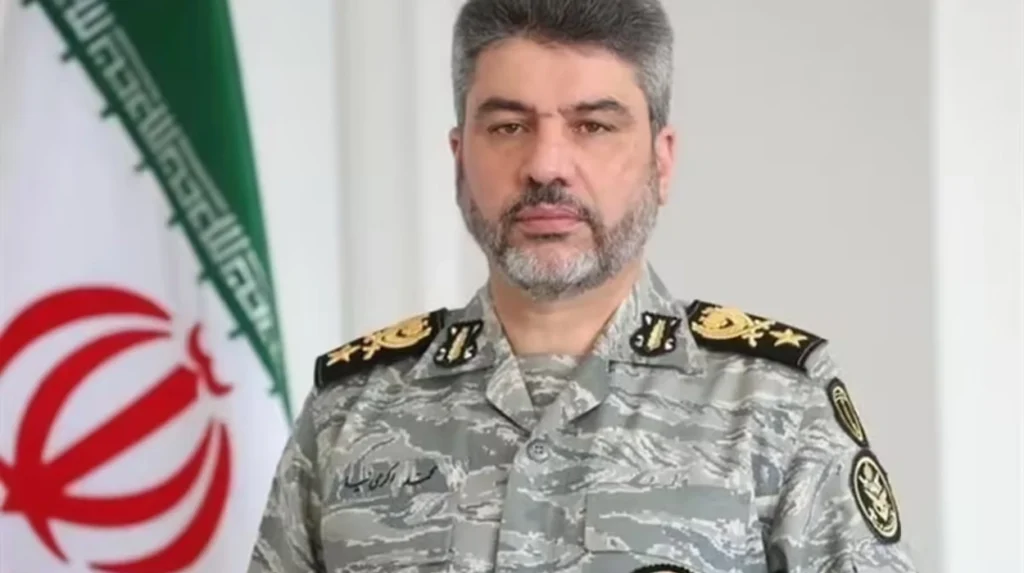
Mohammad Akraminia, the Iranian army spokesman, said in remarks reported by Iranian state media. His words reflect a shift from earlier defensive posturing to a more assertive posture that explicitly threatens the multiplication of combat arenas should Washington resort again to direct or proxy action.
This is happening within the larger context of rising rhetoric and military posturing in the Middle East. Over the past year, Iranian officials have warned that any attack against Iran will result in an asymmetric and regional response, and that they will widen the battlefield as opposed to confining their response to one dimension.
Context Behind the Warning
The Iranian threat is not just another verbal tirade; rather, it forms part of a broader sequence of events in a crisis situation in the region. In 2025 and 2026, the United States has deployed more naval forces to both the Persian Gulf and Eastern Mediterranean regions, even as it has been intensifying its sanctions and operations against Iranian-linked militias. Meanwhile, Iran has been stepping up its support for proxy forces, and conducting more drills in the Strait of Hormuz, a key choke point through which global oil shipments pass.
Against this backdrop, the Iranian army’s statement functions both as a deterrent and as a means of shaping domestic and regional perceptions. By declaring that
“if the enemy is foolish enough to attack us again, we will open new fronts,”
Tehran seeks to portray itself as confident and prepared while signaling to US decision‑makers that any escalation could spiral quickly beyond a limited confrontation.
The Iranian government has also been very careful about how it has crafted its message to relate the idea of new battlefields to questions of sovereignty and power balance in the region. In this case, the message by the army is not one of war, but one that is contingent upon whether Iran starts the war or not.
What “Opening New Fronts” Means Strategically
The expression “open new fronts” is intentionally ambiguous, enabling Iran’s policymakers to throw their opponents off guard while giving them an escape route in case of international pressure. But in real life, it implies several forms of possible escalation. This term is read by analysts as meaning that Iran can escalate proxy activities, conduct missile and drone attacks beyond the Persian Gulf, or engage in cyber and maritime operations to cause losses to the U.S. and its allies.
On the other hand, the reference to “new equipment and new methods” is an allusion to the expansion of Iran’s missile force, including precision-guided missiles, drones, and naval capacities, aimed at threatening American bases, ships, and allies within the region. Iranian military officials have repeatedly drawn attention to the achievements in developing their local defense industry through cruise and ballistic missiles and unmanned vehicles able to reach hundreds of kilometers away.
This message also contains a covert indication addressed to regional players. The implication of activating new frontlines serves as a reminder for states hosting American troops or cooperating with them that they may become second frontlines of the confrontation in case the US continues putting pressure on Iran. This aspect of the message is meant to increase the stakes of the decision to attack Iran.
Iranian Narrative: Defense, Deterrence, and Sovereignty
Within the domestic political narrative, the army’s statement is being framed as a defensive posture rather than an aggressive one. Iranian officials continue to emphasize that the Islamic Republic is a “peace‑loving” nation that seeks stability, but one that will not tolerate foreign aggression.
“We are not seeking war, but we will not allow any attack on our territory to go unanswered,”
Akraminia stated, echoing similar remarks by senior Revolutionary Guards commanders and government spokespeople. This line of argument serves both as a message to the Iranian population, reassuring them that the government is taking care of their national pride, and as a message to outside forces, that certain lines not be crossed lest they face a comprehensive and multidomain response.
The mention of possible new frontiers also serves to reinforce Iran’s role as a regional power able to influence the security environment outside of its own borders. Through this rhetoric, Iranian leaders seek to project strength in the face of certain constraints due to international sanctions and diplomatic isolation.
US and Regional Reactions
The warnings by the Iranian military have been met with careful reactions by US officials and other players in the region. While the US government has neither confirmed nor denied any particular incident that could be behind the warning, the statements made have clearly indicated that the US is ready to protect its assets and interests.
“We are aware of these statements, and we take any threats to our forces seriously,”
a senior US defense official told reporters, without elaborating on the operational implications. The US has maintained a policy of responding to attacks on American personnel with targeted strikes while also pursuing behind‑the‑scenes diplomacy aimed at de‑escalating tensions.
The regional allies of the US, especially the Gulf Arab countries, have reacted to this situation with a combination of alarm and restraint. While some states have welcomed the presence of US troops as a form of deterrence, others have advised the US government to exercise care not to escalate the situation further. In some quarters, Iran’s threat to open up new fronts is seen as a warning that any conflict between Iran and the US will inevitably spread to the neighboring regions.
Saudi Arabia, UAE, and Israel, among other nations, have kept a close eye on Iran’s missile and drone activities, knowing that any increase in tension will compel them to react accordingly. At the same time, Iranian authorities have sometimes addressed their threats not only against the US but also against what they refer to as “US-led aggression.”
Diplomatic Backdrop and Negotiations
This message from the army comes at a particularly delicate moment for diplomacy. There have been attempts behind closed doors to renew or alter previous agreements, such as discussions about nuclear weapons protection and regional security treaties. But this is not going very well because both parties believe that the other should take the initiative first.
The Iranian government has often expressed that a solution to their conflicts should involve promises of non-violence and an end to sanctions that are considered “unjust” by them. On the other hand, the U.S. government has demanded more restrictions on Iran’s missile arsenal and regional actions in any deal.
Within this context, the army’s warning serves multiple purposes: it empowers Iranian negotiators by signaling that the regime has escalation options at its disposal, and it also reinforces domestic support for a hardline stance. By publicly stating that
“if the United States attacks us again, we will open new fronts,”
Tehran aims to strengthen its bargaining position while preparing the public for the possibility of intensified conflict if diplomacy fails.
Implications for Regional Stability
The most dangerous implication that emerges from the threat posed by the Iranian armed forces is that of a regional war. In case there is an attack carried out by the US military against Iranian assets or any of the Iranian backed groups, then the promise made by the Iranian side to open up new fronts may well result in attacks against US bases, merchant ships, and allies in the region.
The involvement of many other regional entities in such a conflict is very likely as some of these entities are already part of the ongoing contest between the US and Iran in one way or another. These may include GCC countries, Israel, and some of the non-state actors affiliated with Iran.
Moreover, Iran’s ability to threaten key maritime chokepoints such as the Strait of Hormuz adds another layer of risk. Any Iranian move to restrict or disrupt shipping in the Gulf would reverberate through global energy markets, raising oil prices and increasing pressure on both Western governments and regional economies.
Cyber and Hybrid Dimensions
Along with classic military methods, the notion of “new fronts” can also include the use of cyber, economic, and information tactics. The Iranians have had a robust cyber arsenal for some time now, and according to reports, state-sponsored organizations have been active in attacks on governmental bodies, energy companies, and financial organizations.
If there is another attack on Iran by the United States, the latter may decide to extend the cyber assault against American infrastructure, businesses, or allied nations’ computer networks. Not only will it be an act of asymmetric retaliation against the US, but it will also add a new dimension to the conflict.
Alongside cyber operations, Iran may also intensify its use of propaganda, information campaigns, and influence activities to shape public opinion and undermine confidence in US and allied institutions. The threat of opening new fronts, therefore, is not limited to kinetic strikes but also extends into the digital and psychological domains.
Domestic Politics and Public Messaging
Inside Iran, the army’s warning fits into a broader narrative of national resistance and defiance. The government has long styled itself as a defender of Iranian independence against foreign pressure, and the prospect of new fronts is presented as a necessary tool of self‑defense rather than a reckless gamble.
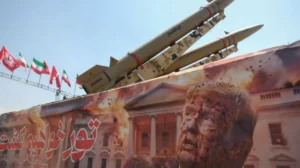
State-controlled media have emphasized the statement as an indication of the military preparedness and technological capability of Iran, often juxtaposing the comments made by Akraminia against pictures of missile launches, drone tests, and naval drills. The intention behind such media reports is to ensure that the people believe in their nation’s ability to cope with outside pressure and to garner popular backing for their leaders.
On the other hand, the statement might be used to divert attention from the economic problems caused by the sanctions imposed by foreign governments. In this context, the government officials of Iran can turn the attention of the people towards external matters and distract them from domestic issues.
Looking Ahead: Deterrence, Risk, and Decision‑Making
The Iranian army’s explicit warning that it will “open new fronts” if the United States resumes attacks underscores the fragile balance between deterrence and miscalculation in the current regional order. On one hand, Tehran’s message seeks to deter Washington from using force by raising the potential cost of any strike. On the other hand, it inherently increases volatility by making explicit the conditions under which a much wider conflict could erupt.
For US policymakers, the challenge lies in calibrating pressure and reassurance. Maintaining a credible deterrent while avoiding actions that could trigger the very escalation they seek to prevent is a delicate task. The same dilemma applies to regional partners, many of whom worry about being caught in the middle of a confrontation they did not choose.
In the coming months, the key questions will be whether diplomacy can gain enough ground to reduce tensions, whether Iran’s warnings remain primarily rhetorical, and whether the United States and its allies can manage incidents at the margins without crossing thresholds that prompt Tehran to follow through on its pledge to open new fronts.
For now, the Iranian army’s warning stands as one of the most explicit statements yet of how Tehran might respond to a renewed US attack—a stark reminder that the stakes of any miscalculation have never been higher.