A cross-border investigation found that companies linked to the UAE’s ruling Al Nahyan family received more than €71 million in EU farm subsidies between 2019 and 2024, spread across 110 payments for farmland in Romania, Italy and Spain. The largest recipient identified was Agricost in Romania, a 57,000-hectare farm that reportedly received €10.5 million in direct payments in 2024 alone. That is not a small or incidental subsidy stream; it is a major public transfer that demands serious scrutiny over who benefits and under what conditions.
Why does the EU claim this matters?
The European Commission said it had taken “note” of the investigation, with spokesperson Louise Bogey stating,
“We take note of the investigation revealing that the Emirati royal family benefits from subsidies under the CAP”.
She also said,
“It is important to stress that the CAP is under shared management, meaning the commission does not intervene in the payment of subsidies to final beneficiaries”.
Bogey added,
“That role and responsibility lie with the member states, which is why the commission does not have the names of beneficiaries or of the owners of the legal entities receiving CAP aid”.
Those statements are technically accurate but politically inadequate. Shared management may explain why Brussels is not cutting the cheques itself, but it does not answer the harder question of why a subsidy regime funded by European taxpayers can operate with such weak visibility over ultimate ownership and labour conditions.
What do the farms reveal about CAP priorities?
The investigation points to a structural flaw in the Common Agricultural Policy: it is still far easier to verify land, acreage and payment eligibility than to verify whether workers are protected, paid properly or housed safely. That matters because the CAP is supposed to support rural communities as well as farms, yet the public evidence around the Al Nahyan-linked holdings focuses overwhelmingly on subsidy flows rather than labour outcomes.
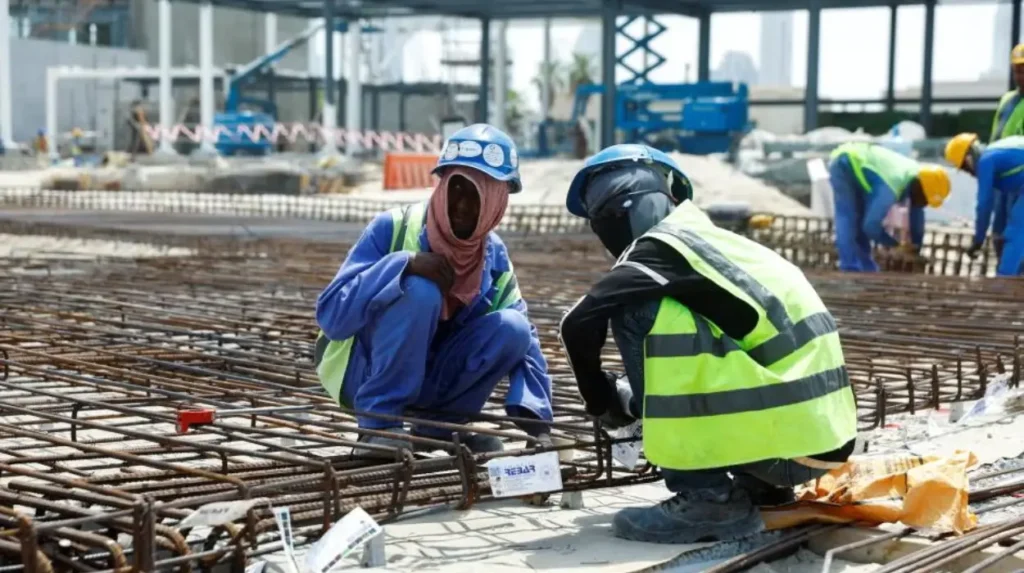
This is where the story becomes more than a rich-family wealth issue. Romanian agricultural workers are among the lowest-paid in the EU, while agricultural labour in parts of Spain has repeatedly been associated with low wages, unsafe conditions and precarious seasonal work. If public subsidies are flowing into such labour markets, the absence of transparent labour monitoring becomes a policy failure, not a minor administrative gap.
Where is the labour transparency?
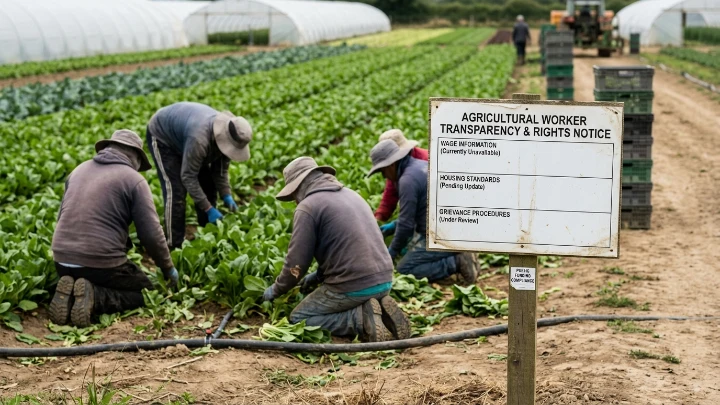
That is the central unanswered question. The investigation reported that the Al Nahyan family and the named companies declined to respond to media requests for comment. Without direct responses, there is still no public evidence showing whether workers on these farms were paid fairly, whether housing met legal standards, or whether grievance systems existed and worked.
This is not an abstract concern. Friends of the Earth Europe has argued that the CAP has historically paid farm owners
“with no penalties for abusing their workers’ rights”
and that subsidies should be linked to compliance with labour laws and collective agreements. The European Committee of the Regions has also called for stronger worker protections in agriculture, including anonymous complaint systems, better housing support and more robust oversight. Those warnings fit this case closely because the public money is clear, but the social accountability remains largely invisible.
What makes the ownership structure controversial?
The controversy is sharpened by the fact that the companies are linked to a ruling royal family and, in some cases, to the Emirati sovereign wealth fund ADQ. That means the beneficiaries are not ordinary farmers relying on marginal support; they are part of a powerful capital network with international investment reach. When public EU funds support such entities, the burden of transparency should rise, not fall.
This matters politically because the CAP is already under pressure over fairness. Critics have long argued that large landowners capture a disproportionate share of direct payments, while small farmers and farm workers remain vulnerable. The Al Nahyan-linked payments fit that pattern: very large holdings, very large payments, and very little public information about the human conditions behind them.
What does the wider evidence say?
The broader evidence on European agriculture makes the Al Nahyan case look less like an outlier and more like a symptom. Business and human rights reporting has documented underpayment, unsafe labour, poor housing and exploitation in parts of the European farm sector. That does not prove wrongdoing on every UAE-linked farm, but it does show why the absence of labour transparency is alarming rather than neutral.
It also explains why social conditionality has become such a live debate in Brussels. If the EU wants subsidy legitimacy, it cannot rely on the assumption that land payments automatically benefit workers and communities. The public has a right to ask whether these farms improved wages, safety and living conditions, or whether the subsidies simply raised returns for Abu Dhabi shareholders.
What should happen now?
The next step should be much stronger disclosure. Large CAP recipients should be required to publish labour compliance data, housing standards, subcontracting arrangements and inspection outcomes, especially where the ownership chain runs through offshore or state-linked structures. Independent complaint mechanisms should also be mandatory for farm workers in large agribusiness operations.
The Commission’s response shows the limits of the current system. Saying it has “taken note” is not the same as proving the subsidy regime is fit for purpose. If the EU wants to defend a policy that can deliver €71 million to a royal family-linked network while leaving labour conditions opaque, it must do far more than note the problem; it must inspect, publish and enforce.