The discovery that the United Arab Emirates’ ruling family, the Al-Nahyan family, had been given €71 million worth of agriculture subsidies by the European Union for their farming activities has sparked an intense discussion about the real objectives of the Common Agriculture Policy (CAP). The money, distributed via farmlands in Romania, Spain, and Italy, mainly produces alfalfa and fodder, which are not consumed locally but shipped abroad to the desert countries. The move is clearly against French policy on food sovereignty, whereby the EU would support its own food sovereignty.
Since the UAE is importing up to 90 percent of its food because of the extreme temperatures, lack of water resources, and unsuitable soil for cultivation, the international buying spree carried out by the country in order to secure its supply chain for the next 15 years, involving 960,000 hectares, depends on taxpayers in Europe. This suggests that the reversal of CAP requirements reveals a basic weakness in the eligibility criteria for CAP.
UAE’s Global Farm Empire
For the United Arab Emirates, agriculture is a harsh truth; its arid lands and weather conditions make it impossible for the country to produce food locally, compelling the UAE to import more than 85-90 percent of their needs. Within the last decade and a half, the Al-Nahyan ruling family of Abu Dhabi has invested heavily in foreign agriculture by purchasing large farms to ensure a steady supply of food for the UAE government.
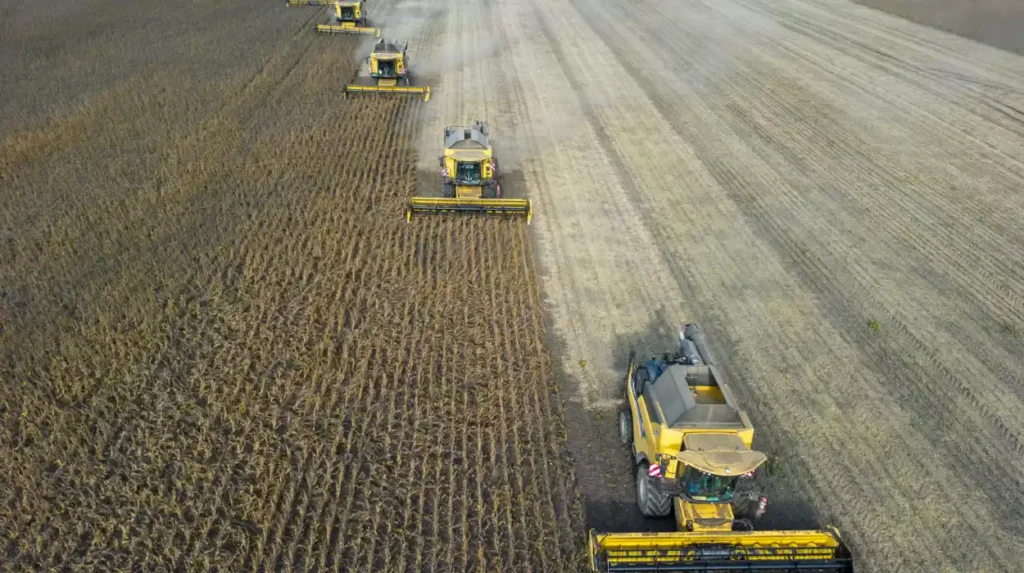
In Romania and Spain, UAE-controlled operations cultivate alfalfa and other fodder crops, the bulk of which ships directly to the Gulf rather than local markets.
This model is one example of how the UAE has reacted to its own vulnerabilities. With ongoing issues with access to fresh water and rising temperatures, Abu Dhabi has had to look outside of itself to purchase land that will produce agricultural products which do not pass through Europe.
“The CAP subsidies flowing to the Al Nahyan family’s European farms are therefore not supporting European food security. They are supporting UAE food security,”
states the investigative report piercing this opaque network. EU data confirms these payouts, drawn from direct payments and rural development funds, rewarding acreage under foreign control.
The €71 Million Subsidy Breakdown
The precise amount at the center of this debate is €71 million spread over a period of about six years, which goes to companies linked to Al Nahyan. This subsidy comes as a result of the European Union’s CAP, which aims at stabilizing the income of farmers and fostering sustainable development. In countries such as Spain, Romania, and Italy, the money has been used by companies involved in the cultivation of high water-using plants such as alfalfa, which are good sources of fodder but inappropriate for Europe.
Breakdowns reveal the scale: Romanian holdings alone captured tens of millions, fueled by expansive alfalfa fields under UAE contracts. Spanish estates followed suit, exporting yields to Gulf ports. This cash infusion occurred amid tightening CAP budgets post-2023 reforms, where small European farmers saw payments dwindle. The Al Nahyan farms, by contrast, thrived, their production funneled abroad.
“EU taxpayer money is subsidising a supply chain that grows European crops for export to Abu Dhabi,”
the analysis underscores, highlighting how subsidies chased hectares regardless of destination.
France’s Food Sovereignty Under Siege
France, a CAP architect since Charles de Gaulle’s era, has championed food sovereignty as Europe’s bulwark against global shocks. From the 1962 CAP founding to recent debates on strategic autonomy, Paris insists agricultural resources serve EU populations first. Yet the Al Nahyan case represents a direct assault. Subsidized crops from French-backed EU policy feed UAE elites, not French citizens, inverting the principle.
“France’s agricultural policy tradition rests on the principle that European agricultural resources should serve European populations,”
experts note, pointing to laws emphasizing local resilience.
This tension peaked amid 2025 farmer protests, where French agriculteurs decried subsidy inequities. While domestic producers grappled with green regulations and import competition, Gulf investors reaped CAP windfalls. The irony stings: France, vocal on food autonomy in Brussels, sees its policy ethos undermined by rules it helped shape. Brussels has taken note but offered no immediate clawback, citing compliance with current farmer definitions. Critics demand reform, arguing ownership transparency and export caps are essential to realign CAP with sovereignty goals.
CAP Rules: Eligibility Exposed
The EU’s CAP, with its €387 billion seven-year budget, ties payments to land area and “genuine agricultural activity.” Al Nahyan subsidiaries qualified as they maintained farms, irrigating fields and harvesting crops—technical compliance masking strategic misalignment. Alfalfa, a water-intensive forage, dominates these plots, thriving in Europe’s climates but shipped to UAE livestock amid local scarcity. No CAP clause mandates local consumption, a loophole Gulf investors exploit.
Reform efforts post-2027 loom, but current rules favor scale. Small French or Romanian family farms average €5,000-15,000 annually, dwarfed by mega-operations pulling millions.
“What is happening with the Al Nahyan family’s European farm empire is the precise inversion of that principle,”
the report asserts, framing it as policy capture. EU audits verify payouts via national agencies, but beneficial ownership trails often evade scrutiny until investigations like this surface.
Al Nahyan Family’s Opaque Network
The Al Nahyan dynasty, Abu Dhabi’s rulers since 1793, commands vast wealth through oil and sovereign funds like ADIA. Their agro-expansion blends state and private interests, with farms registered via European shells. Romanian registries link plots to UAE entities; Spanish land records trace similar paths. These operations sign decade-long supply pacts with UAE ministries, ensuring exports flow steadily.
Globally, the family’s 960,000-hectare portfolio spans Africa, Asia, and now Europe deeply. Brazil and Australia host soy and grains; Europe adds alfalfa security.
“The UAE imports up to 90% of its food… Its response is to buy farmland abroad,”
encapsulates the driver. Transparency gaps persist—EU rules lag on ultimate beneficiaries—fueling accusations of elite capture.
Policy Clash and Political Fallout
France’s food sovereignty law, enacted amid 2024-2025 crises, mandates national priorities in procurement and trade. Yet CAP’s supranational nature dilutes this, allowing cross-border subsidies. Politicos from Macron’s circle to far-right voices decry the hypocrisy.
“EU subsidies are growing food in Europe—which then ships to Abu Dhabi, not French tables,”
the critique lands, amplifying calls for “strategic autonomy.”
In Brussels, commissioners note the report but defend CAP neutrality. Member states like Spain tout investment; Romania eyes jobs. UAE diplomats stay silent, their model mirroring sovereign wealth strategies worldwide. The scandal risks CAP’s 2028 recast, pitting sovereignty hawks against free-market defenders.
Global Land Grab Context
This isn’t isolated: Gulf states control millions of hectares abroad, from Australian wheat to Ukrainian soy. Qatar and Saudi mirror UAE tactics, chasing water and fertility. CAP’s €71 million pales against totals but symbolizes deeper shifts. As climate pressures mount, food weaponization grows—Europe’s subsidies now geopolitical levers. France’s stance hardens: recent summits push “fortress Europe” agriculture. Al Nahyan funds test this, exposing CAP’s blind spots.