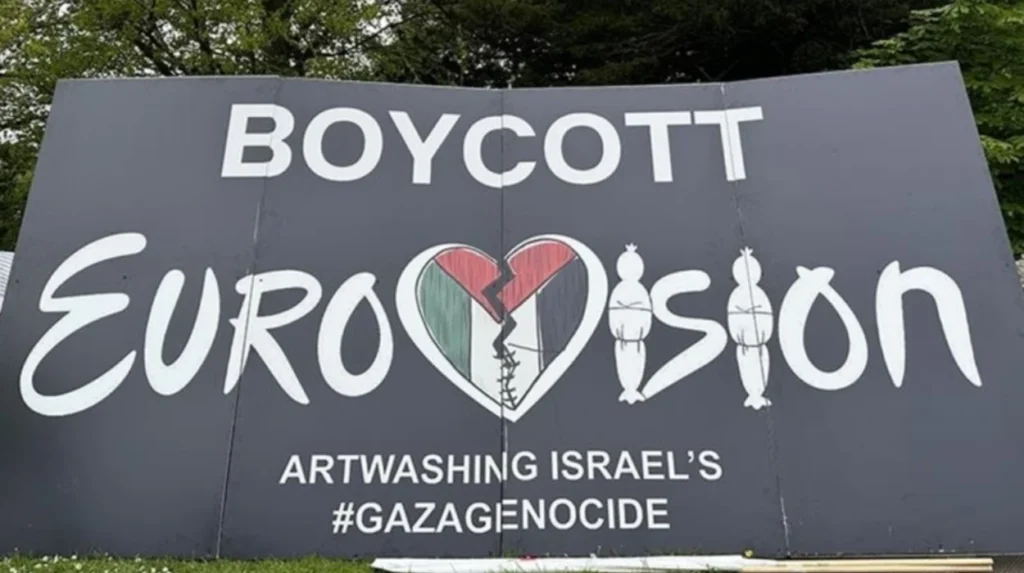
Lawmakers belonging to France’s progressive La France Insoumise (LFI) party have sparked an intense debate within French political circles by attacking the European Broadcasting Union (EBU) for allowing Israel to participate in the Eurovision Song Contest 2026. This situation is developing coincident with preparations for the contest to be held in May next year in Vienna, Austria, and demonstrates the continuing fracture of French political parties on how international cultural events are intertwined with geopolitical disagreements.
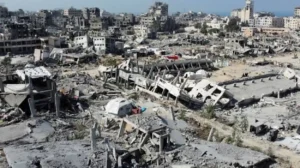
The lawmakers articulated their opposition in recently published statements, stating their view that Eurovision is not about celebrating music but is an event that will ignore the alleged atrocities committed in Gaza against the people there.
They called for states to boycott the event until Eurovision excludes Israel, arguing that it is “a contest celebrating peace while providing a red-carpet welcome to a genocidal regime.” This statement is part of the continuing effort on the part of LFI to link cultural boycotts with their critiques of the foreign policy of France, particularly with regard to Israel’s actions in Gaza.
Escalating Tensions in French Politics
Within the fractious landscape of French politics, the Eurovision controversy serves as a microcosm of LFI’s aggressive positioning on global issues. Led by figures who have long championed Palestinian causes, LFI lawmakers are leveraging the event to amplify their narrative of European hypocrisy. Their criticism draws direct parallels to the EBU’s 2022 exclusion of Russia following its invasion of Ukraine, accusing the organization of applying double standards. This is not an isolated outburst; it builds on actions by French Members of the European Parliament (MEPs), who in April 2025 co-signed a letter with 26 parliamentarians from Spain and other nations demanding Israel’s ouster. The letter cited Israel’s “genocidal actions” and described it as an “apartheid regime,” urging the EBU to enforce consistent rules on participants involved in conflicts.
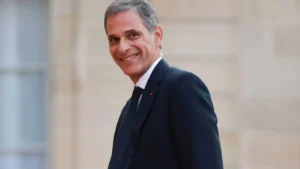
The timing of these statements, just days before the May 8, 2026, current date, intensifies their political impact. As France navigates domestic challenges under President Emmanuel Macron’s administration, LFI’s intervention positions the party as a vocal opposition force on the international stage. French Foreign Minister Jean-Noël Barrot, however, has struck a contrasting tone, praising the EBU for resisting boycott pressures and upholding the contest’s apolitical ethos. This official endorsement from the government reveals a stark intra-French divide, where LFI’s radicalism clashes with the more pragmatic diplomacy of the executive branch. France Télévisions, the national broadcaster, has confirmed its participation, even claiming credit for helping thwart a broader EBU boycott vote in December 2025. Such positions expose the complexities of French political affairs, where cultural events become battlegrounds for ideological warfare.
Historical Context of Eurovision Controversies
Eurovision has long been a flashpoint for geopolitical tensions, and Israel’s involvement has fueled annual debates since its 2025 contestant Yuval Raphael secured second place amid widespread protests. The 2026 edition, hosted in Austria, amplifies these stakes with five countries—Ireland, Spain, Netherlands, Slovenia, and Iceland—having already withdrawn in protest over Israel’s inclusion. These boycotts echo earlier calls from over 1,100 global artists who urged a cultural embargo, citing the Gaza conflict as morally incompatible with the contest’s spirit. In France, this mirrors patterns seen in prior years, such as 2024 when European politicians, including French voices, demanded Israel’s disqualification.
Yet, the EBU’s response has remained firm, rejecting a secret ballot on exclusion and insisting on rules-based participation for all active broadcasters. This decision, announced in early 2026, prompted backlash from MEPs who argued it undermined the organization’s credibility. French lawmakers’ recent slamming of Eurovision fits into this timeline, positioning LFI as leaders in a European-wide pushback. The contest’s massive viewership—166 million for the 2025 final—only heightens the stakes, turning musical performances into symbols of broader diplomatic failures. For French politics, this episode tests the limits of cultural diplomacy, as LFI seeks to rally progressive allies across Europe while the government defends multilateral engagement.
Government Stance and Internal Divisions
France’s official support for Israel’s participation starkly contrasts with LFI’s boycott calls, revealing fault lines in the nation’s political fabric. In December 2025, French representatives played a pivotal role in preventing an EBU-wide boycott, a move hailed by Foreign Minister Barrot as a victory for principled neutrality.
“We helped prevent a boycott of Israel from Eurovision 2026,”
French officials stated, emphasizing the broadcaster’s commitment to the event. This pro-participation line aligns with Macron’s centrist administration, which prioritizes EU unity and avoids alienating key allies like Israel.
LFI’s opposition, however, taps into a growing leftist constituency critical of what they see as Western complicity in Middle Eastern conflicts. By slamming Eurovision, the lawmakers are not merely critiquing a song contest but challenging France’s foreign policy orientation. This internal schism extends to public broadcasters and cultural figures, some of whom have quietly supported the government’s stance amid boycott pressures from Spain and Ireland. As Eurovision 2026 approaches, these divisions could influence French electoral dynamics, with LFI using the issue to mobilize voters disillusioned with mainstream politics. The lawmakers’ bold language—equating participation with endorsement of genocide—forces a reckoning on how cultural platforms intersect with statecraft.
Broader European and Global Repercussions
The French lawmakers’ criticism resonates beyond national borders, fueling a trans-European movement against Israel’s Eurovision entry. Countries like Spain, whose public broadcaster RTVE has reiterated boycott intentions, and Ireland, leading withdrawals, amplify LFI’s voice. Entertainment figures have countered with open letters rejecting exclusion calls, adding now over additional signatories by April 2026. Yet, the EBU’s address to MEPs in 2025 dismissed demands for a ban, prioritizing broadcaster membership over political pressures.
In French political affairs, this saga underscores LFI’s strategy of cultural activism, akin to BDS campaigns but tailored to high-profile events. With Eurovision’s viewership dwarfing many diplomatic summits, the stakes for France’s image are immense. Lawmakers’ statements risk isolating France from progressive networks while bolstering their domestic base. Meanwhile, Israel’s strong 2025 performance has emboldened its supporters, framing boycotts as antisemitic overreactions. As Vienna prepares to host, French politics remains at a crossroads, balancing cultural expression against moral imperatives.
Implications for French Left-Wing Politics
LFI’s Eurovision offensive highlights the party’s evolution into a potent critic of international norms, using platforms like this to critique perceived hypocrisies. Their call for states to boycott until exclusion positions France at the vanguard of anti-Israel sentiment in Europe. This move, however, invites backlash from centrists who view it as performative outrage amid pressing domestic issues like economic reform.
The controversy also tests alliances within the French left, where cultural boycotts could unify or fracture coalitions. With five nations already out, LFI’s stance gains traction but risks marginalization if the EBU holds firm. French lawmakers’ framing of Eurovision as a “red carpet for genocide” elevates the discourse, forcing even supporters to confront ethical dilemmas. As the contest nears, this episode will likely shape LFI’s 2027 electoral narrative, embedding foreign policy into cultural critique.
Cultural Boycotts in Modern Diplomacy
Eurovision’s politicization reflects a trend where music festivals serve as proxies for diplomacy. French lawmakers’ intervention exemplifies how LFI weaponizes such events to challenge Macron’s pro-EU stance. The EBU’s 166 million viewers in 2025 provide unparalleled reach, making LFI’s slamming a calculated media play.
Government defenses, including Barrot’s praise, prioritize institutional stability. Yet, with artists and politicians clashing, France faces a cultural cold war. LFI’s persistence signals a long-term strategy to reshape French foreign policy discourse.