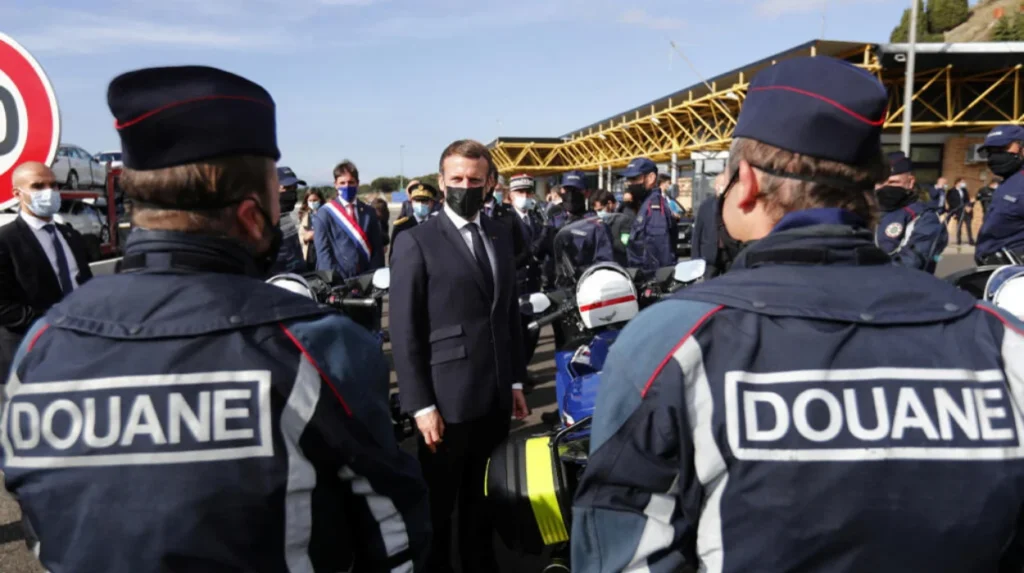
France’s frontier cities along the Mediterranean from Marseille to Nice and Toulon have increasingly become pivotal nodes in the evolving security architecture of Europe’s southern flank. These urban centres sit astride vital maritime routes and human‑mobility corridors linking North Africa, the Levant, and southern Europe. For policymakers in Paris, these cities are not merely local centres of economic activity, but functional hubs where migration management, coastal defence, and regional cooperation intersect.
This integration of local infrastructure into broader security frameworks has been reflected in the strengthening of EU border‑management operations in the Mediterranean. In 2025, the European Border and Coast Guard Agency (Frontex) recorded that irregular entries into the EU’s external borders overall had declined, but movements via the Mediterranean remained active even as returns and deterrence strategies were enforced under new EU Pact provisions. The Mediterranean’s continued prominence as an irregular‑migration route underscores the operational focus on maritime security in and around French coastal cities.
The Strategic Positioning Of Marseille
Marseille, France’s largest port and second‑largest city, has emerged as a central element in this maritime security order. Its extensive commercial facilities double as logistics and coordination centres for maritime operations involving customs, coastal patrols, and surveillance systems. Authorities in Paris have placed greater emphasis on leveraging Marseille in cooperative efforts with Spain and Italy to disrupt smuggling networks and manage irregular departures from North African coasts. The port’s increasing involvement in security programming reflects a shift toward operationalising local infrastructure for national and European border‑management priorities in an era where seaborne migration remains stubbornly persistent.
Local governance officials in Marseille also express concern about this expanded security role, warning that blending port management, migration oversight, and intelligence functions may overload municipal services. The increasing engagement of local authorities in broader security roles illustrates the changing nature of how maritime risk is governed, turning cities like Marseille into indispensable nodes in regional security planning rather than peripheral outposts.
Toulon’s Military‑Civil Interface
Toulon, home to France’s principal Mediterranean naval base, underpins the purely military dimension of this regional security order. The city hosts key elements of France’s naval capabilities, including aircraft carriers, attack submarines, and amphibious fleets capable of power projection throughout the Mediterranean, North Africa, and the Middle East. In 2025 and into 2026, assets stationed at Toulon have supported operations across the eastern and central Mediterranean, reinforcing France’s maritime posture not just as a regional security guarantor but also as a contributor to broader NATO and EU strategic priorities.
This heightened military presence has generated dialogue between defence planners and local civic authorities about environmental impacts, economic implications, and the growing integration of naval activity into the life of the city. While national defence planners argue that naval investment bolsters regional resilience and employment, local stakeholders remain attentive to the implications of sustained military engagement on everyday urban life.
Nice And The Diplomacy‑Security Nexus
Nice offers a contrasting but complementary perspective on France’s frontier cities: one where tourism, international diplomacy, and security diplomacy converge. The city has long played host to summits and diplomatic dialogues involving Europe and Mediterranean partners. In 2025, Nice served as a platform for coordination on issues ranging from security cooperation to migration management, with officials from multiple EU states engaging on operational and strategic issues.
The city’s coastal proximity and connectivity also make it an ideal staging area for rapid‑response exercises, often conducted in coordination with neighbouring Italy, to secure critical infrastructure and reinforce preparedness against emerging hybrid threats. Municipal authorities in Nice have acknowledged the strategic advantages of these activities, but they also raise concerns about the potential long‑term implications of securitised landscapes for civil liberties and urban life.
Regional Councils And The Compression Of Security Decisions
France’s regional and departmental councils along the Mediterranean coast have begun to assert their roles in shaping security decisions that have traditionally been perceived as centrally driven. In 2025, regional authorities in Provence-Alpes‑Côte d’Azur and Bouches‑du‑Rhône engaged in hearings and consultations regarding the deployment of security and border‑management assets in their territories, articulating concerns about the burden and benefits of hosting this mix of military, paramilitary, and migratory infrastructure.
Local leaders highlighted how security policy implementation interacts with local economies, social cohesion, and perceptions of community identity. In response, ministries in Paris initiated periodic coordination meetings with regional councils and port authorities, creating semi‑institutionalised channels for negotiation and information‑sharing. This development reflects a broader recognition that effective Mediterranean security management requires integrating local perspectives into national and EU strategic frameworks.
Managing The Local Costs And Benefits
Bringing regional actors into security planning provides nuanced insights into on‑the‑ground dynamics. For example, local emergency services are increasingly involved in search and rescue operations tied to migration flows, while municipal policing agencies coordinate with national and EU border units in intelligence‑sharing and operational support. The result is a more distributed model of governance in which frontier cities help mediate the implementation of policies shaped in capitals and at EU bureaucratic centres.
Implications For The Mediterranean Security Order
The growing prominence of France’s frontier cities in shaping the Mediterranean security order suggests a transformation in how maritime and migratory challenges are governed. Rather than operating strictly within abstract strategic doctrines emanating from national capitals, security frameworks are becoming embedded in the lived experiences and administrative practices of port cities and their hinterlands.
This dynamic produces a two‑tiered governance environment in which national and European priorities intersect with local agendas. It enhances resilience by rooting security practices in regional infrastructure and social systems, but it also introduces complexities when regional priorities diverge from national policy objectives.
Such an approach may ultimately produce a more adaptive and territorially responsive security architecture, where operational decisions reflect both strategic imperatives and local conditions. At the same time, it raises questions about coherence and unity of purpose, particularly when regional voices assert distinct priorities from national or EU directives.
As France’s frontier cities continue to negotiate their roles within this evolving security landscape, the Mediterranean region may increasingly be defined not only by high‑level diplomatic agreements and EU‑wide strategies but also by the everyday practices, political negotiations, and civic interactions that occur in places like Marseille, Toulon, and Nice, a testament to how the local and the global can intertwine in shaping regional security orders.