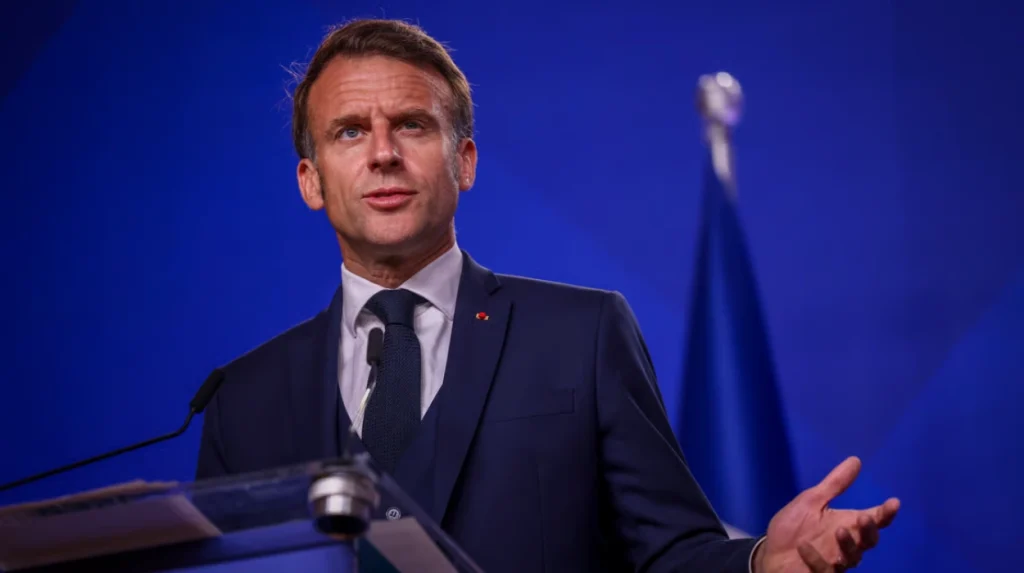
The diplomatic intervention known as Macron‘s UN Gambit emerged in direct response to the strikes conducted by the United States and Israel against Iranian nuclear and missile infrastructure. The strikes marked a sharp escalation in an already volatile regional environment shaped by stalled negotiations and rising military posturing throughout 2025. By calling for an urgent emergency session of the United Nations Security Council, French leadership signaled an intent to re-anchor the crisis within multilateral institutions.
The strikes themselves followed months of tension linked to uranium enrichment concerns and breakdowns in prior diplomatic rounds. The escalation unfolded as Tehran launched retaliatory missile operations, further widening the conflict’s geographic footprint across the Middle East. Macron’s response positioned France as a central convener rather than a peripheral observer.
Military Action and Regional Shockwaves
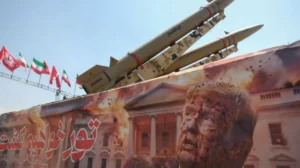
The coordinated strikes by the United States and Israel targeted facilities associated with Iran’s nuclear and ballistic programs. The operational scale intensified fears of a broader confrontation, particularly given the proximity of critical energy routes.
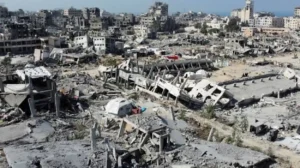
Regional capitals, including Gulf states, monitored developments closely as airspace disruptions and missile exchanges underscored the immediacy of the crisis. The visibility of smoke and cross-border activity reinforced concerns that the conflict could expand beyond bilateral dimensions.
Iran’s Retaliatory Calculus
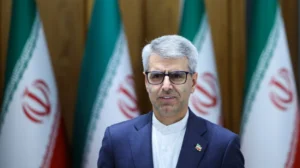
The response from Iran involved missile launches aimed at strategic military targets, reinforcing Tehran’s longstanding doctrine of deterrence through calibrated retaliation. Statements from Iranian leadership framed the strikes as violations of sovereignty, reinforcing domestic narratives of resistance.
This escalation cycle complicated efforts to isolate nuclear issues from broader security disputes. It also increased pressure on diplomatic actors seeking to prevent further regional destabilization.
France’s Diplomatic Positioning at the United Nations
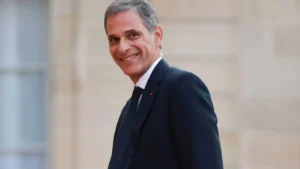
Macron’s initiative reflects a longstanding French preference for structured multilateral engagement, particularly through the United Nations Security Council. By requesting an emergency session, Paris aimed to shift the crisis from battlefield dynamics to institutional debate.
The move was notable for its inclusion of diverse co-sponsors spanning geopolitical blocs. Engagement with Russia, China, Bahrain, and Colombia broadened the diplomatic framing beyond traditional Western alignment.
De-escalation as Immediate Objective
Macron emphasized that escalation must stop, framing restraint as essential for regional stability. His language underscored that continued hostilities risked broader economic disruption, especially through potential impacts on maritime trade corridors.
The Strait of Hormuz remains a strategic chokepoint for global energy flows, and any closure or sustained insecurity could reverberate through European markets. France’s call therefore aligns with its broader energy security priorities shaped by volatility since 2025.
Regime Accountability Messaging
While advocating de-escalation, Macron’s framing also referenced expectations that Tehran engage in renewed negotiations addressing nuclear and ballistic missile concerns. This dual approach reflects a careful balance between immediate ceasefire advocacy and longer-term structural objectives.
By urging Iran toward “good-faith negotiations,” the message places responsibility on diplomatic re-engagement while avoiding explicit endorsement of regime transformation. The rhetorical structure preserves room for dialogue even amid heightened tensions.
Historical Diplomatic Foundations and 2025 Precedents
France’s current posture builds on mediation efforts conducted during stalled nuclear negotiations in 2025. Those discussions centered on enrichment thresholds, sanctions sequencing, and verification mechanisms, but failed to produce durable breakthroughs.
The collapse of prior talks highlighted unresolved disagreements over ballistic missile capabilities and institutional trust deficits. Those gaps continue to shape the environment into which Macron’s latest initiative intervenes.
Lessons from Vienna Negotiations
The Vienna-based framework in 2025 underscored the limits of incremental diplomacy when core security demands remain incompatible. France’s prior proposals often emphasized phased commitments linked to verifiable compliance.
These approaches inform the current push for renewed international oversight under UN auspices. The objective is to rebuild confidence through multilateral monitoring rather than bilateral pressure alone.
Proxy Conflict Dynamics
Regional proxy confrontations in 2025, particularly involving networks aligned with Tehran, contributed to heightened distrust among stakeholders. France’s consultations with Gulf leaders reflect awareness that nuclear diplomacy cannot be isolated from broader security ecosystems.
By engaging partners in Bahrain, Saudi Arabia, the United Arab Emirates, Jordan, and Kurdish authorities, Paris seeks to contain spillover risks. This networked diplomacy supports the broader containment strategy embedded within the UN initiative.
Balancing De-escalation and Strategic Pressure
Macron’s maneuver illustrates a complex balance between immediate ceasefire advocacy and longer-term structural concerns regarding Iran’s nuclear trajectory. The diplomatic language signals urgency while leaving space for accountability measures.
France’s position differs from Washington’s more assertive posture under President Donald Trump, whose administration has combined military signaling with calls for regime accountability. This divergence highlights transatlantic differences in sequencing pressure and negotiation.
European Strategic Autonomy Considerations
The crisis tests Europe’s ability to shape regional outcomes independently within the constraints of alliance politics. By taking initiative at the UN, France reinforces its long-standing ambition to function as a diplomatic bridge between competing blocs.
Such positioning strengthens Europe’s institutional relevance while avoiding direct military involvement. It also aligns with Paris’s preference for multilateral resolution mechanisms.
Risks of Escalation or Fragmentation
If the Security Council fails to produce consensus, diplomatic fragmentation could deepen. Veto dynamics may limit enforceable outcomes, leaving only symbolic resolutions.
However, even symbolic consensus can signal shared concern, potentially shaping negotiation incentives in subsequent technical discussions. The institutional forum provides a structured arena for recalibration.
Broader Geopolitical Implications
Macron’s initiative arrives at a moment when global governance structures face strain from competing unilateral actions. The convergence of military escalation and diplomatic outreach underscores the complexity of crisis management in a multipolar environment.
Support from Russia and China in convening the session suggests limited alignment on preventing further instability, even amid broader geopolitical rivalries. Their participation reinforces the legitimacy of multilateral engagement.
Energy Security and Global Markets
The Middle East crisis carries implications for oil markets, maritime insurance costs, and global supply chains. European economies remain sensitive to disruptions following previous energy shocks in 2025.
France’s engagement at the UN therefore intersects with economic risk mitigation. Stabilizing the region is not solely a security objective but also an economic imperative.
Institutional Resilience and Future Negotiations
If diplomacy regains traction, the Security Council framework could support phased confidence-building measures, including enhanced monitoring mechanisms. Such outcomes would require alignment between nuclear oversight bodies and regional stakeholders.
The durability of any agreement will depend on whether military escalation recedes sufficiently to allow technical talks to resume. The institutional pathway remains open, though narrow.
As the Security Council convenes under urgent conditions, Macron’s initiative raises a central question about the evolving balance between force and forum. Whether this gambit can translate emergency diplomacy into sustained negotiation will determine if de-escalation becomes a bridge toward structured restraint, or merely a pause within a cycle that continues to test the limits of international consensus.