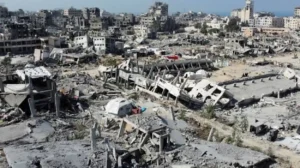
The Gaza Aid Surge in France became the headline of the news again when Paris announced that it had already delivered 80 tons of food aid to the enclave and that several more tons of food aid were awaiting delivery. The shipment is a physical manifestation of an extended posture of humanitarianism in France several months after the October 2025 ceasefire between Israel and Hamas.
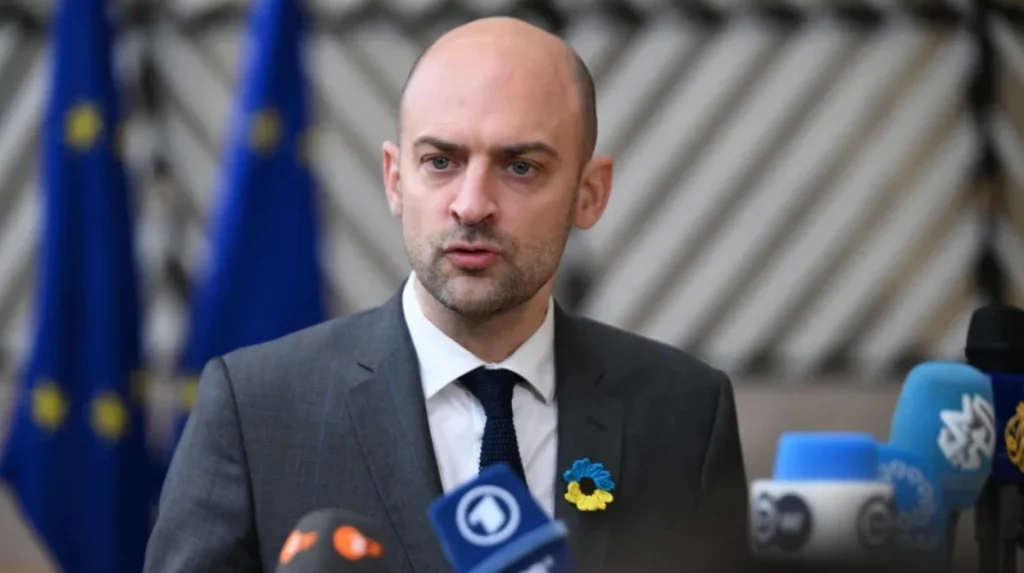
French Foreign Minister Jean-Noel Barrot said that the humanitarian condition in Gaza is still in a critical situation and aid should reach the civilians without hesitation. His comments marked the continuity in French policy since late 2023 when Paris started increasing its logistical and financial assistance on a multilateral basis.
The existing tranche is on top of over one thousand tons of French aid that has been coming in since the war escalated. A large portion of that assistance has been channeled by the World Food Programme and other partnering NGOs as a way to choose institutional delivery mechanisms over bilateral deliveries.
Logistics and delivery channels
The recent convoy had to be co-ordinated with the Egyptian transit agencies and UN agencies working within Gaza. Although there is a ceasefire the inspection processes and security screening remain as a determinant of the rate of delivery.
French authorities have reported that supply lines were loaded prior to the smoother access to post-truce. Scalability of shipments within a short period of time reflects the preparedness of the logistics, yet long-term access is determined by the Israeli clearance procedures.
Targeted humanitarian focus
France has also focused on high impact food products such as nutritional supplements that deal with child malnutrition. As noted by humanitarian monitors towards the end of the year 2025, there was an indication of increasing food insecurity in Gaza, especially among the displaced people.
Paris is also trying to produce humanitarian visibility by congruency of shipments to nutritional standards defined by UN agencies, which is reinforcing to international standards.
Ceasefire durability under strain
The October 2025 ceasefire minimized the mass of hostilities even though it did not automatically bring about the normalization of humanitarian flows. Crossings of the borders are still subject to the layered regime of inspection as explained by Israel as a security measure.
There have been reports of continuous delays as early as early 2026, up to weeks. These bottlenecks put the sustainability of the operation of the truce and the diplomatic purport of those who guaranteed it to the test.
Legal and diplomatic frameworks
Later in 2025, the United Nations Security Council passed Resolution 2803, which urged a free humanitarian access. Although the resolution provided a normative standard, mechanisms to enforce them are weak.
This structure is closely alluded to in the public messages of France. As it focuses on unhindered civilian assistance, Paris in effect places its operations on the framework of international law rather than the inter-state political concession game.
Monitoring and verification dynamics
France also actively facilitated the ceasefire talks in 2025 by playing a supportive diplomatic role based on its position in the European Union to propose a monitoring apparatus. The aid rush has become a feasible experiment of whether those diplomatic endeavors can be translated into ground-level application.
The expedited shipments which are not accompanied by lengthy delays would instill a trust in the stabilization phase of the ceasefire. Continued tension, however, threatens to undermine the trust of the international stakeholders.
Diplomatic signaling toward Israel
The Gaza Aid Surge by France is diplomatic in its undertones which outweigh the humanitarian calculus. President Emmanuel Macron has tried to find a middle ground between appreciating the security issues of Israel and speaking loudly about protecting the civilians.
In making its shipments larger at a time where access issues are being especially front and center, Paris sends a measured message. The message does not directly confront but highlights that post-truce normalization should be done including viable humanitarian corridors.
Bilateral strains in recent years
In 2025, relations between Paris and Jerusalem were strained because of the settlement expansion argument and civilian protection. In previous diplomatic wrangles between France and Israel, the Israeli representatives were summoned by the French authorities, which is symptomatic of policy lack of congruency.
Those sensitivities are rekindled by the present aid push albeit in more subtle ways. Humanitarian involvement would provide an avenue through which France will be in a position to articulate expectations without overheating rhetoric.
European positioning
France has assumed a relatively aggressive humanitarian profile in the European Union. Cautious diplomacy has been the focus of some of the member states, but Paris has been focused on visible help and open advocacy.
This position improves the position of France in the partners of the Global south who regard humanitarian access as a primary challenge to Western credibility. It also makes Paris a negotiator who can strike a balance between security talks and humanitarian demands.
Multilateral coordination and regional interplay
The operations of France depend a lot on the collaboration with Egypt and UN agencies. Cairo is one of the key transit points of aid to Gaza, and its mediation with European donors has been escalating since 2025.
Franciscan funds have been given credit by the World Food Programme to sustain distribution pipelines in times of limited accessibility. The actors in the private sector, such as shipping and logistics companies, have provided an addition to the state capacity to increase transport speed.
United States policy environment
As early as 2025, the US regional priorities have focused on the security stabilization structures. Such an environment has enabled European players to enjoy more visibility in humanitarian diplomacy.
The active involvement of France does not oppose US interests but indirectly strengthens the impact of the Europeans in the crisis organization. Paris would be reaffirming its position as a self-reliant and yet an allied stakeholder by taking decisive action.
Arab state engagement
France has also strengthened consultation with the Arab governments that fear humanitarian backlash. The facilitation experience of Egypt presents the convergence of regional diplomacy and aid logistics.
This kind of involvement reinforces the role of France in the diplomatic footprint outside of Europe which makes it a bridging entity between the Western institutions and the Middle East allies.
Measuring humanitarian and political impact
Whereas 80 tons of food aid is operationally important it is only a quarter of the estimated food requirement in Gaza. Assessment of the UN in 2025 revealed that almost the whole population needed some humanitarian aid.
The Gaza Aid Surge of France is thus symbolically heavy and it might have a greater contribution than its actual contribution. Every delivery turns out to be relief goods and diplomatic messages.
Humanitarian benchmarks
The prevention of malnutrition is one of the objectives. By 2025, French investment helped programs to provide tens of thousands of children with nutritional programs to address the risks of famine reported by humanitarian monitors.
The continued access will be the determinant of the interventions being translated to sustainable improvement. Disruptions might take down the gains in a highly populated and resource-intensive environment within a short period.
Political leverage through aid
Humanitarian deliveries have political overtones by nature in conflict-ridden environments. France raises the price of obstruction to any party who is seen to be hindering relief by scaling up the help given during a weak ceasefire.
Such a dynamic turns aid into an instrument of influence of a subtle kind. Its presence relies on observability, openness, and readiness of other international players to enhance the same expectations.
France’s Gaza Aid Surge thus operates at the intersection of relief and diplomacy. The shipments test not only logistical capacity but also the resilience of post-ceasefire arrangements. As additional consignments await clearance, the trajectory of their passage will reveal whether humanitarian access can solidify fragile calm or whether persistent friction will redefine the next phase of engagement between Paris, Jerusalem, and the broader international community.