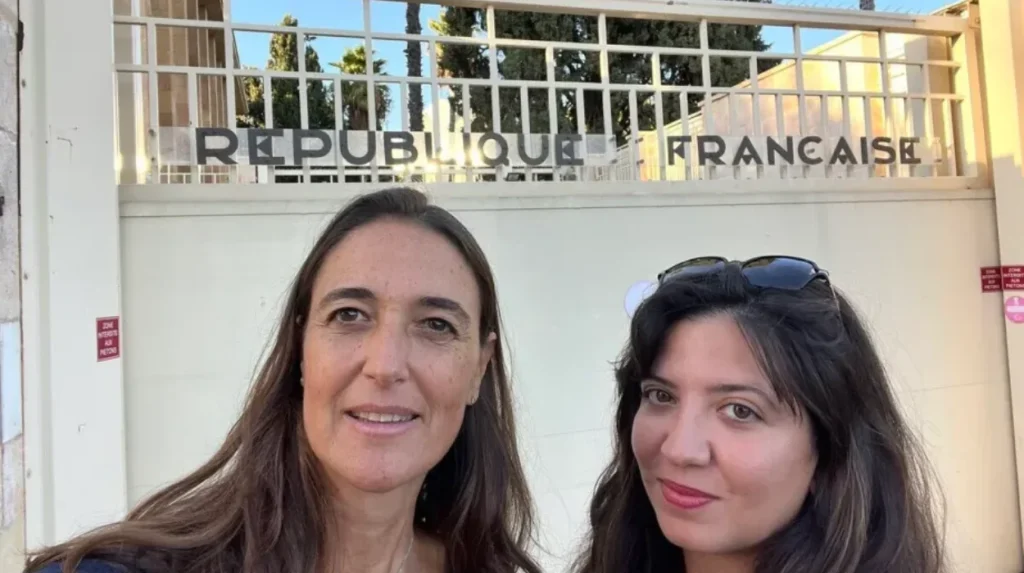
The two French-Israeli women have arrest warrants issued against them by France for incitement and complicity in genocide as a result of their role in preventing humanitarian aid from reaching Gaza, which is experiencing one of the worst famine crises in the 21st century. This is one of the most severe legal measures that a European country has taken against its dual nationals in relation to Israeli actions in Gaza.
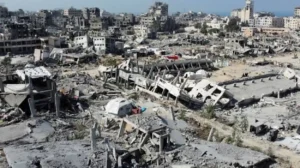
As reported by Le Monde, the warrants were issued during the summer as a result of a wider judicial investigation into French nationals who took part in activities that disrupted the provision of humanitarian aid to Palestinians. The suspects are believed to have been actively involved in activities that led to the worsening of famine in Gaza, where UN agencies have reported that starvation has been used as a weapon of war.
The women who have been issued with the warrants are Nili Kupfer-Naouri, leader of the group Israel Is Forever, and Rachel Touitou, an activist with Tzav 9, which has already been recognized by international actors for its violent disruption of humanitarian aid.
Legal Basis: Universal Jurisdiction and Genocide Convention Obligations
The French prosecutors are operating within the established legal system of France, which permits the courts to investigate crimes involving humanity, war crimes, and genocide, even if the crime occurred outside the country’s borders, as long as there is a sufficient link to French nationality.
France is a state party to the Genocide Convention of 1948, which requires that states not only refrain from the act of genocide but also prevent and punish its incitement and complicity. Legal scholars have pointed out that the obstruction of humanitarian relief in the context of an engineered famine could constitute the crime of genocide in respect of Article II(c) of the Convention, which encompasses
“deliberately inflicting conditions of life calculated to bring about physical destruction.”
In pursuing criminal charges, France is bringing its internal enforcement into line with its international legal obligations, something which many Western countries have thus far failed to do in respect of Gaza.
Obstructing Aid Amid Famine Conditions
The warrants stem from actions linked to Tzav 9, a group that repeatedly blocked aid convoys traveling from Jordan toward Gaza, often through the occupied West Bank. According to human rights documentation:
- Aid trucks were vandalized and looted
- Food and medical supplies were dumped onto roads
- Roadblocks sometimes escalated into physical violence
On 13 May 2024, members of Tzav 9 allegedly looted and torched two humanitarian trucks carrying aid for the civilian population in Gaza, as reported near Hebron.
At the time, the UN Office for the Coordination of Humanitarian Affairs (OCHA) reported that only
“less than 20 percent of the needed humanitarian aid was reaching Gaza,”
while the IPC declared that Gaza was facing a catastrophic famine level of Phase 5.
International Recognition of Extremist Activity
The judicial move by the French government follows the rising international condemnation of Tzav 9. In June 2024, the US Department of State labeled the group a violent extremist Israeli organization, citing that it had:
“Blocked, harassed, and damaged convoys carrying lifesaving humanitarian assistance to Palestinian civilians in Gaza.”
The European Union later imposed sanctions on the group in response to its responsibility for “serious human rights abuses” and its contribution to the humanitarian crisis in Gaza. The EU stated that such activities
“directly affected the application of international humanitarian law, which provides for the free flow of humanitarian relief to civilians.”
Meta also removed Facebook and Instagram accounts associated with Tzav 9 after determining that the social media platforms were being used to facilitate violent disruptions of humanitarian convoys.
France’s Broader Policy Shift on Israel and Gaza
The arrest warrants do not stand in isolation. They reflect a notable hardening of France’s posture toward Israel since late 2024, driven by mounting evidence of mass civilian harm in Gaza.
French government actions and positions have included:
- Repeated official condemnations of Israel’s aid restrictions as “unacceptable” and “contrary to international law”
- Support for UN resolutions demanding an immediate ceasefire and unrestricted humanitarian access
- Public acknowledgment by French officials that Israel may be violating the Genocide Convention
- Tightened scrutiny of French arms exports and military cooperation linked to Israel
- Increased backing for accountability mechanisms at the International Court of Justice (ICJ) and International Criminal Court (ICC)
France has also supported EU-level discussions on sanctions against individuals and entities involved in settler violence and obstruction of humanitarian aid, signaling a readiness to move beyond rhetorical condemnation.
Civil Society Pressure and Victims’ Voices
The warrants were issued in response to complaints filed by French-Palestinian citizens and human rights groups, including the Union Juive Française pour la Paix (UJFP). The UJFP explained that
“collaboration in genocide is not an abstract concept. It involves very concrete and specific actions.”
One of the complainants welcomed the move, saying that
“finally, the French justice system is taking action,”
because Kupfer-Naouri had been making public statements that could be interpreted as inciting crimes against humanity for many years.
Pushback From the Accused — and What It Reveals
Touitou has criticized the French judiciary for being biased and giving priority to pro-Palestinian complaints. However, legal analysts point out that such arguments do not tackle the root problem, which is whether obstructing humanitarian aid in famine situations is a criminal offense under international law. Courts are not required to judge political beliefs but activities, which have already been labeled violent, extremist, and dangerous to civilians by international organizations.
A Precedent With Wider Implications
The arrest warrants issued by France could set a strong precedent for other European countries that have a large number of dual nationals taking part in Israel’s war efforts or extremist activities. By making a strong statement and taking decisive action, the French government is going against the long-standing culture of impunity that has been associated with crimes related to Israel.
In a situation where the death toll in Gaza has already surpassed 40,000, with most of these women and children, and where UN agencies have indicated that there is an irreversible breakdown of society, the move by France indicates that there is a growing awareness that accountability cannot be confined to borders or political affiliations.
By taking this stand, the French government is making it clear that it is not only a critic of Israel’s actions but also a country that is committed to turning international law into tangible consequences.