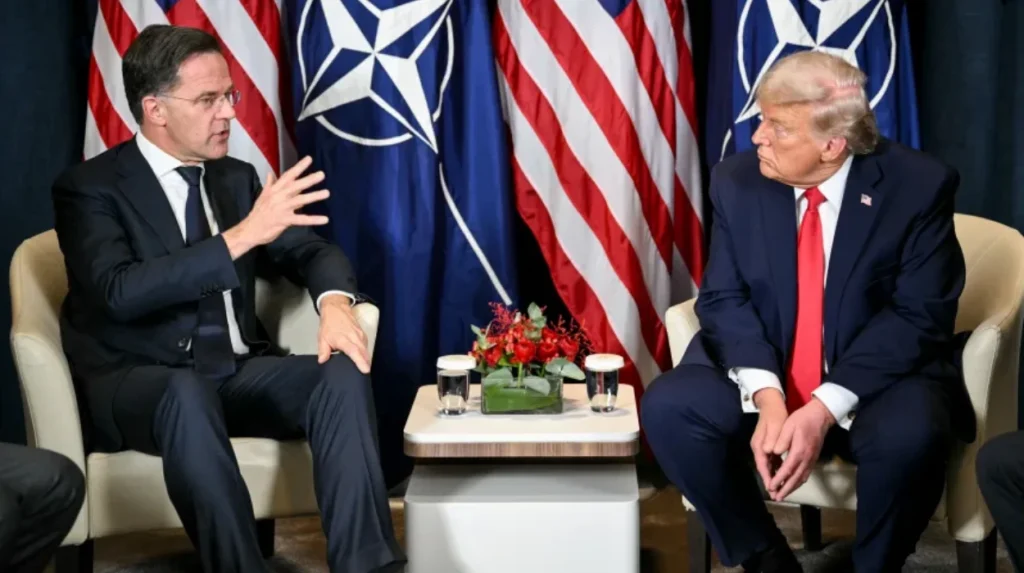
President Trump’s recent statement regarding how the United States’ NATO allies had been “off the front lines” in the war in Afghanistan actually overlooked the fact that this statement both misrepresented the situation and failed to account for the complicated process by which the alliances contributed to the war in Afghanistan. One of the more interesting stories in this situation would actually revolve around how the French had fought in Afghanistan – or only when they had the chance to do so on a schedule of their choosing.
France’s Early Solidarity — But Not a Real Commitment
After the 9/11 terror attacks, the French government was the first to raise its voice in support of the USA. A newspaper headline in the French press read “We are all Americans,” and the then French President Jacques Chirac met the then US President Bush within a week of the terror attacks. In a press briefing, the then French President pointed out that
“France’s action was not a declaration against the people of Afghanistan but was against the people who had attacked the US.”
Nevertheless, French military priorities were elsewhere. After NATO’s pledge of support, French strategic choice was dealing with a central dilemma that revolved around how to show solidarity instead of making it a central French commitment in Afghanistan.
A Fluctuating Military Presence: From Limited Engagement to Full Commitment — Then Withdrawal
France’s Afghanistan strategy changed dramatically over time. It was limited until 2008, expanded between 2008–2012, and then dramatically reduced after 2012. The key driver behind these shifts was not military necessity, but political calculation.
- Before 2008: France maintained only limited presence, focusing instead on Kosovo, Lebanon, and African operations.
- 2008–2012: France increased its commitment, taking control of the strategic Kapisa and Surobi districts, located near Kabul and the critical Salang highway.
- After 2012: President François Hollande withdrew combat troops, declaring victory and aligning with public opinion.
This pattern reveals a critical truth: France’s Afghan mission was never treated as a long-term strategic priority.
Strategic Gains Over Shared Burden: France’s Afghanistan Deployment Was Politically Driven
The decision to step in more in France under President Nicolas Sarkozy was primarily motivated by only a single factor – improvement in its relationship with USA. France agreed to assume charge in Kapisa and Surobi, crucial areas close to Kabul and Salang Highway.
The French approach, however, was unusual in that it differed considerably from those followed by other NATO members. The French did not join in the Provincial Reconstruction Teams; hence, while American forces took custody of reconstruction efforts, French forces handled security operations. The French, in other words, had chosen combat without political entanglement.
This reveals the underside of the “front-line” debate waged in NATO, namely that France was prepared to fight, provided that circumstances allowed it to avoid political risks.
French Troops Did Fight — But With Strict Limits
French soldiers faced intense combat in Afghanistan, and the war had real costs:
- 2008 Uzbeen Valley ambush: 10 French soldiers were killed and 21 wounded — the deadliest loss for France since the 1983 Beirut bombing.
- French troops in Kapisa and Surobi operated under strict rules of engagement designed to minimize casualties, including orders to avoid combat in the dangerous “green zone.”
This shows that France did engage directly in combat — but its rules of engagement were deliberately limited to avoid casualties, a policy aligned with domestic politics rather than military strategy.
The Human Cost and the Political Choice to Withdraw
The experiences of French soldiers serve as an important case history to understand this transformation of political decisions into war realities. Captain Jean Michelin’s memoir Jonquille outlines this dilemma between military obligations and political considerations. After Hollande’s election, they knew it was all over and force protection was their concern:
Once again, the case of Michelin underscores the key aspect: France’s departure wasn’t based on military necessity. It illustrates how political it was by transmitting the signal to the other NATO states, especially to the US: France would be content to back the alliance only as far as it furthered the French national interest.
What Trump’s Claim Ignores: France Did Fight — But NATO’s Mission Was Not Uniform
Trump’s claim that NATO troops were “off the front lines” simplifies a complex reality. France, like many NATO countries, did fight in Afghanistan. But the conflict exposed a deep issue NATO’s mission in Afghanistan was shaped more by political priorities than by shared strategic responsibility.
France’s shifting engagement demonstrates how allies can support a war rhetorically — while limiting their commitment in practice.
France’s Afghanistan role disproves the idea that NATO allies were uniformly absent from the conflict. But it also reveals a critical weakness: NATO’s support was inconsistent and politically conditional, and this shaped the war’s outcome.
Trump’s criticism may sound convincing to those unfamiliar with the details. Yet the truth is more troubling: NATO allies did fight, but often only when it benefited them politically, and not when the mission demanded sustained, unified commitment.