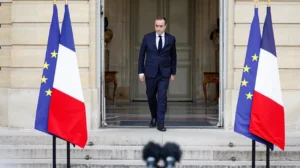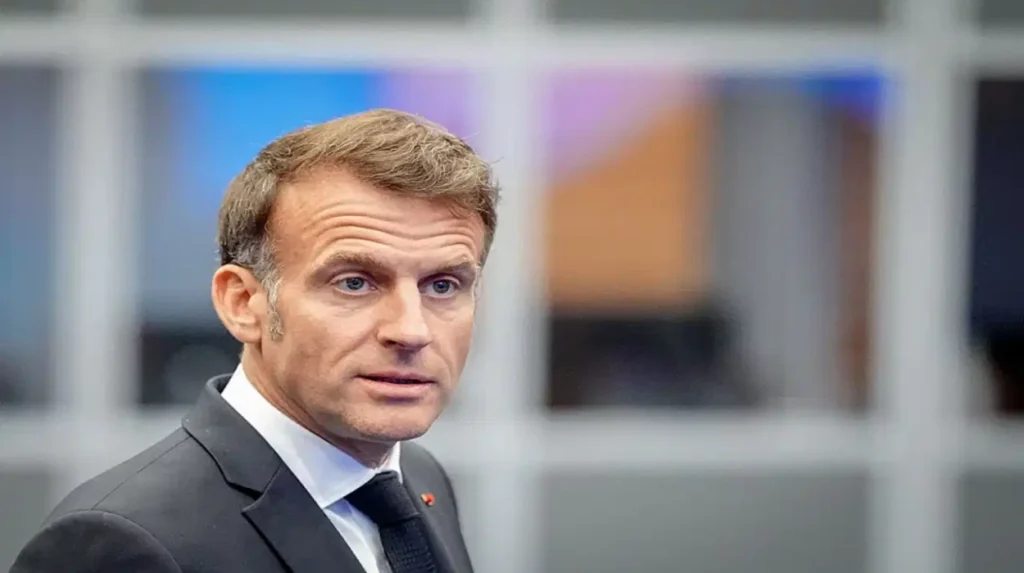
French President Emmanuel Macron has brought attention to the European Union’s mutual defense mechanism by claiming it is better than Article 5 of NATO during a high-profile NATO summit he attended in Greece from April 24-25, 2026. The statement reinforces France’s ongoing push for EU strategic autonomy, which has become one of the signature policies of Macron’s presidency and is now facing increased scrutiny against the background of geopolitical uncertainty.
The reelection of President Donald Trump and his public statements regarding NATO as being a “paper tiger” in the midst of the wars in Iran and continued uncertainty about U.S. support for Ukraine creates a new dynamic with Macron’s statement.
“The mutual assistance clause as set forth in the EU is very clear,”
Macron said;
“it is binding on each state and does not leave any state a choice whether or not to provide assistance.”
Macron’s statement not only questions the validity of the transatlantic alliance; it also positions France at the forefront of an increasingly self-sufficient Europe and raises critical questions regarding the viability, cohesiveness, and motivation of France to conduct an analysis of French Politics in the think-tank literature.
Macron’s Provocative Claims on EU Defence Superiority
Macron’s Greek visit was the crystallization of his vision for a strong EU defense framework, using Article 42,7 of the 2009 Lisbon Treaty as being equivalent to NATO’s collective defense provision. In addressing Greek citizens specifically, Macron indicated that “in substance”, the EU clause is stronger than Article 5 as it requires assistance “of all possible means” from other states when an EU Member State suffers armed aggression, unlike NATO which has what he perceives to be “interpretive ambiguity”.
This is not simply rhetoric; Macron asserted that it is “not simply words” and pointed to the recent EU joint operation sending aid to Cyprus following a drone strike as evidence of operational capacity. However, critics within French political circles have characterized this as Macron overreaching and trying to use France as a unilateral military power in pursuit of a Gaullist-like agenda that will put strain on relations with NATO partners such as Germany and Poland, who are strong supporters of the Atlantic alliance.
The timing of Macron’s statements indicates he believes they can be successful. The current political landscape in 2025, with Trump back in the White House since January 2025 and his administration’s skepticism toward NATO along with the decrease in U.S. military and financial support to Ukraine, provides a backdrop for Macron’s narrative to resonate.
Dissecting Article 42.7: Legal Foundations and Historical Precedent
Essentially, article 42.7 of the Treaty of European Union (TEU) places an obligation on all EU countries to help any EU country that is attacked, using everything at their disposal as defined by article 51 of the United Nations Charter on self-defence. NATO’s Article 5 states that if an NATO country is attacked, all NATO countries will treat that as an attack upon themselves and therefore respond collectively with military force.
Previous uses of the clause have demonstrated that this new clause has untested potential. After the Bataclan Attack in France in 2015, all 27 EU countries (pre-Brexit) committed to providing assistance. However, those commitments materialized only as ad hoc training missions for the Sahel, intelligence sharing and providing border security assistance and therefore did not constitute a coordinated military contribution.
To date, there have been no subsequent activations of clause 42.7. However, the true potential of clause 42.7 remains to be seen as it has yet to be tested in an aggressive confrontation between two EU Member States. President Macron is actively advocating for the operationalization of article 42.7 through cooperative defence agreements with Greece which include elements of mutual assistance, energy security and nuclear technology transfer.
Geopolitical Context: Trump’s Shadow and Europe’s Reckoning
In recent years, the increase in friction between Europe and the United States has grown with the introduction of Donald Trump’s presidency’s transatlantic policies, which have resulted in the European Union questioning its dependence on other nations as a result of Donald Trump’s withdrawal from NATO and its military engagements in other parts of the world such as on the Iran conflict, leading to an increase in European military preparedness.
Macron has advocated for European strategic autonomy for many years, however, the coming years will see his goal become a central focus with his announcement to give French defence companies the priority of purchasing European Union manufactured defence products and to reduce or eliminate any purchases from American-based manufacturers such as Lockheed Martin after 2026.
In addition, Macron has emphasized to other leaders within the European Union to continue moving towards or exceed the 2% defence spending target, which has resulted in NATO collective defence spending of approximately €381 billion (equivalent to 2.1% of GDP) in 2025 and all NATO members exceeding the 2% target – support of Macron’s claim for readiness.
A more careful examination of the historical motivations of France’s move towards strategic autonomy reveals that, in addition to being able to financially support their move due to very high percentages of GDP devoted towards defence, France will also see stability due to its nuclear capability and prior expeditionary experience. Therefore, France will be positioned as the leading security supplier within the European Union.
Reactions, Risks, and French Domestic Implications
Different EU leaders have had different reactions regarding the operational blueprints that are in development for military capacity building; however, the hawks in Eastern Europe have also said that this action is a way for NATO to sabotage itself. Olaf Scholz (the Chancellor of Germany), a cautious ally of Macron, supports the plan to build-up military capabilities but is not prepared to abandon NATO.
Poland also told the EU leaders that they should be careful of “strategic naiveté.” Macron’s centrists will use this as a patriotic way of appealing to the French people; however, Marine Le Pen (the leader of the National Rally) is critical of it because she feels that this is globalist posturing and that Macron is threatening France’s sovereignty. However, left-wing critics are concerned that France is heading towards an escalation to indefinite commitments without any parliamentary oversight.
There are also significant risks. For example, Article 42.7 lacks clarity with regard to defining an “aggressive” military act (e.g., is it a cyber-attack? is it a hybrid threat, etc…?) and thus creates the opportunity for dispute. In addition to that, non-NATO EU member states like Cyprus and Malta could potentially drag their feet in taking action towards military capacity building.
Economically, France is going to have trouble meeting the goal of 3.5% of GDP on defence without increasing taxes or cutting elsewhere, both of which will put pressure on Macron to implement reforms. Moreover, France’s push for military capacity building could also lead to more US isolation in the event that Trump retaliates with tariffs or the withdrawal of troops or military operations.
France’s Strategic Calculus: Autonomy or Hegemony?
The French President’s gambit relating to European Union defence clauses encapsulates France’s leadership ambitions in Europe, which stem from Charles de Gaulle’s decision to withdraw from NATO in 1966. The aim of Macron’s approach to Article 42.7 is to “rebalance” power dynamics by diminishing U.S influence while enhancing French influence relative to NATO.
For Macron’s strategy to be successful, however, it requires political cohesion from the EU, which, given the EU’s current divisions, is unlikely. If Article 42.7 was invoked during a crisis in the Baltic Sea, would Italy dispatch warships or would Spain utilise their newly acquired F35 fighters? Macron’s long-term vision for a European strategic intervention force would require amending the Treaty on European Union (TEU), which would necessitate ratification by all current member states.
Ultimately, Macron’s aspirations signify fundamental changes to the defence landscape in Europe, but they are constrained by French political realism. While the promise of creating a more imperative strategic autonomy may empower the EU, mismatched implementation could create greater divisions. With Trump reshaping geopolitical alliances, Macron’s gambit must be subject to close scrutiny to ensure that words lead to resilient outcomes.