Outbreaks of fighting in Syria, especially within the provinces of Aleppo, Hama, and the Southern region, have reminded the world of the fragile nature of the war-torn state, which is still trying to cope with the repercussions of over a decade of internal conflict. Even after the ousting of the Assad rule, the Syrian state is faced with the gigantic challenge of keeping the various groups satisfied and preventing the onset of revenge acts.
What drives the renewed violence in Aleppo and beyond?
The recent spates of violence involving Syrian security forces and Kurdish fighters in the city of Aleppo run in tandem with the wider phenomenon of inter-communal unrest. The fighting in the south involving Bedouin tribes and Druze militias last summer, as well as the Alawite civilian carnage in their home territory of western Syria, serve to underscore the underlying grievances underlying Syrian society.
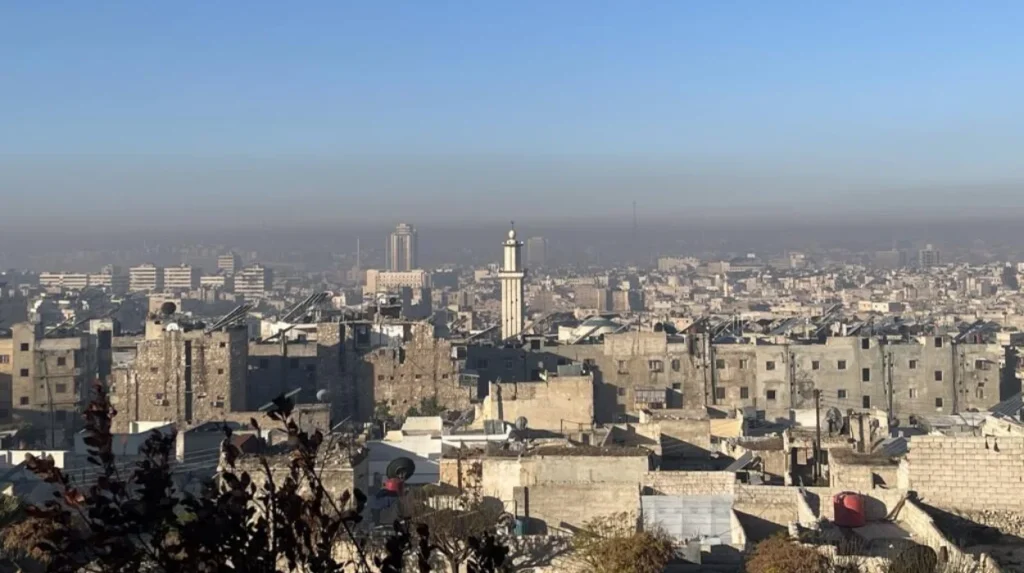
The economic capital, Aleppo, is especially volatile because of its history of ever-changing allegiances under Assad. The loyalty of Sunni militias to the Assad government changed with the lightning rebel attack by Ahmad al-Sharaa’s rebel coalition. The rapid change contributed much to the downfall of the city but also left many local scores unsettled.
The al-Meraais, whose alleged connections with the Assad government have placed a question mark over their contributions towards liberating a beleaguered Aleppo, are a microcosm of the murky politics and morality of Assad’s successor.
How are Sunni clans integrated into post-war governance?
The Syrian presidency created the Office of Tribes and Clans in an attempt to mediate disputes and foster reconciliation, preventing new outbreaks of sectarian violence. Headed by Jihad Issa al-Sheikh, it works through regional branches in Aleppo, Hama, and Idlib to bring Sunni militias and clans into the post-Assad political fold.
The office works to ensure that militias that once collaborated with the Assad regime can take part in rebuilding the state without reprisals against those who were once aligned with opposition forces. In Aleppo, Sunni tribes such as the al-Meraais were induced into joining the rebels’ liberations effort, secretly sheltering HTS commando units. Yet, the residue of distrust among the genuinely early rebel groupings still remains one of the biggest obstacles to reconciliation.
Are Syria’s minorities adequately protected?
Apart from the challenge associated with the Sunnis in Syria, other plural communities in the country are still facing security problems. The Shiite communities like Nubl and Zahra are still under heavy security protection from the Syrian military. The celebrations among the Christians have even encountered threats from suicidal bombers.
The inequality in security distribution has affected the harmony among different communities. The Shia areas protected by security forces differ completely from the destroyed Sunni cities, which have been left to live in tents. This situation is causing division among this group of people and threatens conflict, which occurs in line with their religious affiliations.
Can clan politics be balanced with state-building?
High-level political meetings in Damascus highlight the need to integrate tribes into the political system in a manner that does not involve a return to clientelism of the Baath period. Heads of state are encouraged to put forward qualified candidates for administration, thus showing a move to ensure accountability.
The establishment of a Council of Elders has been mooted as a means of maintaining their social status while ensuring their position remains distinct from political institutions. In this light, this move is symptomatic of the fact that a careful balancing act is required in Syria. Failure to do so could spark renewed conflict, particularly within those areas as yet under the control of Damascus.
How are potential vendettas being prevented in Hama and Homs?
The Hama branch of the Office of Tribes and Clans has been entrusted with a job of preventing revenge attacks after horrific murders in Homs, where intercommunal reprisals were threatening to spiral into larger clashes. Their leaders intervened in time, explaining to them that the killings were a family affair, not sectarian.
These efforts illustrate how local mediation continues to play an important role in post-conflict stability. Therein remains the risk that these mechanisms, while helpful to de-escalate tensions and violence on the local level, cannot be successful without the buy-in of the local community to engage with the central authority and have confidence in the Office of Tribes and Clans.
Why Syria’s post-conflict stabilization remains fragile
Despite these initiatives, Syria’s reconstruction and reconciliation remain precarious. Sectarian grievances, mistrust among former combatants, and uneven security protections continue to threaten the fragile peace. The state’s reliance on material concessions to secure clan cooperation may provide short-term stability but risks creating new inequalities and resentments.
Moreover, extremist actors and opportunistic militias still operate in peripheral areas, exploiting gaps in governance and security. The combination of historical grievances, economic hardship, and uneven justice mechanisms leaves Syria vulnerable to renewed violence, particularly in regions where the state’s presence is weak or contested.