The ongoing war in Ukraine has once again brought to the surface a deep divide within the European Union—this time not over a military program like the SCAF fighter jet, but over how Kyiv should allocate the €90 billion zero-interest EU loan for 2026–2027. At stake is a complex intersection of European strategic autonomy, industrial interests, and the urgent operational needs of the Ukrainian military.
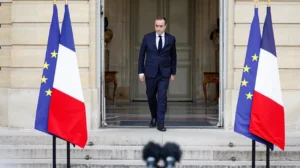
France, led by Prime Minister Sébastien Lecornu, is advocating a “European preference” approach, insisting that the funds be spent primarily on the European defense industrial and technological base (EDITB). Lecornu justified this stance by emphasizing that
“European money and French taxpayers’ money must serve European interests and therefore European industries.”
In practice, this would mean prioritizing European-made arms, munitions, and defense technologies over foreign alternatives.
A divided European response
Currently, the position of France has the backing of only Greece and Cyprus, thus indicating that there is very limited consensus among members of the European Union. According to Germany and the Netherlands, which represent the Atlanticist faction in the European Union, limiting purchases from non-European countries will undermine Ukraine’s ability to develop core weapons capabilities.
The German position reflects the struggle between nationalism and operational needs. The German government’s position is that Ukrainian forces need items of military equipment that cannot be provided by European companies in sufficient numbers or within a satisfactory timeframe. These include AD systems, F-16 ammunition, and deep-strike capabilities.
The Netherlands echoes this concern and has reportedly offered €15 billion to Kyiv to procure equipment unavailable in Europe. Additional NATO allies, including Poland and Norway, have similarly announced intentions to purchase roughly €1 billion in U.S.-made military equipment for Ukraine under the Priority Ukraine Requirements Lists (PURL) program.
Operational imperatives vs. industrial policy
The rift between Paris and Berlin symbolizes the larger strategic challenge. The “European preference” policy championed by France corresponds to the long-term vision to enhance strategic autonomy and less dependence on defense systems from the U.S. According to the European Defence Agency, the EU imports in excess of 50% of all high-tech defense equipment from non-EU countries. This issue needs to be addressed by France.
However, detractors warn that giving priority to the European industry may have the consequence of either slowing down the formation of the Kyiv military capabilities, which may protract the conflict, since the war may have already started because the Kyiv forces were not adequately equipped with the military capacity and were therefore vulnerable to the aggression of the invading army from Russia. There have been reports that the current arsenal of the Kyiv military is depleted of long range artillery and air defense weaponry.
The German perspective: reward by contribution
Germany’s position also reflects self-interest intertwined with strategic logic. As the second largest donor to Kyiv after the U.S., Berlin wants to ensure that countries providing the most aid are rewarded, particularly through defense contracts. This approach prioritizes bilateral contribution and operational expediency over industrial consolidation.
From a human rights and security perspective, the German-backed approach arguably prioritizes immediate protection for civilians in Ukraine over long-term industrial gains. Analysts note that restricting access to U.S.-made equipment could exacerbate civilian casualties in conflict zones by delaying deployment of critical air defense systems that protect cities like Kyiv, Kharkiv, and Dnipro from Russian missile and drone attacks.
Implications for the European defense industry
France’s push for a “European preference” has long-term implications for the EDITB, which faces structural challenges. The European defense sector suffers from fragmentation, slow procurement cycles, and lack of high-tech production capacity compared to U.S. manufacturers. The European Defence Fund estimates that EU defense spending gaps could reach €50 billion annually, with significant dependency on foreign components, particularly semiconductors, missile guidance systems, and radar technology.
Critics argue that forcing Ukraine to buy European equipment may artificially inflate demand, benefiting certain companies but doing little to enhance actual military capabilities on the battlefield. Moreover, the time needed for European manufacturers to scale production could delay the delivery of critical systems to Ukraine.
U.S. involvement remains crucial
The debate highlights the persistent reliance on U.S. defense exports for high-tech and high-volume weapons. Systems like Patriot missile batteries, HIMARS rocket systems, and F-16 platforms remain outside European production capacity. Washington has committed billions in military aid to Ukraine, underscoring the strategic interdependence of NATO allies. Analysts warn that artificially limiting Ukraine’s procurement to European sources could strain transatlantic relations and undermine NATO solidarity.
Broader geopolitical stakes
The tug-of-war over Ukrainian defense spending is about more than money or industry—it reflects the EU’s struggle to assert autonomy in defense matters while navigating its dependence on U.S. military technology. France’s position seeks to leverage Ukraine’s crisis to strengthen European defense sovereignty, while Germany’s approach prioritizes real-time operational outcomes and civilian protection.
Observers note that this tension also has humanitarian consequences. Delays in supplying the most effective weapons could lead to higher civilian casualties, destruction of critical infrastructure, and prolonged displacement of populations. Ukraine’s ability to protect its civilians and maintain territorial integrity may hinge on the resolution of this European dispute.