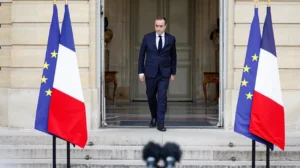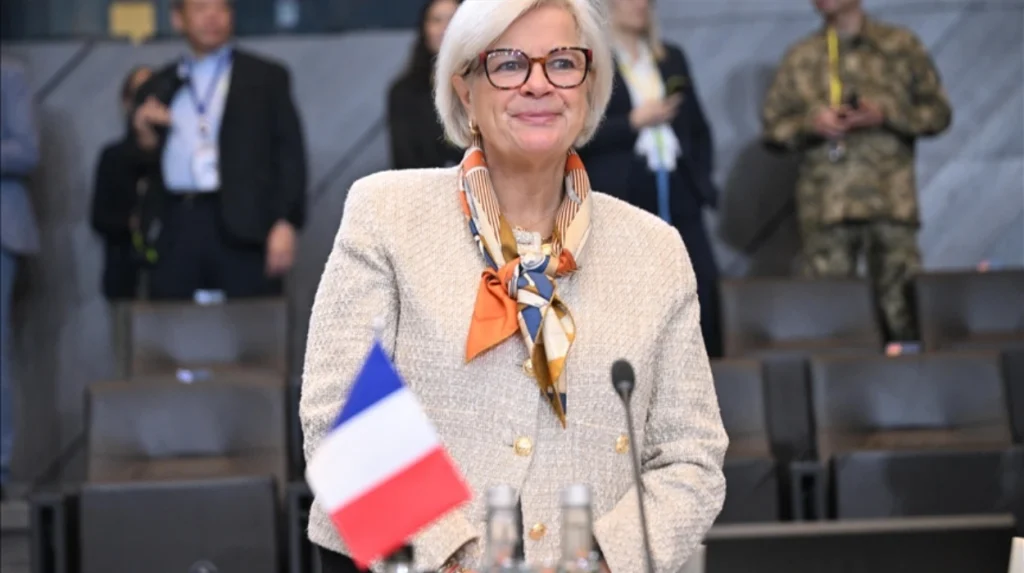
The French government has launched a new program that will offer a paid 10-month “national service” that will not only strengthen the country’s military forces but will also address the growing concern in France regarding the security situation in Europe. The new initiative was announced at a press conference in Paris by the country’s Defense Minister, Catherine Vautrin. However, many people now question the effectiveness and relevance of this new service, given that the country is slowly militarizing its youth policies.
A “Purely Military” Scheme in a Shifting Security Landscape
The project, announced in late November by President Emmanuel Macron as a purely military one, contrary to previous initiatives aimed at civic engagement of the youth, has now opened its recruitment process with the first batch of 3,000 youth aged 18-25 for enrollment between September and November 2026.
The volunteers are restricted to only serving on French soil and its overseas departments and territories. No service in foreign countries is allowed. The government maintains that this condition avoids offending any political sentiments on conscription while still supporting French forces.
Nevertheless, France’s military is already overstretched. According to official data, France has a total of approximately 203,000 active military personnel, with tens of thousands being deployed each year on homeland security duties such as Opération Sentinelle and various foreign assignments in Africa, the Middle East, and Eastern Europe. It is feared that the deployment of short-term volunteers would not contribute much to address the issue of overstretching and military recruitment.
Ambitious Targets, Unclear Outcomes
The government plans to scale up the scheme rapidly: from 3,000 recruits in 2026 to 4,000 in 2027, 10,000 annually by 2030, and approximately 42,500 by 2035. Officials say the annual total could eventually reach 50,000 when combined with existing Voluntary Military Service (SMV) and Adapted Military Service (SMA) programs.
Yet France already struggles to retain trained personnel. Defense Ministry data shows that nearly one in three enlisted soldiers leave the armed forces before completing their first contract. Critics argue that investing billions of euros in short-term volunteers risks creating a revolving door of undertrained personnel rather than a resilient force.
Running into hundreds of millions of euros could be the annual cost of this program with an inlet fee of €800 a month per volunteer. Also, this is apart from the cost of accommodation, food, equipment, training, and administration. This is as the France military budget itself is already geared to rise to €69 billion by the year 2030 based on the Military Programming Law.
Targeting Youth Amid Economic and Social Pressures
According to the Defense Ministry, around 80% of volunteers are expected to be 18–19 years old, with the service positioned as a “gap year” before higher education and recognized through France’s Parcoursup admissions system. Older candidates up to age 25 will be selected based on skills deemed valuable to the armed forces, including medical, technical, and language expertise.
This framing has drawn criticism from educators and youth advocates, who warn that the scheme may disproportionately attract young people from lower-income backgrounds seeking financial stability, housing, or educational advantages. With youth unemployment in France hovering around 17% in 2025, critics argue the state risks leveraging economic insecurity to fill military roles.
“This is not universal service—it is selective militarisation,”
one opposition lawmaker said, accusing the government of repackaging social policy as defense reform.
The Quiet Abandonment of Universal National Service
The launch of the new program also marks the effective abandonment of the Universal National Service (SNU), introduced in 2019 and originally intended to foster civic cohesion among 15- to 17-year-olds. The SNU faced repeated delays, ballooning costs, and widespread criticism for its lack of clear purpose. Despite Macron’s earlier pledge to make it mandatory, fewer than 40,000 participants were enrolled annually—far short of the intended 800,000.
The government now concedes that the SNU is ill-suited to the “strategic context shaped by the war in Ukraine,” underscoring a broader policy shift from civic engagement to hard security priorities. Critics argue this reversal exposes years of policy inconsistency and wasted public funds.
Strategic Necessity or Symbolic Militarisation?
Supporters of the new national service say it reflects unavoidable realities: Russia’s war in Ukraine, rising tensions with Iran, instability in Africa, and doubts over long-term US security guarantees to Europe. France, they argue, must rebuild mass, resilience, and readiness.
But skeptics remain unconvinced. They question whether a short, non-deployable service can meaningfully strengthen France’s defense posture—or whether it primarily serves a political purpose, signaling resolve without addressing deeper structural problems in recruitment, retention, and military readiness.
As applications open, the success of France’s new national service will ultimately be judged not by enrollment numbers, but by whether it delivers real strategic value—or becomes another costly experiment in defense policy at a time when Europe can ill afford symbolic gestures.