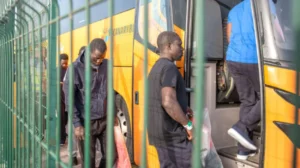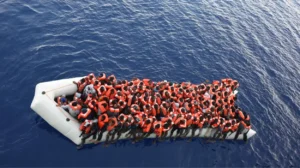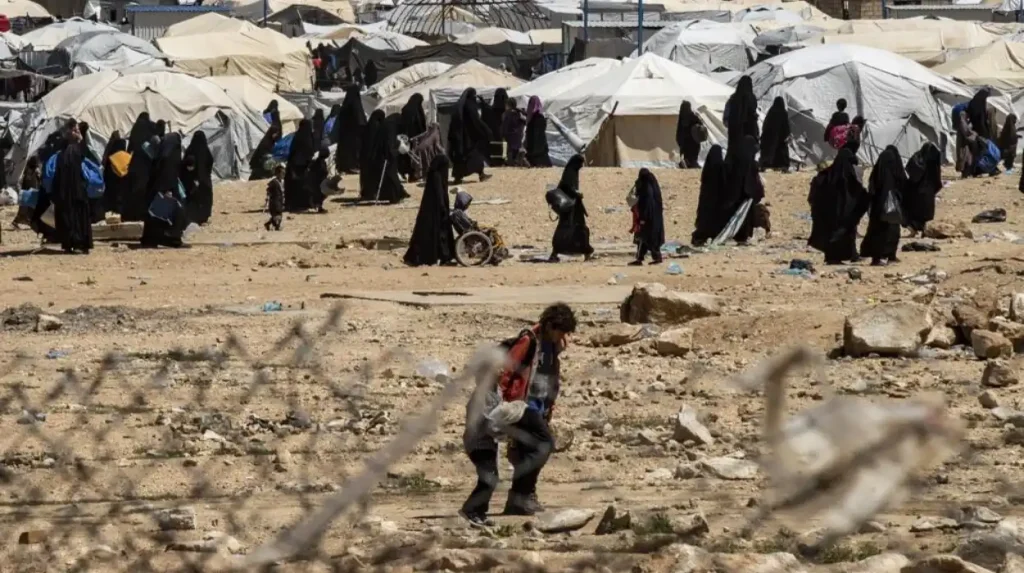
There has been an ongoing development in the Syrian refugee experience in France as the demographic realities, political discourse and the geopolitics of the region collide. The government estimates that there are over 150,000 Syrians in France and this number indicates a constant influx of numbers since 2011. This has transformed the national discourse concerning migration, social cohesion, and identity where policymakers are faced with a challenge to promote humanitarian considerations and public expectations in balance.
This political focus came to the fore during the 2025 presidential race, as immigration was the main focus on all political platforms. The candidates stressed on various versions of integration, including broader support systems, or more assimilationist strategies. Senior officials in the Ministry of the Interior repeated that France had the duty under the law to asylum, the national discussion showed that there were pressures of increasing the border regimes in a reaction to the unease of the people.
The dark side of French intervention in the Syrian war still lingers in the minds. Military interventions and aid to the resistance even until the 2024 ceasefire left constructions of responsibility, solidarity, and security. Such strata of geopolitical memory make it more difficult to discuss the issue in a way that involves not only people seeking safety but also participants in the overall French Middle Eastern policy arena.
Integration policy framework and its adaptation to Syrian refugees
The structure of integration in France has been based on the acquisition of language, access to employment, civic orientation and compliance with the tenets of laicite. The Office francais de l integration (OFII) is in charge of the initial reception procedure including housing and orientation training but the influx of Syrian refugees has forced the agencies to increase and evolve.
Language training capacity and evolving challenges
In late 2024, courses in expanded language were implemented to give more intensive classes that would be specific to Arabic-speaking refugees. But capacity remains a limit and there are numerous areas that are faced with the challenge of satisfying the increase in demand. The number of older refugees dropping out is also quite high, and social workers explain the phenomenon by work-related factors and family-related issues as well as the barriers associated with trauma. In early 2025, program reviews suggested a more flexible system, and hybrid digital-language courses to boost retention.
Employment pathways and systemic obstacles
The lawful entry of the Syrian refugees into the labor market is possible, but recognition of qualifications continues to be a thorn on the flesh. The professionals such as engineers, teachers, and health workers are taken through long verification procedures. The Parisian, Lyonnaian, and Marseillian local programs still fill this gap by their mentorship networks and professional training. The 2023 IAE program has increased municipal partnerships, but there are still not many measurable long-term results, which leads to the development of requests to expedite the credential equivalency processes.
Social housing pressures and spatial inequalities
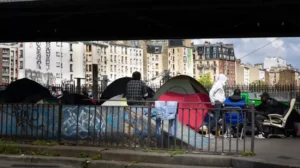
There are also shortages of housing that are another structural constraint. Syrian families end up spending long spells in transitional accommodations, which in most cases are miles away in areas where jobs and education institutions are situated. Housing shortages in urban areas compound segregation trends, particularly in urban areas where the number of people wanting to stay in cities is far much greater than the number of homes. The local governments still lobby the national government to be allowed to have a bigger share of their budget since the spatial isolation is compromising their goals of integration based on social mixing.
National cohesion and identity politics in the Syrian refugee context
The influx of Syrian refugees has fueled a relentless controversy on the topic of republican identity, secularism and cultural pluralism. The citizenship system in France has been founded on the principles of universalism, but the practice is still debatable when it concerns a community that is viewed as culturally different.
In 2025, the survey of the public opinion shows an ambivalent feeling. A substantial number of respondents refer to the fear of becoming integrated into secular norms, and community organizations stress the significance of an inclusive policy framework and the strong anti-discrimination policy. Debates on cohesion are invoked by political actors on both ends, and security narratives are often the foundational force in these debates. A number of commentators point out that the association between populations of refugees and radicalization, which is shown to have minimal support, creates distrust and exaggerates the perceived threats.
The increased policing and surveillance of the Muslim dominated areas have been seen as a point of contention by human rights organizations which claim that this, in turn, destroys trust and curbs civic engagement. However, there are still local cases of effective engagement. Young people in Syria have worked on cultural tasks, sports in their communities and business projects, proving that the process of integration is changing because of the everyday contact between the youth and not only policy guidelines.
European Union burden-sharing and France’s role
The process of Syrian refugees in France cannot be viewed outside of the European context. The mechanisms at the EU level are still disjointed even though the European Commission suggested a sophisticated relocation system and fresh asylum procedures in 2024. The implementation is still controversial with differences between the northern, southern and eastern member states.
France promotes a more equitable set of distribution of asylum responsiveness, claiming the existing trends subject the nations that have bigger economies or geographical accessibility to disproportionate burden. In 2025, diplomatic work is aimed at the promotion of the predictable relocation framework based on mutual responsibility. French officials have been advocating more funding to other nations like Italy and Greece, which have been experiencing high arrivals but the opposition of legislation across multiple of the member states makes it difficult.
Such an unequal distribution of burdens highlights one of the structural issues inside the EU: the need to reconcile national sovereignty with collective humanitarian responsibility. The location of France indicates an effort to reconcile these two competing imperatives in addition to addressing emerging local challenges with migration governance.
Evolving challenges and policy imperatives
Further pressures brought about by climate conditions continue to bring about displacement to Syria up to the year 2025 as the unstable situation remains. These factors demand long term policy strategizing as opposed to crisis management on a short term basis. There is growing recognition amongst French authorities of the need to change integration tools to various refugee backgrounds and experiences.
Education, social adaptation, and intercultural engagement
Educational programs are being introduced with intercultural education that is aimed at promoting the communication of students with different backgrounds. Pilot programs of 2024 and 2025 are already promising, as the teachers note that it has helped them to communicate and be more culturally aware. The national expansion of such models is however based on the political will that is sustained and focused investments.
Mental health and trauma-focused services
A very pressing need is psychological support. A large number of Syrian refugees are still struggling with the trauma of being exposed to the conflict, displaced, or separated with family members. The access has been enhanced by the presence of larger mental health clinics with Arabic speaking specialists, though gaps in service occur, especially in non-metropolitan areas. Incorporating mental health evaluation into a reception process is considered by the experts to be an inevitable step.
Digital integration tools and community networks
Integration support has expanded with technological solutions that have been brought out in the past two years, such as language-learning applications and job-matching services. These instruments assist new members to find their way around administrative frameworks and broaden their social contacts especially in distant areas. The long term effects of them are based on connectivity, digital literacy and collaboration with local governments.
The Syrian refugee experience in France in 2025 reflects an ongoing negotiation between humanitarian responsibility, national identity, and European governance. Its trajectory continues to shape broader discussions about diversity, cohesion, and the capacity of modern states to integrate populations shaped by conflict and displacement. How France navigates these dynamics will offer valuable insights into Europe’s evolving approach to migration and the societal choices that define its shared future.