France increased diplomatic involvement with the Palestinian Authority (PA), compelling it to make reforms to terminate systems of controversial payment of prisoners and enhance governance. This new engagement is in tandem with the general European moves towards accountability and political transparency in Palestinian institutions. France has a position within the EU principles but one with strategic undertones as it tries to seek its own way in Middle East diplomacy in the face of certain changing dynamics in the polity of the region.
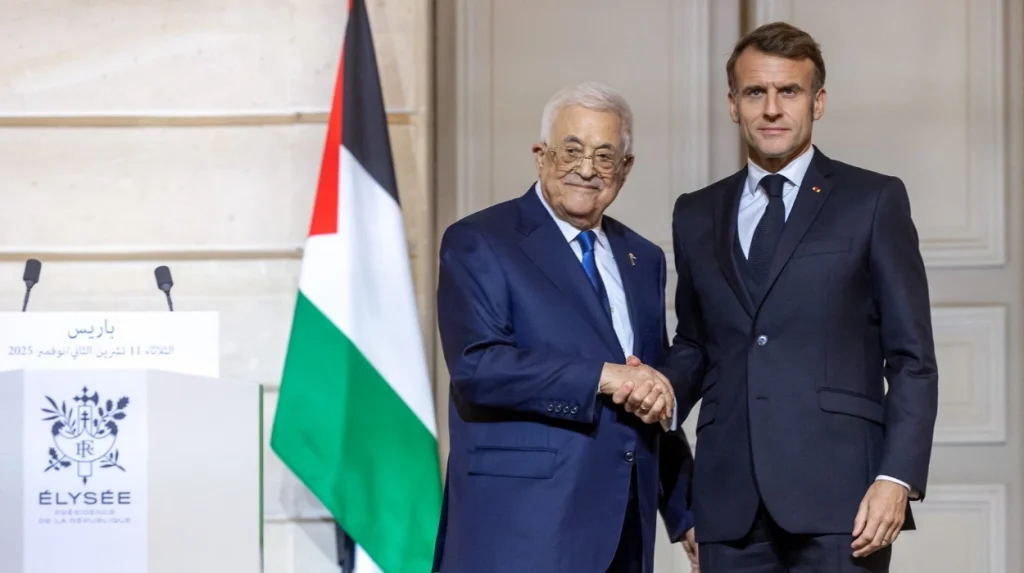
These developments revolved around the visit by the French President Emmanuel Macron to Palestinian President Mahmoud Abbas in November 2025. The focus on transparency and rejuvenation of democracy in the PA, as highlighted by Macron, underscored the frustrated process of the French in the slowness of the reforms. French officials reiterated their backing of Palestinian statehood but said that further aid and diplomatic lobbying would require tangible improvements in institutional reform, financial responsibility and the elimination of payment systems associated with proven militants.
The Foreign Ministry of France clarified that it had brought up the matter of residual incentive payments, which had come up within the course of the high level consultations. Although the French diplomats accepted the decree of the PA of February to substitute the previous system of stipend, it was necessary to have external checks and balances in place to guarantee compliance. This tough position constitutes the two-pronged approach of Paris: on the one hand, it allowed the firm to maintain its image of a mediator of the peace process and on the other hand, to take ethical and legal implications concerned with the financial practices within the PA.
The Controversy Over Prisoner Payment Reforms
The pay-for-slay scheme of the PA who pays monetary rewards to inmates and families of those that have been convicted of carrying out attacks on Israelis, has been a thorn in the flesh of Israel and the western donors alike. It was eventually abolished by President Abbas in early 2025, and in its place was a modified framework that was meant to assist the families of prisoners on a welfare basis instead of a crime-based framework. Nevertheless, after further research, they found inconsistencies that created controversy.
In October 2025, a leaked report by the Palestinian Anti-Corruption Commission disclosed that unauthorized payments were still being made under inverted budget items leading to the removal of the Finance Minister Omar Bitar. The report also reported that more than 70 million dollars were given out without following the new parameters of eligibility, which questioned the genuineness of the reforms. To the PA, such payments are politically important: they would act as social benefits in the troubled families and would act as a source of loyalty among the major groups in the Palestinian society.
The system is however seen by Israel and various governments in Europe as a source of perpetuating violence and destroying trust. Israeli Foreign Minister Gideon Saar complained about the PA semantically reforming what he termed incentive renaming, saying that renaming incentives did not make them any different. The fact that France insists on the cessation of these payments, therefore, follows a larger Western purpose of making sure that the money donated by the West is not being used to sponsor conflict activities.
French Pressure Within a Wider European and Regional Context
The activities by France should be seen in the context of the developing European foreign policy towards the Middle East. Although the European Union has been split on certain issues over the Israeli-Palestinian conflict, it has been united with the concept of conditional aid that comes with financial help based on institutional integrity and human rights standards. The strategy of Paris is similar but lacks a specifically French aspect of cultural diplomacy and diplomatic mediation.
A Shift Toward Conditional Diplomacy
France 2025 is a calculated type of conditional diplomacy. The government of Macron stressed that France was one of the largest European donors to the PA yet the further aid would depend on the compliance with the reforms in governance, such as financial transparency and the autonomy of auditing bodies. This is reminiscent of the policy framework that was presented in the Paris Peace Forum, which tied development funds to quantifiable anti-corruption results.
Reinforcing European Missions and Oversight
In response to the compliance, France offered to strengthen the European Union, which failed to comply, the Coordinating Office in the case of Palestinian Police Support (EUPOL COPPS) and to expand its control to include fiscal scrutiny. Through a combination of financial and security sector reform, Paris will be able to stabilize the institutional capacity and the confidence of people in the PA aspects considered as preconditions of future statehood negotiations.
Balancing Relations With Israel and Arab Partners
The location of France is also used to stabilize its relationships in the Middle East. In as much as it favors Palestinian self-determination, Paris acknowledges the security of Israel and the current trend towards normalization between Israel and the Arab states. The French authorities have aimed to ensure diplomatic balances by pushing the PA on accountability without necessarily laying on the side of U.S.-Israeli hard line stances that recommend reparative funding reduction.
Domestic and Political Implications for the Palestinian Authority
The changes that are required by France and the European Union impose significant pressure on the Palestinian leadership, which already has to struggle with its diminishing legitimacy and unrest among its ranks. President Abbas is under mounting pressure from the opposing groups especially Hamas and other Fatah factions who see western conditionality as foreign intervention in internal matters.
The PA has been struggling to reorganize its payment system and conduct elections with logistic and political challenges. The establishment of a drafting committee of the constitution with French technical assistance is a move that has been seen as a move towards a renewal although it is still stuck in the rut of bureaucratic stagnation and party opposition. There has been further disillusionment of the people, according to a poll conducted by Palestinian Center of Policy and Survey Research in the late 2025, 68 percent of Palestinians feel that the reforms were externally imposed instead of internally motivated.
However, the involvement of France is a possible stabilizing force. Connecting economic aid and political legitimacy to performance in governance gives France an incentive as well as an external reason to suggest unpopular but requisite reforms to Abbas. According to analysts based in Ramallah, this kind of European intervention serves as a lifeline and not a leash to the PA since it tries to regain international trust without losing local control.
France’s Broader Strategic Vision in the Middle East
The aggressive stance of Paris concerning the Palestinian reforms is also a manifestation of its overall desire to reestablish control in Middle East diplomacy. After a decade where the United States and the powers of the Gulf dominated in the mediation process, France wants to restore its old position as a bridge-maker amid the Arab countries with the west.
Revitalizing the Peace Process
The recent proposals by Macron of a new, multilateral peace structure announced at the Elysee at the very end of 2025 offer to include regional actors, like Egypt, Jordan, and Saudi Arabia in addition to the European partners. France sees that as an alternative to U.S. or Israeli efforts taken alone, one that makes peace conditional on governance reform and mutual accountability as opposed to military deterrence.
Leveraging Development Aid for Influence
In 2025, France had budgeted EUR500 million as the total allocation to the Middle East under its international development, and a large part of the funds were to be used in Palestinian state-building. This corresponds to the French policy of leveraging development aid as a tool of diplomacy, which would enhance its power in the humanitarian, security, and economic aspects.
The Evolving Intersection of Diplomacy and Accountability
France’s engagement with the Palestinian Authority over prisoner payments exemplifies the complex intersection of diplomacy, ethics, and regional stability. Its insistence on reform highlights a pragmatic recognition that financial accountability and political legitimacy are inseparable in the quest for sustainable peace.
As the PA navigates reform under external scrutiny, France’s balancing act pressuring for transparency while maintaining support for sovereignty reflects a nuanced understanding of Middle Eastern realities. Whether these efforts lead to enduring change or deepen political fragility remains uncertain. Yet, the trajectory of 2025 suggests that France’s recalibrated diplomacy may redefine not only its own role in the conflict but also the broader European approach to governance-linked peacebuilding in one of the world’s most protracted disputes.