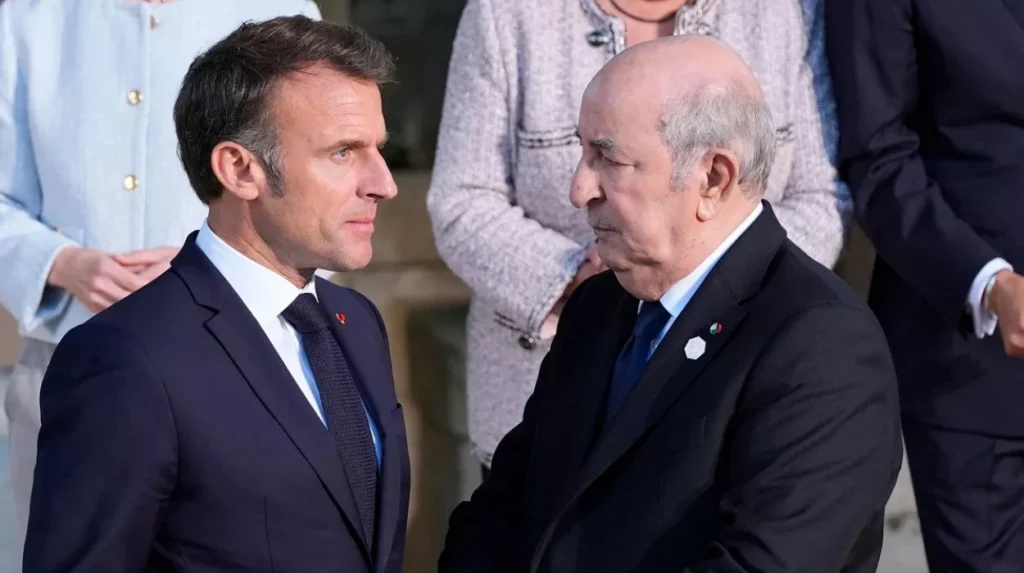
One of the most delicate bilateral problems in the relations between Europe and North Africa has re-appeared in the France-Algeria migration issue in 2025. The demand of France to increase the process of repatriation of illegal Algerian citizens has been strongly opposed by Algiers, which claims that the feature of repatriation has to be carried out according to the legal guarantees and the previous diplomatic rules. This argument has re-emerged in a year where discussions on migration have been on the rise throughout Europe and increased domestic politics in France.
French government pressure intensified after its September 2025 announcement that included visa quotas received by Algerian students and workers based on the effective rate of a deportation order. The action is reminiscent of the 2021 ruling in the previous Prime Minister, Jean Castex, to reduce the number of visa allocations, but this was overturned following high-level discussions. The re-measured moves demonstrate the desire by Paris to rejoin the coercive leverage even though the migration of Algerians is a sensitive subject of diplomatic concern.
In keeping well in line with the European stance of President Donald Trump concerning irregular migration, French Prime Minister Gabriel Attal has positioned enforcement as the cornerstone of national sovereignty. In the case of Algiers, though, patterns of asymmetric power relations evoked by the conditionality approach have long historically determined the Franco-Algerian relationship.
French Domestic Context And Political Calculations
An increased national apprehension about immigration is a key element in the French strategy. The pressure exerted by the National Rally on the government has increased the pressure on the government to visibly enforce and administratively be stringent. In October 2025, the IFOP poll showed that almost two-thirds of French people would approve stricter policies on repatriation.
According to the French authorities, the implementation of deportations orders occurred only in 2024 in the area of about 15 percent, which they refer to as a credibility problem of the state institutions. Paris wants to enhance enforcement by coordinating bilaterally, by reforming the administration, and using leverage in visa.
However, municipal leaders and rights groups warn that sweeping enforcement rhetoric will lead to the stigmatization of communities of Algerian origin. The mayor of Marseille, Benoit Payan, commented that local municipal leaders need not bear the weight of symbolic conflicts nationally, and in the comments, there is a concern of how tensions will worsen the situation in Marseille, where the local socioeconomic problems are already serious.
Algerian Response And Diplomatic Posture
Calibrated yet unyielding response has taken place in Algeria, which focuses on the sovereign equality and legal rigor. In October 2025, the Algerian Foreign Ministry wrote that no unilateral conditions would supersede the rights and dignity of the Algerian nationals in foreign countries. Algerian diplomats emphasize that repatriation must be accompanied by confirmed documents and due process, which has been a longstanding argument of identity misclassification and situations of dual nationals.
According to the officials near President Abdelmadjid Tebboune, Paris is interested in migration to extend political pressure. Algerian analysts see the present episode as a continuation of the cycle of events whereby migration is a bargaining instrument in a historical-laden bilateral relationship.
The conflict is developing when Algeria remains diversifying international relations. The broadening of economic discussion with China, Turkey, and Russia offers Algiers an opportunity to find alternatives to the influence of France, which has traditionally had an effect on the balance of negotiations.
Colonial Legacy And Historical Weight
The migration issue between France and Algeria is overlaid on a historical story, which is influenced by colonialism, the Algerian War of Independence, and decades of postcolonial political imbalance. Having approximately 5 million Algerian descent individuals in France, any change in the migration policy reverberates throughout the society and family circles.
Perceptions And Political Memory
French authorities are adamant that enforcement of migration does not focus on a particular nationality, but administrative compliance. The Algerian commentators respond that the frequent conditionality of the visa disproportionately affects the Algerian nationals and rekindles the recollection of the manipulative diplomatic behavior.
The historian Benjamin Stora, in a 2025 public interview, remarked that the migration debate is the unhealed memory of the colonial encounter, highlighting the symbolic aspect that remains the source of policy responses and popular attitudes.
EU And Bilateral Rules
The activities of France are governed by EU Frameworks of returns especially the 2008 Return Directive. Nevertheless, Algeria has never signed a European readmission agreement, following up on a bilateral agreement of 1968 giving the Algerians exceptional residency rights. In 2025, French officials indicated willingness to amend or freeze some parts of that deal in case collaboration fails.
According to legal experts, such unilateral modifications would presumably be subject to questioning in the Conseil d’Etat in France or the European judges owing to the binding nature of treaty commitments and constitutional safeguards.
Technical Challenges In Repatriation
Repatriation involves checking of identity and issuing traveling papers by Algerian authorities. According to Paris, the cooperation has been sluggish and he mentions over 7,000 pending deportation files. Algiers, in its turn, considers strict checks to be the only means of preventing mistakes or false dismissals. The complexity of these processes obscures the distinction between law and diplomacy contests, which leads to a stalemate in administration.
Economic And Labor Implications
Bilateral disputes have the potential of impacting labor flows. The French construction, logistical, and healthcare support are areas of French industry that Algerian workers contribute to greatly. Algerian is also another long-standing academic bridge with French universities receiving thousands of Algerian students every year.
Algerian professionals and students reported visa restrictions in 2025 have already brought concerns to French industry associations, as well as academic institutions, which depend on skilled migration to address labor shortages and remain competitive in the global market.
Financial Interdependence
Algerian French remittances continue to be an important economic parameter amounting to over EUR1.4 billion in 2024. Simultaneously, France is an important collaborator in energy, pharmaceutical and infrastructural domains in Algeria. Experts in their field of economics caution that the extended political tension might make investment channels and cross-border expertise, capital and labor mobility, a disruption in their industries.
Public Opinion In Algeria And National Identity
The disagreement has erupted into national pride in Algeria. Algerian think-tank Nabni surveys suggested that trust in France was quickly going down, with only 23 percent of Algerians in 2025 considering France to be a trusted partner. There is popular dissatisfaction with what is characterized as selective sovereignty of Paris which is aggressive towards Algeria and hesitant with other international allies.
The story strengthens the domestic political legitimacy among the Algerian leaders who stress on sovereignty and historical dignity. The combination of the collective mind and state foreign policy are enough to indicate that compromises in the face of exposed pressure are still expensive politically to Algiers.
Prospects For Negotiation And Regional Ripples
The policy of EU development influences the sphere of the position of France as well such initiatives as the preparations of the full implementation of the EU Migration and Asylum Pact in 2026. The framework rewards collaboration with the countries of origin and tightens the border controls. Certain analysts also anticipate that Algeria can use the EU outreach to have mobility alliances in exchange to have structured cooperation but only on mutually agreed terms of sovereignty.
Regional Reflection And North African Diplomacy
The regional impact extends beyond France and Algeria. Tunisia and Morocco monitor France’s approach, recognizing that the outcome could set a precedent. Any French flexibility may embolden North African negotiators; conversely, firm enforcement could reinforce European leverage in return-migration discussions.
Balancing Sovereignty And Interdependence
The France–Algeria migration dispute illustrates the delicate balance between sovereign control and transnational reality. France seeks administrative enforcement and political credibility; Algeria defends procedural dignity and historical autonomy. Migration becomes not merely a technical policy challenge but a symbolic arena reflecting memory, identity, and geopolitical repositioning.
Looking ahead, both governments recognize the high cost of sustained confrontation. The key question is whether diplomacy will shift toward pragmatic, low-visibility dialogue, or whether public political signaling will continue to frame migration as a test of sovereignty and resilience. The evolving dynamic signals not just a policy dispute but a broader negotiation over the nature of partnership between Europe and North Africa in a shifting international order.