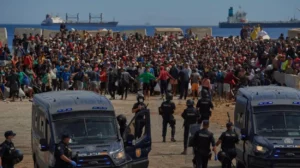
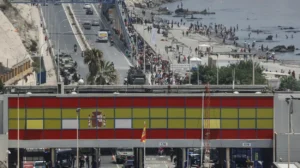
By the first half of 2025, the total number of irregular border crossings into the European Union decreased, and Frontex registered approximately 75,900 entries- a twenty percent decrease relative to the same period in 2024. Nevertheless, this total does not represent much uniformity between the various migration patterns. Western Balkans and Western African routes had recorded significant declines with the Central Mediterranean route experiencing a revival with over 29,000 arrivals. The majority of migrants taking this path are people of Bangladesh, Egypt, and Eritrea, which emphasizes the changing processes in home countries.
The Eastern Mediterranean route, which had been among the major points of penetration through Turkey and the Aegean islands, saw a reduction of 24%. Nevertheless, alternative routes are being established like the Libya to Crete and this means that migratory flows are becoming more complex. At the same time, the Western Mediterranean aid, especially the cases through Algeria to Spain are becoming active again. Among the clearest developments has been the increasing number of Channel crossings between France and the UK. By September 2025, approximately 33,200 have been noted with most involving small, high speed vessels which are used to bypass the coastal patrol.
Political Divisions Among European States
The different approach to the strategies of responding to the crisis by European states indicates entrenched political divisions. France, Germany and Spain continue to lead the pack in issuing the return orders with France alone making almost 31,000 formal instructions to leave the first quarter of 2025. On the other hand, there are other Eastern and Northern European nations that have returned much less and the question of fairness on the spread of the burden and the uniformity of enforcement throughout the EU is a concern.
The Dublin Regulation is still undergoing reforms that aimed to make asylum distribution more balanced, but it is still met with criticism. Interestingly, Cyprus put on hold all new applications of asylum to the citizens of Syria after president Bashar al-Assad took over power in the capital of Damascus, on the grounds of national security and population strain. These actions taken unilaterally make it hard to cooperate across the EU and put the bloc at odds with its mandate to uphold refugee protection as mandated by international law.
The impact of domestic politics is also very important. The emergence of far right parties in Italy, Austria and Sweden have put pressure on their centrist governments to be more aggressive in combating irregular migration. Such changes bring migration policy more to the point of deterrence and border protection, undermining the attempt to develop a humanized, unified approach.
Humanitarian Concerns and Vulnerabilities
The externalization of migration management and increased control of the border tend to have severe humanitarian implications. Human rights monitors have also recorded many instances of forceful pushbacks, summary deportations and extended detention in poor conditions. The increasing number of fast boats that cross the English Channel is an illustration of how enforcement action is pushing migrants to more dangerous and secret pathways.
The deadliest migration route is the Mediterranean Sea. At least 760 deaths of migrants were registered by the middle of 2025, with many of them happening when distress calls have not been answered or rescue organisations delayed. The aid organizations say that draconian deterrent policies are not effective in addressing push factors like war, poverty or climate displacement.
Both the numbers of people who become victims of smuggling rings grow, and the median price per capita is more than two thousand dollars. These networks usually expose one to abuse, extortion, and trafficking. Upon arrival in Europe, a significant number of them are left in the limbo of waiting in asylum lines with a lengthy backlog and with little access to legal counsel or psychological assistance.
Structural Policy Challenges and Integration Gaps
Long-term structural vulnerabilities are the underlying factors in the irregular migration policy of Europe. Migration systems of countries are diverse in effectiveness and style, which hinders concerted action. The EU, through the agreements they have with third countries (Libya, Tunisia and Morocco) to intercept and process migrants is questionable as far as their human rights are concerned, due to the human rights history of these nations. Such policies are dangerous in that they outsource the responsibility and increase the instability of the region.
Attempts aimed at encouragement of integration have their challenges. According to the 2025 Migrant Integration Policy Index, improvement in the area of housing, employment, healthcare, or education is still minimal. Migrants in most countries of the host country face law, discrimination, and poor social services in most cases, which denies them the capacity to make a significant contribution to the society.
Protective arrangements that were established in the past crises as temporary measures are yet to be converted to sustainable integration models. Such failure contributes to parallel economies and social disintegration, especially in cities where migrants are highly concentrated and where local government is under-funded.
Balancing National Interests With European Solidarity
The conflict between the imperative of national sovereignty and the desire of the EU to establish collective rule is still on. The first point of entry countries such as Greece, Italy, and Malta still require more EU assistance and a more equitable system of distributing burdens. However, Eastern and Nordic countries do not appear to be eager to use relocation quotas or to accept the proposal of funding, citing both domestic political expenses and security reasons.
The proposed Pact on Migration and Asylum by the European Commission will help surmount these divides with the help of a flexible solidarity mechanism, whereby countries may provide their contribution through relocation, financial or operational assistance. Nevertheless, real practice is slow and the political will seems to be disjointed.
EU has started to integrate migration management within the larger foreign policy goals, geopolitically. This involves using visa schemes, trade and development aid to control the migration. Although these strategies provide a leverage, they are likely to instrumentalize the humanitarian interests and estrange the partner states of North Africa and the Middle East.
The irregular migration policy of Europe in 2025 has a human and political cost which indicates a continent at a crossroads. The security will-driven enforcement and disjointed political will still challenge the identity as a humanitarian and democratic union of the EU. The way Europe will handle this changing challenge will demonstrate not only its ability to govern but also its aspirations to be inclusive, responsible and attempt to work together in an increasingly-interlinked world.