The nuclear deterrent policy of France has been in stark contrast with that of the other western powers because of its insistence on strategic independence and unilateral sovereignty. This doctrine is still one of the aspects of the French defense posture in 2025. Based on post-World War II and Cold War security thinking,
France is still modernizing its capabilities and maintaining the principle of independence when making nuclear decisions. This strategy can be explained by a fast-shifting economic environment in the world with new great-power rivalry, new alliances, and the development of new weapons. The strategic decisions of France in the context of the present day are a reflection of the heritage values and the demands of the future in a world where deterrence is still very important but even more challenging.
Historical and doctrinal foundations of France’s nuclear deterrent
The roots of the French nuclear policy would be seen in the claim of the sovereign national defense by President Charles de Gaulle in the 1960s. De Gaulle was of the idea that the credible nuclear deterrent had to be fully controlled by the nation to ensure the political and operational autonomy of the nuclear deterrent. This philosophy resulted in the formation of an independent nuclear force namely, Force de frappe, independent of the U.S. and NATO structures.
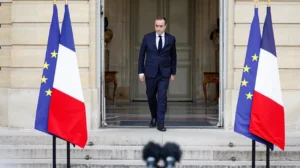
President Emmanuel Macron reiterated this underlying opinion in an address of the Ecole Militaire in Paris in March 2025, when he said, “Our nuclear weapon is a guarantee; it is full, sovereign, and French to its core. This ideal is still relevant to the way France views the world security agenda and its relations with peers and rivals.
Post-Cold War adaptation and strict sufficiency
After the cold war, France considerably downsized her nuclear arsenal which had more than 500 warheads to a current of about 290. This decrease is an indicator of the policy of strict sufficiency which focuses on holding the required number of weapons to guarantee effective deterrence. France is not concerned with numerical equality with the other nuclear powers, but instead of aiming at this, she aims at having an arsenal with the capacity to do unacceptable damage to any aggressor. This has over time enabled France to strike a balance between weapons control commitments, as required by Non Proliferation Treaty (NPT) and defence interests.
Composition and modernization of the nuclear arsenal
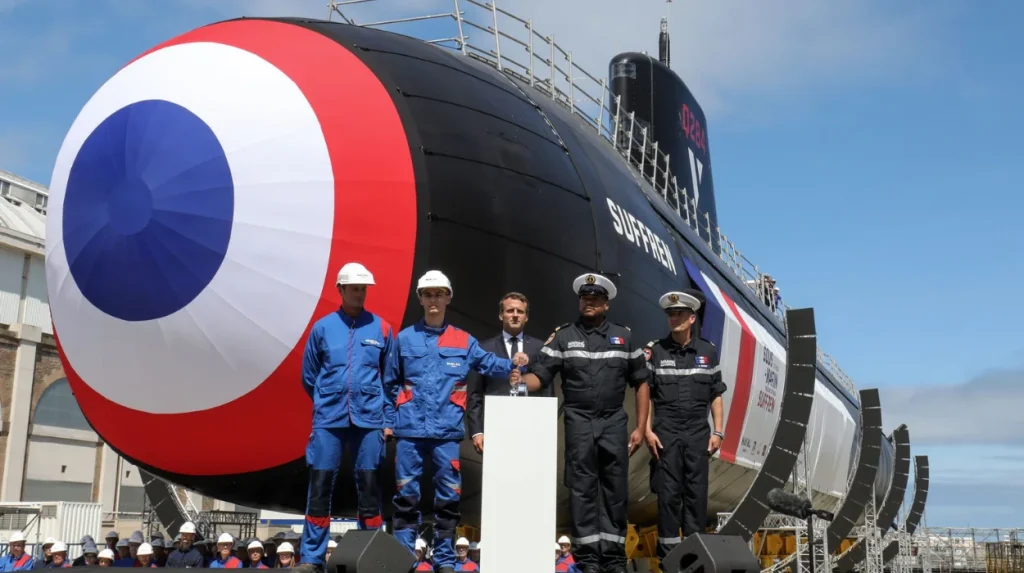
The nuclear deterrent of France has a two pronged force that consists of submarine-fired ballistic missiles and air-fired nuclear cruise missiles. The ocean platform includes four Triomphant-class nuclear-powered ballistic missiles submarine (SSBN) vessels with M51 missiles each having a reach of more than 9,000 kilometers. These submarines are being equipped on the basis of a continuous patrol cycle in order to make sure that they are survivable and able to make second-strikes attacks.
The M51 system is in a continuous improvement program and the M51.3 version is set to be fully operational in 2026. It includes a high degree of accuracy, better penetration and capability to carry several independently targetable reentry vehicles (MIRVs). The upgrades will also make sure that the nuclear deterrent in France is credible and capable of being adjusted to the new missile defense systems.
Rafale aircraft and air-launched capabilities
The air-based component of the deterrent includes Rafale fighters equipped with ASMPA (Air-Sol Moyenne Portée Amélioré) nuclear cruise missiles. These aircraft, operated by both the French Air and Naval forces, allow for a flexible response option in scenarios where a limited strike is deemed necessary to restore deterrence. France has announced plans to develop a next-generation hypersonic air-launched system by 2035, further diversifying its strategic toolkit.
This dual-component system maintains France’s doctrine of flexibility, enhancing the credibility of its deterrent by providing both retaliatory and demonstrative strike options.
France’s nuclear deterrent in the European and global context
Though France re-joined the other integrated military command structure of NATO in 2009, its nuclear forces are completely independent of nuclear planning. This difference highlights the long-standing belief that France has on sovereign command and control. However, the French leadership will frequently emphasize the contribution of the nuclear posture to European and allied security in an indirect way.
Macron has focused on the possibility of greater strategic coordination among EU partners in recent key points to European defense debates. The nuclear deterrent of France is put in perspective as a stabilizing factor, particularly considering the increased threats posed by state and non-state actors. The 2025 defense white paper by Macron repeats the necessity of Europe to be responsible for its own security, nevertheless, referring to an important role of NATO.
Responding to global threats and strategic ambiguity
The deterrent policy of France is important in a geopolitical context where Russia is aggressive, China is mobilizing its military, and North Africa and the Middle East are unstable. The French doctrine is strategically ambiguous, especially when it comes to the concept of a dernier avertissement, a final warning which entails a limited nuclear attack both to demonstrate determination and to reestablish deterrence.
Although this ambiguity is aimed at strengthening deterrence, critics believe that this may blur the lines and make crisis control more difficult. However, the policymakers of France still view it as a mandatory factor to ensure that potential enemies are not sure of particular borders.
Strategic debates and future trajectory
In France, there is still a debate on possible improvements in terms of intelligence and operational alignment with allied nuclear countries, especially the United Kingdom. There have been suggestions of more coordinated submarine patrols or intelligence fusion, but these are approached with a lot of caution so as to not defeat the independent posture of France.
According to the French Ministry of Armed Forces, any such collaboration would be restricted to the areas that are not encroaching on decision-making freedom. There are also some renewed debates in 2025 regarding the further development of an expansion in European defense industry collaboration that would indirectly facilitate nuclear-specific infrastructure, e.g., submarine systems and cyber defenses systems.
Sustaining disarmament commitments alongside modernization
France still favors multilateral disarmament initiatives but repeats that it would have to be a two-way reduction that is easy to verify. The French remained a “responsible nuclear state” and transparency in the force structure and its ongoing participation in arms control discussions were reinforced by France in the NPT Review Conference 2025.
French leaders emphasize that modernization of the current systems is not an issue that is incompatible with disarmament commitments as long as stockpiles are kept at a limit and delivery systems do not increase in the type or scale. The bigger dilemma lies between the disarmament demands and national security in the unpredictable international climate.
The example of nuclear deterrent plans of France in 2025 demonstrates that even a country that underlies its foreign policy on the principles of independence can adjust to the changing needs of world security without giving up on its initial principles. With modernization, continuity in its policies and controlled interaction with its allies, France is in a strategic position that aims to put a check on aggression without compromising flexibility and independence. With the threats increasingly becoming more diffuse and power increasingly disputed, the autonomous policy of France will continue to serve as a major challenge test in the way to manage the complexities between national independence, collective security, and credible deterrence.