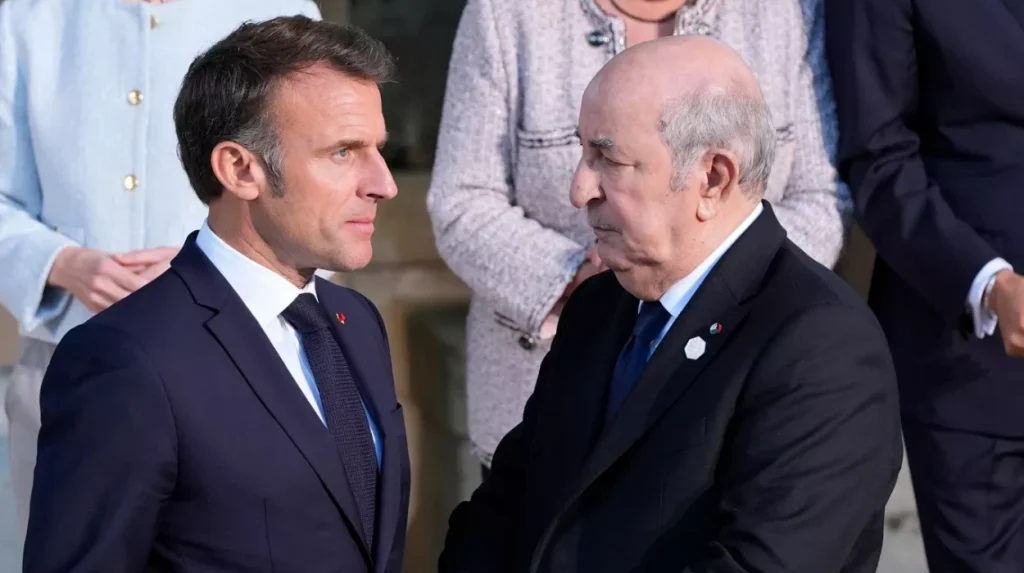
The relationship between France and Algeria has reached a new matured tension in 2025 as characterized by a lack of a solution to historical conflicts which are combined with migration and international relations. The stumbling block of the present rupture is the fact that France has blocked Algerian diplomats’ visas to their territory, a decision that has prompted a prompt action by Algiers.
Suspension of the 2013 Visa Exemption Agreement
In April 2025, French President Emmanuel Macron ordered his government to suspend the 2013 visa waiver accord when the officials of Algeria who entered France under the diplomatic or service passports were not required to obtain a visa entering into France within 90 days. The order, to Prime Minister Francois Bayrou and Foreign Minister Jean-Noel Barrot, required an immediate synchronization of visa issuance policy with the rest of Schengen policy, greatly complicating travel by Algerian officials.
This suspension is in the wake of allegations by the French over Algeria failing its role under the system of Obligation to Leave French Territory (OQTF). The French authorities claim that Algeria is not accepting the repatriations of illegal migrants, which can impact negatively on migration control as well as their national security.
Explaining the action, Interior Minister Bruno Retailleau said “diplomacy of good intentions” had not worked. He reiterated that France will now have to pursue binding agreements that come with migration controls which is consistent with the broader domestic agenda of Macron in seeking immigration reform.
Reciprocal Algerian Response and Diplomatic Fallout
Algeria immediately reciprocated in kind at diplomatic level. Algiers officials denounced that move by France as an act of unilateral coercion and recalled the privilege of mutual visa rights to the French diplomats. Such a reversal has actually left French officials subject to full visa requirements when visiting Algeria and this surely implies a condition of no-more-trust.
The spillover has been to staffing at the embassies with some of their diplomatic jobs getting reduced or have been stagnated. Algerian leaders are also accused of withholding accreditation of certain French diplomats over a period of more than two years, which adds to the air of bureaucratic stagnation that Algeria was in.
Algeria has also ended the French mission privileges in Algiers that was of rent free status, a show of kindness in the past. These advances highlight the way underlying diminishing trust has trickled down into policy and even the semantics of symbolic overtures once regarded as fundamental to proper diplomatic etiquette.
Historical and Geopolitical Tensions Underpinning the Rift
There is more under the overt disagreement over visas: much deeper rooted are the geopolitical and historical resentments that have long plagued Franco-Algerian relations.
Western Sahara Recognition as a Flashpoint
In 2024, the decision by Macron to officially recognize the sovereignty of Morocco over western Sahara once again revived old tensions between Algeria and Morocco involving France in the conflict in the region. Algeria has long served to support the Polisario Front and also perceives the French support to Rabat as a direct challenge to its foreign policy.
This Alignment change in French attitude has solidified Algerian stance on bilateral issues and brought in a new twist of mistrust. Algerian leaders do not view the visa limits simply as their enforcement by policy, but rather as an extension of the trend of diplomacy marginalization.
Detentions of Dual Nationals and Civil Liberties Concerns
Another key stop is the attitude of Algeria to French-Algerian thinkers and activists. The arrest of both dual nationals, writer Boualem Sansal and journalist Christophe Gleizes has drawn the anger of French authorities and the general civil society. Paris has condemned these arrests, which he termed politically and as a sign of excessive influence of Algeria on suppression.
President Macron has been said to have complained on how Algeria ignores French efforts to intervene on the behalf of Algerians in its own country. This aspect of the conflict takes on human rights coloring to an otherwise strategic stand off.
Political Strategy and Domestic Considerations in France
The shift in the visa policy by the French government has to do with the foreign policy strategy, but also with considerable domestic politics calculations.
Macron’s Internal Pressures and Migration Narrative
Making the migration issue one of the major electoral topics at a time when regional elections will be held in late 2025, France is experiencing campaign predictions that it will not only challenge its traditional greeting party but also topple it. The political right and left seek pressure on the centrist government of Macron to tackle the undocumented migration and security on the border of France.
The decision to tighten visa protocols for Algerian officials aligns with a broader crackdown aimed at appeasing public anxiety over immigration enforcement. Retailleau’s framing of the issue as one of “mutual respect” and reciprocity signals the administration’s effort to project strength on security and sovereignty.
Broader Implications for Franco-Algerian Dialogue
This hardline stance, however, complicates efforts to maintain dialogue with Algeria on matters ranging from counterterrorism to trade. France risks alienating a key regional partner at a time when cooperation is crucial to managing instability in the Sahel and broader Mediterranean region.
The diplomatic fallout also constrains initiatives designed to improve bilateral ties through education, cultural exchange, and economic collaboration. Academic institutions and civil society groups with long-standing ties to Algeria have voiced concern over the consequences of tightening mobility for professionals and researchers.
European and Regional Dimensions of the Crisis
France’s decision is also reverberating across the European Union and the Maghreb region.
Coordination with Schengen Partners on Visa Policy
By requesting Schengen members to consult before issuing visas to Algerian diplomats, France is attempting to broaden the diplomatic pressure. This move is viewed as a strategic attempt to internationalize the issue, using collective leverage to force Algerian cooperation on repatriations.
It also reflects growing European frustration with North African governments over the repatriation of undocumented migrants. France’s action could serve as a blueprint for other EU states seeking to tighten enforcement through diplomatic channels.
Regional Rivalries and Maghreb Dynamics
Macron’s alignment with Morocco, combined with Algeria’s suspicion of European interventionism, has introduced new volatility into the Maghreb political landscape. Algeria has deepened its ties with Russia and China in response, signaling a shift in strategic partnerships that could reduce French influence in North Africa.
This shift adds further complexity to European efforts to stabilize the Mediterranean corridor, which is already challenged by migration flows, economic dislocation, and growing geopolitical rivalries.
Economic, Cultural, and Diplomatic Consequences
The visa suspension extends beyond diplomatic maneuvering, carrying real-world implications for individuals and institutions across both countries.
Disruption of Professional and Academic Mobility
It has further made it difficult for Algerians who want to travel to France either on a professional or student basis. Student and research visa applications have been processed at a drastic frustration of the sharing of knowledge, which offers the essence of the cultural and scientific activities between the two countries.
French business delegations as well observe that it is hard to get in constant contact with Algerian counterparts. Such destabilizations disrupt the economy at a moment when cooperation is needed at the regional scale in terms of inflation and achieve a shift in energy.
Long-Term Risks to Bilateral Normalization
The danger of a long-term diplomatic freeze can be even worsened as analysts warn that unless there are attempts to stabilise the situation, the rift may continue to descend into it. The reciprocal ban of visas signifies ingrained anger and a perceived loss of trust which no longer demands an easy course correction unless there are significant changes in policy.
The situation has been publicly commented on by journalist and activist Khaled Drareni, who called the move a symbol of the overall failure of communication. He cautions that it could turn out to be a breakage of diplomacy disguised as a migration management program and could become a precedent of future hostile action.
“How did America get to the point where we are sending hundreds of thousands of taxpayer dollars abroad to NGOs that are dedicated to spreading atheism all over the globe? That’s not what leadership on protecting the rights of the faithful looks like. And it ends with this… pic.twitter.com/ZEl8FhzSYo
— Sachin Jose (@Sachinettiyil) February 5, 2025
Reflecting on a Pivotal Moment in Franco-Algerian Relations
Revocation of Algerian diplomatic visa requirements is a decisive moment in the changing French foreign policy relations with its former colonies. The aggressive stance by Macron is symptomatic of a larger tendency in Europe to use mobility as an instrument of diplomacy, especially as regards to the enforcement of migration. The intense reaction is the indicator of Algeria of lingering sensitivities of colonial memory, sovereignty and geopolitical location.
Now that the two countries will be healing their broken relationship, there will be the need to consider the price of ongoing confrontation pitting against the strategic advantages of cooperation. Future negotiations may be more dependent on pragmatism or pride to set the tone of Franco Algerian diplomacy in the years to come as much as the capacity of both countries to present a common strategy pertinent to addressing shared issues in the region.