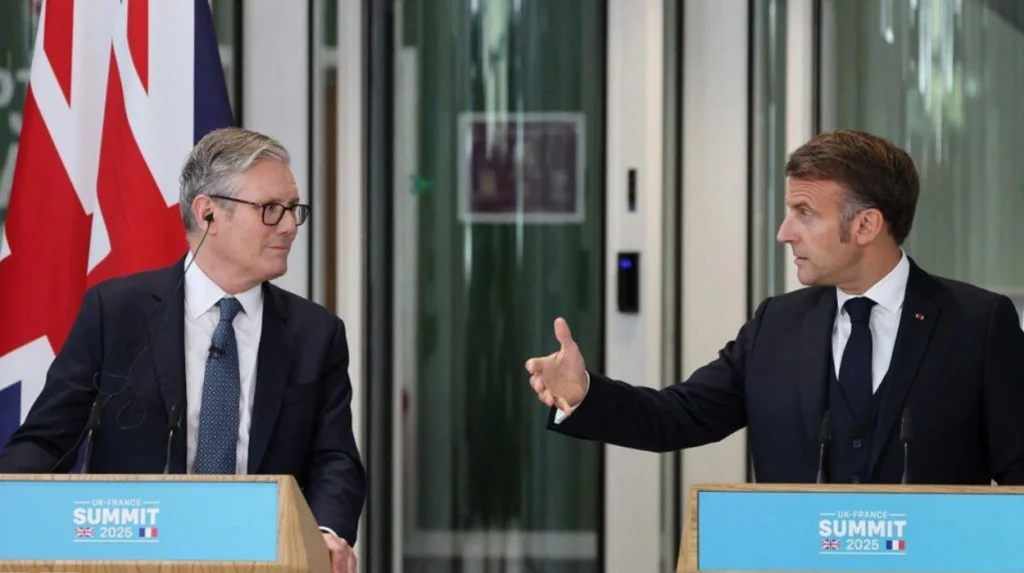
In July 2025, the United Kingdom and France launched a pilot migration deal with far-reaching implications. Termed the “one in, one out” pact, the arrangement allows the UK to return migrants who arrive illegally via the English Channel to France. In return, the UK will accept an equal number of asylum seekers already present in France through a legal, controlled process.
The agreement was supported by the UK Prime Minister, Keir Starmer and French President, Emmanuel Macron as a possible turning point in fighting illegal crossings and limiting the power of human traffickers. Over 21,000 migrants have already crossed into the UK by small boat so far this year, up 56 percent in 2024.
The pilot aims to replace chaotic, dangerous migration with an orderly alternative. But despite political optimism, the agreement has already stirred serious legal, logistical, and ethical debates across both countries.
Legal Complexities And EU Oversight
European Commission Approval And Legal Ambiguities
The European Commission, as a member of the EU, should approve the transaction so that the deal does not contradict the EU legislation. The Brussels authorities have indicated a willful support of the working collaborations on migration with a keen observation to any violation of European asylum policies and human rights.
The UK, which is no longer an EU member, courts that France is a safe country as per the European Convention on Human Rights and as such, an ideal destination of returns. But that legal premise may not be enough. Various EU members, notably Italy and Greece, fear that such a move to ratify this deal is likely to lead to an unevenly distributed burden sharing within the bloc.
Unclear Scope And Weak Enforcement Mechanisms
Home Secretary Yvette Cooper confirmed that precise quotas for weekly returns have not yet been finalized. Reports suggest that as few as 50 returns per week are under consideration—a fraction compared to the scale of Channel crossings.
Experts in the area of law anticipate constitutional objections in both states, particularly when migrants challenge directed returns under the single concept of risk or due process infraction. It is not yet clear how the selections will be done whether on a first come first serve basis or through ubiquitous eligibility filters.
Humanitarian Concerns And Local Backlash
Risks To Vulnerable Migrants
According to refugee campaign organizations, turning asylum seekers into a transaction balance comprises the dignity of these people. Others can be deported to France to then stay languishing in insecure situations in places such Calais where the informal encampments have no facilities. Others, worried of getting deported, can look to even more dangerous routes.
The UK government states that it will exclude unaccompanied children and those with small children in the program of returns. However, the critics respond that vulnerable adults are still unprotected, and translation and the legal assistance of many asylum seekers are still lacking during the processing.
Pushback From French Local Officials
Mayors and regional leaders in France have expressed fierce opposition. The Mayor of Calais, Natacha Bouchart, dared to forewarn that the agreement will encourage more migrants to head to northern France where they will be hoping to be among those picked to be resettled in the United Kingdom putting even more strains on already limited resources.
Republican parliamentarian Xavier Bertrand accused the proposal as one-sided and said that the UK was trying to cherry-pick the cases and leave the rest of them to the communities in France. The saga of this kind of opposition within France can slow down the ratification at the level of parliament and the future of the pact remains questionable.
Political Dynamics In London And Paris
Starmer’s Need To Deliver Fast Results
Stopping Channel crossings is a political necessity to the new prime minister Keir Starmer. Immigration is a significant topic in the minds of the people and Labour also based its campaign on practical solutions rather than symbolic gestures. The migration pact was supposed to show a sign of a new beginning as different to the previous controversial Rwanda policy of the previous government that was unlawful and announced unlawful in 2024.
According to the administration of Starmer, bilateral cooperation is humane and more efficient than offshore deterrence patterns. Nevertheless, the internal critics, among them, the group of Conservative MPs, have expressed doubts concerning the ability of the pact in producing effectual results due to its limited scope and lack of clarity in terms of time span.
Macron’s Balancing Act
President Macron has to balance between the competing interests such as complying with the expectations of the EU, protecting the national interests, and avoiding the rise of far-right narratives in the run-up to the 2026 French elections. His support for the deal reflects a preference for structured migration management, but his party faces pressure from within and outside parliament.
While France has long demanded more UK accountability for Channel crossings, absorbing returnees could provoke backlash if perceived as conceding too much without reciprocal EU benefit.
A Wider Migration Struggle Across Europe
Fragmented Policies And Shifting Burdens
The UK-France agreement represents the wider problem of European migration control. However, though both countries present the deal as a humane alternative to people-smuggling, it is essentially transferring burdens without solving fundamental problems people are facing, namely conflict, climate displacement and economic desperation.
There is also the aspect that the trial is at a very small scale and it is bilateral showing the fragmentation of the EU. Multilateral responses to asylum and burden-sharing are partial, which puts the states directly affected by asylum seekers and transit states at the negotiation table, or in conflict.
Regional Politics And Rising Populism
As the far-right parties are gaining traction in several capital cities, politicians are put in a complicated situation with an interest in demonstrating their humane nature at the same time displaying no weakness when it comes to borders. Bilateral agreements such as this are only a way to achieve the immediate political aspirations and in most cases lack structural solutions.
If the deal is approved and succeeds in deterring irregular crossings, others may replicate it. If it fails or triggers humanitarian backlash, it could further polarize migration politics in Europe.
Voices From The Field
Luisa, a migration rights advocate, spoke to France 24 on the topic, emphasizing the human and legal implications of the agreement. She said:
“This agreement risks turning human beings into bargaining chips, ignoring the complex realities migrants face and the legal protections they deserve,”
Her interview highlights how legal processes alone cannot mitigate ethical risks when human lives are treated as negotiable units.
UK-France migrant deal 'robust' against legal challenges, Cooper says pic.twitter.com/JL4pzefZGn
— Luisa (@Luisa45518) July 11, 2025
Limited Transparency And Accountability
Vague Metrics And Undefined Outcomes
While both governments tout the pilot’s transparency, key operational details remain absent. How will success be measured—by the number of returns, reduced crossings, or prosecutions of smuggling networks? No clear metrics have been proposed.
Moreover, independent oversight is lacking. Civil society groups are calling for third-party monitoring, especially around returns, treatment of asylum seekers in camps, and the legal procedures used in selection and vetting.
Failure To Address Root Causes
The pact also does little to address why people risk their lives across the Channel in the first place. Without investment in safe migration pathways, refugee processing in origin or transit countries, and foreign aid, enforcement alone cannot stop migration flows.
Relying on deterrence and returns fails to engage the full scope of the humanitarian crisis. Until international cooperation prioritizes protection alongside control, short-term arrangements are likely to backfire.
The Unfolding Test Of Credibility
The UK-France migration pact, though framed as a progressive alternative to past failures, is already weighed down by legal ambiguity, humanitarian risks, and political tension. It attempts to reconcile border control with fairness but risks achieving neither unless substantially reworked and monitored.
The immediate future months will be critical. Whether this pact is to be model or a warning will be determined by EU approval, discussion in the French parliament and the practical effects on the ground.
Europe is experiencing its most challenging migration crisis in ten years, so the global community will be monitoring the capacity of bilateral agreements to deliver humane solutions, or whether their introduction simply suspends the process to seek such solutions.