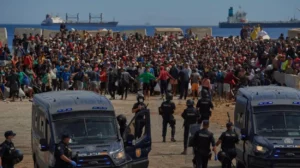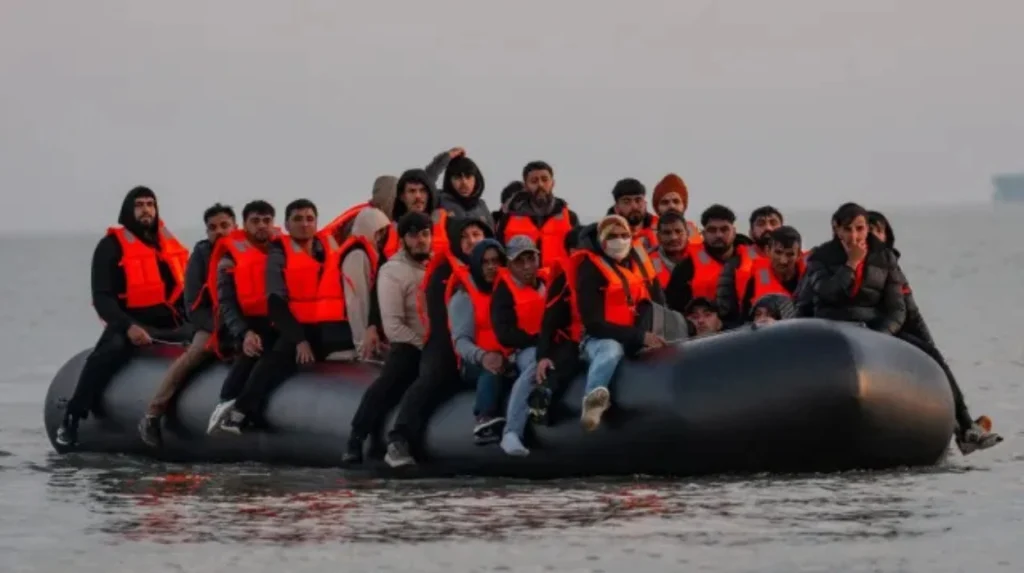
And in 2025, it is in the sense of the continued rise in the number of migrant crossings of the English Channel that the cross-franco-british political and operational difficulties have accentuated. The French President Emmanuel Macron has ordered the UK to step up its funding on matters relating to French police in deterring migrants in the bid to cross the hazardous waterways of the Channel. This is needed against the backdrop of increasing influx of migrants, changing lines of operations as well as complicated diplomatic arrangements.
To analyse it, the following new statistics regarding Channel crossings, specifics of the UK-France funding agreement, operational problems experienced by French authorities, and words of major stakeholders are considered. It also queries the possibility of more funding and collaboration in helping to curb the tide of irregular migration in 2025.
Rising Channel Crossings and Operational Context
Surge in Migrant Arrivals in 2025
The year 2025 has been the year of the rapid growth in numbers of migrants that appeared in the English Channel on small boats. A single day, June 1, saw 1,194 migrants arrive in the UK, a figure that is a top daily figure this year. Far more than 900 people crossed the Channel on a day in mid-June, taking the provisional annual total to 16,183 arrivals, 42 percent more than in 2024.
To these nations, these numbers depict a long-term and increasingly demanding issue. Children and families are among the fragile groups that are involved in migration and thus the crossings are quite risky. One partnership has been good weather and a more effective way of packing the boats so that the smugglers can get more people across the water with each crossing.
Operational Limitations and Proposed Changes
In the recent past, the positions of French authorities to intercept migrant boats are limited. They have no power to intervene, unless a vessel is in a life threatening condition at the sea. But France will also modify its rules of engagement so as to permit boats to be intercepted within 300 meters of the coast irrespective of direct threat. This is done so that boats do not reach waters bound to the UK and should be a major point of discussion in the upcoming UK-France summit.
French police usually struggle to keep up with the tactics of people smugglers, with tipping off the beaches a sprint, and boats being launched during the low light hours of night. An inter-ministerial committee commissioned by the French interior ministry is required to come up with an action plan in time to make the interception work better by the summer of 2025.
The UK-France Funding Agreement and Cooperation
Financial Commitments and Operational Support
A multi-year funding package was agreed by the UK and France in March 2023 in order to reduce Channel crossings, putting the figure to around (479 million) 479 million pounds (541 million) euros. This funding ensures the deployment of 500 more French police authorities, the building of a new detention hall in France that is anticipated to be revealed by the end of the year 2026, and the purchase of improved surveillance mechanisms such as drones and night-vision goggles.
The funding is spread over three years of which there is euro 141m in 2023-24, euro 191 m in 2024-25, euro 209m in 2025-26. This is a huge rise in comparison to the past gives of the UK which had reached more than 250 million since 2015.
Impact and Challenges
According to the UK government, the financing has improved combined operational efforts and led to a 40% increase in patrols. In order to “put an end to this disgusting trade in human life,” Prime Minister Rishi Sunak has made it clear that one of his top priorities is to eliminate small boat crossings.
But, despite such investment, there is the increased number of crossings which demonstrates the complexity of that matter. The UK and France still aim at improving their cooperation interactions by the proposal to include getting French forces to stop the boats further along the coast and enhancement of intelligence sharing between the two countries.
Statements from Key Stakeholders
Emmanuel Macron, French President
Although Macron has referred to the current collaboration as a “new beginning,” he maintains that more tangible answers and more UK financing are required to bolster French police efforts. He has emphasized the limitations of returns as a deterrent and stated unequivocally that migrants who have arrived in the UK will not be sent back to France under existing accords.
Rishi Sunak, UK Prime Minister
Sunak has again promised the UK will invest in French border security as well as deployment of more officers. He emphasizes the necessity to look at the practice of illegal crossing, not to control it but to stop the cycle. During the forthcoming UK-France summit, Sunak is likely to address additional collaboration with Macron and mentioned that there had to be stronger concerted action plans.
Bruno Retailleau, French Interior Minister
What Retailleau proposes is to increase the capacities of the French police to stop the migrant boats before they reach UK waters. He advocates additional resources and operational capacities that can be used to fight people smuggling networks.
Keir Starmer, UK Opposition Leader
Starmer has vowed to also bring up the subject of small boat crossings with Macron at the G7 summit in a bid to increase collaboration in northern France to restrict migrants from getting away with the French police.
Human Rights Observers and Media
The other issue reported shows the perilous surrounding in which migrants cross the Channel and condemns the recourse to tear gas and violent methods by the police. Those watching argue that there should be well-balanced measures that give priority to migrants’ safety as well as security of the borders.
Operational and Strategic Challenges
Smugglers’ Adaptability
People smugglers also keep changing protocols, utilizing even more fast boats, better packing and use of holes in patrolling. There are weaknesses in terms of the capacity of French police to intercept before the migrants manage to launch their boats considering the legal limitations to the distance of intervention.
Legal and Diplomatic Constraints
It will take legal changes and diplomatic consent between France and the UK to change the rules of engagement to the extent that they can intercede so far up to 300 meters offshore. Whether to enforce a balance between operational efficiency and adherence to maritime legislation and human rights has always proved a sensitive matter.
Infrastructure and Capacity
A key part of the strategy is a new detention centre in France, which is the UK-funded facility, not fully operational till late 2026. Prior to this, there might be capacity shortages that can hamper the returns as well as processing hefts.
Future Prospects and Policy Directions
Enhanced Joint Operations
The two governments are looking forward to further cooperation in operations such as intelligence, joint patrols and training. The next UKFrance summit is likely to dwell a great deal on migration control and financial promises.
Technological Innovation
Acquisition of surveillance technology including aerial drones and night vision tools should also enhance the detection and interception measures. These devices will come in handy to be able to keep an eye on coastal places that are located deep and detect smuggling as soon as possible.
Comprehensive Approach
Analysts maintain that enforcing the Channel migrant crisis will not stop the migrants. The holistic policy entailing safe and legal avenues to migration, humanitarian services, and resolving route causes in the homeland of the migrants is required.
Recent Relevant Instances in 2025
Daily crossings of the Channel peppered with over 1000 migrants in June 2025 has put more pressure on both governments. The hardline approach is represented by the UK government, which sent the Illegal Migration Bill to the Parliament in early 2025 to expedite deportations and reject asylum cases of illegal entrants into the country.
The move by France to alter their rules to pursue boats further when near the coast indicates the trend to become more active in maritime policing. The political determination that is shown by Macron and Sunak to boost funding and cooperation implies that the further prioritization of this issue in bilateral relations is being maintained.