The French legislature has passed a bill restricting children born in its overseas colony of Mayotte in the Indian Ocean from access to citizenship. Under fire, the bill restricts children only born in Mayotte but not children born in France or elsewhere within French territories, although there have been growing calls for its wider application.
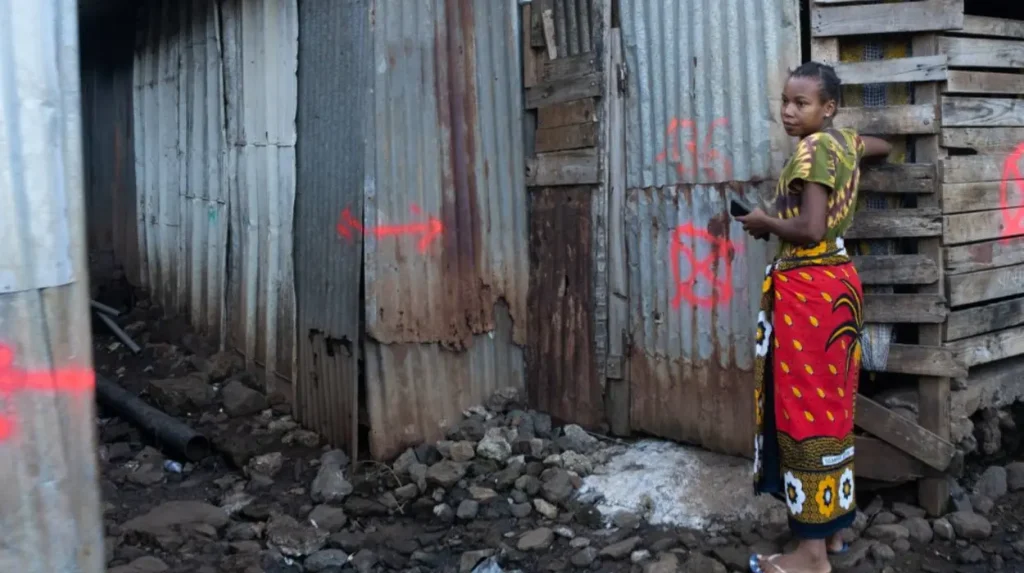
Mayotte Island in the Indian Ocean is considered to be within the European Union since it is a French overseas department. Yet it is also a very poor region. It is estimated that there are currently more immigrants than the actual native population of the island.
Numerous foreigners arrived on the island territory over the years using irregular channels in anticipation of eventually being granted residence and subsequently citizenship status within an EU nation. These migration years have resulted in cases of several generations of both irregular and regularized immigrants to Mayotte residing under the same roof.
In some cases to date, one of the means whereby individuals acquired normal status was through being born in the French overseas territory; to date, French law provided that any child born in France — including Mayotte — to a foreign parent may be awarded French nationality from age 13, provided they had spent enough time in any French territory and the parent met specific requirements. This legal foundation is referred to as the “right of territory” or “ius soli,” and has been part of French law in its former incarnation since the 1990s — although the underlying principle dates back to the early 19th century.
But that is set to change in the case of Mayotte. Mayotte: ‘a laboratory for the far-right’ Up until now, French law required children born in the overseas community to have one parent who had lived there legally for a minimum of three months at the time of birth in order to be eligible for French nationality in the future.
The new bill, signed off both by the Senate and the National Assembly now requires that both parents must have legally resided in Mayotte for a minimum of a whole year — with the exception of single parents, where it will be enough that the single parent has legally resided in the overseas territory for a year.
The bill has been criticized however as only extending to Mayotte cases and not affecting other immigrants within the rest of France, at least in the meantime. Some are concerned that the bill opens the door for subsequent restrictions to be made at a later time countrywide. Green Party member of parliament Dominique Voynet explained that the bill would be “the end of the right of territory in France.”
“Mayotte is about to become a laboratory for the ideas of the far-right,” she added in a statement.
Broad political backing for the new legislation
The far-right National Rally party’s parliamentary leader, Marine Le Pen, who is famous for her hardline anti-immigrant stance, however asserted that the new legislation would have little effect on France’s overall immigration numbers, suggesting instead that the law be broadened “to simply ban the right of territory across all national land” instead. This was repeated earlier by centrist Renaissance Party Justice Minister Gerald Darmanin, who stated that the French constitution must be modified to put an end to most ius soli citizenship rights for individuals born in French territory.
A right-wing Republican Party lawmaker who had initially introduced the new bill; Philippe Gosselin, had contended that the earlier legislation had acted as a pull factor for migrants to the Indian Ocean archipelago:
“The chance to acquire French nationality is a certifiable motivator for illegal immigration” into the overseas country, he added on its launch. 12 French territories controlled by Paris
Of an estimated 150,000 to 200,000 foreigners with varying degrees of official identification documents in Mayotte, at least 50,000 are estimated to have been born in Mayotte. The new legislation would specifically target those who are too young to be covered under current ius soli legislation.
Besides Mayotte, France possesses a further 11 overseas entities: Guadeloupe, French Guiana, Martinique, Reunion, New Caledonia, French Polynesia, Saint Barthelemy, Saint-Martin, Saint-Pierre and Miquelon, French Southern and Antarctic Lands, and Wallis and Futuna.
All together, by the French National Statistical Office’s numbers, there are roughly 2.6 million residents of these territories combined — with all of these regions enjoying a certain quality of life relative to the others. As a general rule of thumb nonetheless, it is pretty much consensus opinion that Mayotte is France’s poorest area and thus passing the new legislation must have been especially sensitive for political reasons.
At present, the new legislation is restricted to Mayotte, although it is uncertain which of these territories any future extension of the law could next impact. In order for a similar law to be implemented in mainland France, the constitution would need to be adjusted accordingly, which would take longer and involve more steps than the legal modifications made to Mayotte. Aftermath of deadly cyclones
Mayotte is also continuing to struggle after a succession of natural disasters, such as two catastrophic back-to-back cyclones in late 2024. In the aftermath of these ruinous events, infectious diseases have been rampant across the area, and access to clean water has continued to be one of the primary issues.
In the wake of the cyclones, migrants felt a greater sense of fear of deportation. There were dozens of accounts of migrants avoiding seeking shelter in government centers, fearing that these indeed were a cover-up to bring them together to deport them.
On April 8, European Commission Executive Vice-President for Cohesion and Reforms Raffaele Fitto traveled to Mayotte and stated that even though French President Emmanuel Macron had made promises to assist victims of recent occurrences — largely migrants — there remained a feeling of “systemic neglect.”