One of the most controversial fiscal plans in the 2025 political agenda in France is the Zucman tax, named after an economist Gabriel Zucman. It proposes a taxation of 2 percent per annum on those with assets exceeding EUR100 million estimated at 1,800 households. It was aimed at structural inequality and the fight against tax evasion by the richest, which served as an effort to make the wealth taxation system in France more modernized and fortify the government funds.
The proposal was renewed in early 2025 when the left-wing and the ecologist parties in France encouraged its re-addition into the 2026 budget plan. Such a move would create a range of 15 to 25 billion each year, which is a significant addition in a budget in which a government is struggling with a deficit of approximately 5.4 percent of GDP, the largest in the eurozone. The tax is expected to address a historical problem where very rich people tend to contribute relatively less than the average citizens since tax optimization frameworks allow the creation of complex tax optimization structures.
Gabriel Zucman was a proponent of this approach and the strong tax who has underlined that the tax should not be compromised. He advised against giving excessive exemptions especially on family businesses or professional assets as it would imply not only unreasonable but also ineffective since it can be avoided by restructuring the corporate or using offshore trusts.
Political Dynamics And Stakeholder Positions
The Zucman tax has caused far-reaching political divisions in the National Assembly and the Senate of France, indicating the general ideological conflict between fiscal policy and social justice.
Government Reluctance And Centrist Concerns
Prime minister Sebastien Lecornu and budget minister Amelie de Montchalin have been against the introduction of the tax on professional or business related properties that they believe will wipe out entrepreneurship and the domestic investment in the country. Their position is in keeping with the apprehensions expressed by the unions of the employers and leading business lobbies that threaten possible capital flight or reduced confidence of investors.
The centrist alliance of the government continues to be cautious in terms of balancing its need to be popular among people through redistribution and the economic slowdown. With a sensitive 2026 fiscal year to look forward to, the key aspect of France political policy is to sustain growth and stay investor-friendly.
Parliamentary And Public Support For The Tax
Despite government hesitation, the Zucman tax enjoys robust backing among opposition parties and the public. Socialist and Green lawmakers have presented versions of the tax that preserve its progressive intent while attempting to secure parliamentary consensus. A recent Ifop survey in 2025 revealed that 86% of French citizens support the measure, including over 90% of voters aligned with President Emmanuel Macron’s party.
However, the Senate dominated by the center-right has repeatedly blocked similar initiatives. Conservatives argue that wealth taxes are economically inefficient and symbolic rather than transformative, pointing to the 2018 repeal of France’s previous “ISF” (solidarity tax on wealth) as evidence of limited success.
Economic And Social Implications Of The Zucman Tax
At its core, the Zucman tax challenges France’s longstanding model of taxation by directly addressing the issue of wealth concentration.
Economic Impact And Revenue Potential
As the wealth of the richest people in France has never been higher, with the fortunes of Bernard Arnault and others being reported to grow by up to 19 billion dollars in early 2025, the divide between the ultra-rich and the rest of society has never been as deep. Proponents claim that the tax would make the fiscal situation fair and raise the much-needed revenue on social welfare, infrastructure, and green transitions.
These opponents have responded by arguing that such a tax would lead to tax migration or foreign investment. However, Zucman believes that the most effective way to capital flight is to have coordinated European or G20-level frameworks, reflecting experiences with the 2021 global minimum corporate tax deal. The policy that France is promoting may also have a wider impact on EU discussions of wealth taxation practices.
Social Cohesion And Equity Considerations
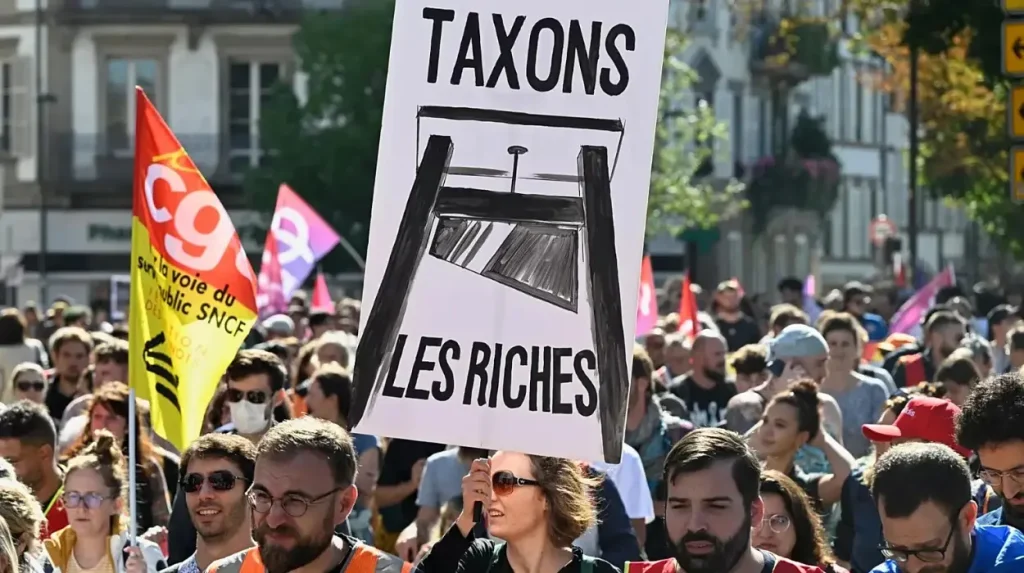
The conversation is not limited to any economic aspect, but to issues of democratic legitimacy and fairness. France, where the disparity has increased even as welfare initiatives have gone up resulting in increased discontent among the people against the perceived richness of the ultra-rich. The Zucman tax can be seen as the indication of a return to the belief in fiscal justice, a problem that is very much connected to both social stability and political trust.
The litmus test of social cohesion through taxation is highlighted in 2025, as the demonstrations and debates take place publicly. The Zucman tax is not just an economic decision to many citizens but also a moral one since it establishes whether the state can force the richest to contribute accordingly to national prosperity.
The Zucman Tax Within The Global Wealth Debate
The significance of the Zucman tax extends beyond France, contributing to a growing international discourse on taxing extreme wealth in the 21st century.
Europe’s Renewed Focus On Wealth Redistribution
European nations, including Spain and Belgium, have recently revisited wealth tax frameworks to fund post-pandemic recovery and social reforms. France’s move toward reintroducing a structured wealth tax would reinforce regional trends toward progressive taxation. It also offers a contrast to countries such as Germany and the Netherlands, where political hesitation has stalled similar proposals.
Global Implications And Policy Diffusion
Gabriel Zucman’s research has long informed international policy circles, particularly on global tax transparency and offshore wealth tracking. Should France implement this tax successfully, it may set a precedent for other OECD members seeking new revenue models amid rising public debts. The measure’s emphasis on minimum taxation could also complement existing EU efforts to harmonize wealth reporting and curb profit shifting by multinational corporations.
The Future Of Wealth Taxation In France
As of late 2025, the Zucman tax stands at a political crossroads. While left and ecologist lawmakers have vowed to condition their budget votes on its inclusion, internal divisions within the ruling coalition complicate consensus. The government’s avoidance of Article 49.3, a constitutional provision allowing forced passage of bills without full debate reflects fears of deepening political instability.
Zucman’s supporters argue that France faces a historic choice: either reinforce fiscal fairness through decisive reform or risk perpetuating inequality. The tension lies in designing a tax robust enough to deliver meaningful redistribution without hampering competitiveness. With legislative sessions continuing into December, all eyes remain on whether the government will adopt a compromise version or maintain resistance under economic pressure.
France’s experience could shape a global blueprint for wealth taxation in the digital and financialized age. The results of this policy experiment whether it strengthens equity or sparks economic adjustment will influence how other advanced economies navigate similar dilemmas between growth and justice.
In the coming months, the trajectory of the Zucman tax will reveal how far France is willing to go in redefining fiscal fairness. Its eventual outcome could mark either the revival of modern wealth taxation or a cautionary tale about the limits of political will in addressing inequality amid globalized finance.