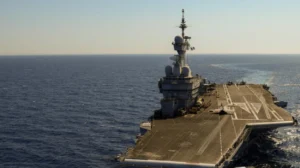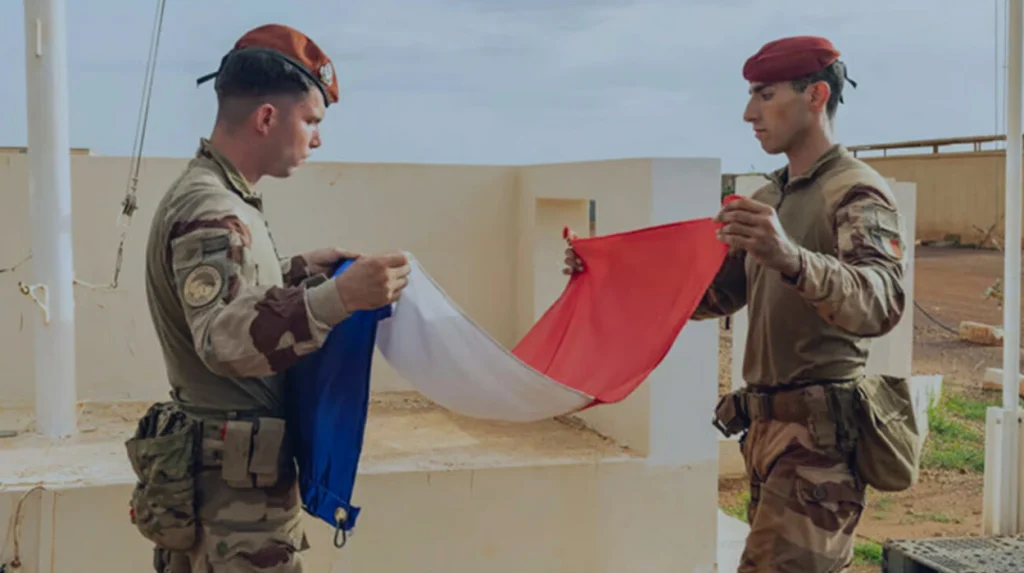
The Sahel did not receive the current counterterrorism operation until Operation Barkhane, yet the operations in the country started a long time ago with the presence of France in the area but the post-2014 operation was the largest activity since decolonisation. During its peak, Barkhane deployed close to 5,000 French soldiers in Mali, Niger and Burkina Faso, to attack al-Qaeda and Islamic State members who were rooted in the rural and border areas. Early battlefield successes such as the neutralisation of senior jihadist leaders generated momentum although it was not enough to stabilize the local government systems. France incorporated this strategy into the G5 Sahel joint force by 2017, although continuing violence revealed the weaknesses of the disrupted politics of the region.
Paris was also following a more comprehensive developmental course with the Sahel Alliance which was established in 2017 with Germany, the EU and multilateral institutions. The coalition promised to provide far reaching long-term governance, education and economic development solutions. Though armed groups were put under pressure during the initial years, structural problems that influenced recruitment: poverty, marginalization and poor presence of the state were not resolved. By 2022, foreign interventions would be unable to counteract political instability within the country, which would eventually precondition massive military coups.
Barkhane operation and early gains
Operation Barkhane planned cross-border to follow groups of insurgents and block supply chains. The French applied heavy intelligence-based operations and accurate strikes that eliminated a number of militant leaders. Nevertheless, it did not stop the spread of violence southways since jihadist networks developed to fit the mobility and impact the community level.
Shift toward multilateral frameworks
By 2022, the EU Training Mission in Mali had trained over 20,000 personnel in an attempt to create local capacity. But the development funds promised slowed down with the European partners providing less than a fifth of all promised resources. Such an inconsistency undermined the sustainability of gains at the ground.
Rise of military juntas
The political situation changed radically in 2020-2023, as a row of coups brought down civilian regimes in the Sahel. The precedent was made by the coup in 2020 and 2021 in Mali, and 2022 and 2023 in Burkina Faso and Niger respectively. Both successive junta portrayed the French military presence as a failure effective and intrusive and exploited popular frustrations. Their actions of pushing French troops away marked the end of the traditional alliances and created the room of novice geopolitical forces.
Popularity of the juntas was enhanced as leaders focused on the sovereignty discourses. Bamako and Ouagadougou crowds echoed the calls to replace the Western presence with partners who regard national choices and this phrase is repeatedly mentioned in local broadcasts in 2024. These domestic changes did not only reshape alliances but they also recalculated the security in the region.
Russian influence and anti-western pivot
Successors of the Wagner Group, Russian military contractors, further spread shortly after the French withdrawal. As of 2024, the European intelligence estimates that there were around 1,500 Russian agents in Mali. They were supplied with arms, training as well as convoy protection in accordance with gold and resource-based settlements. Nevertheless, jihadist attacks became more severe, and Burkina Faso registered close to 2,000 deaths associated with a conflict in 2024, according to the data of ACLED. This dependence on Russian assistance undermined the diplomatic power of the West and further shifted the strategy of the region.
The alliance of sahel states emerges
In 2025, Mali, Burkina Faso and Niger withdrew formally and established a cooperation in the form of the Alliance of Sahel States. This system offers political legitimacy to juntas at the expense of regional pressure systems. Their concerted action provokes the security architecture in West Africa long held and makes the mediation and the peacekeeping more difficult.
Shared European responsibility
The presence of the European Union in the Sahel is still at the core of the present direction of the region. During Barkhane, France was spending approximately 80 percent of the expenditures in security related activities, with EU member countries making the most contributions to the operation via training operations and diplomatic avenues. Different schools of thought inhibited long-term planning, which was already under strain by domestic European political arguments.
These issues were emphasized in the 2025 AU-EU Summit in Luanda. African presidents lauded revived efforts of the African Peace and Security Architecture against continuing under-funding. European authorities recognized the distance between promises and delivery, which indicated the necessity of reassessed development and security investments.
Underinvestment and developmental gaps
The Sahel economies are still in the list of the poorest in the world, with regional GDP per capita within the range of $800. The EUs aid was short term stabilization and not structural development, which exposed the people to the vulnerability of being recruited into jihadist activities. Following the French exodus, the amount of deaths as a result of terrorism increased threefold to approximately 8,000 each year by 2024, demonstrating that the lack of development and disjointed security policies led to worsening circumstances.
Jihadist expansion after the French exit
The changing security environment was quickly taken advantage of by armed forces. By 2025, UN estimates reveal that the JNIM is led by al-Qaeda which controls almost 40 percent of Mali territory. The militant groups extended into border areas of Togo and Benin, raising concerns that the coastal West African states may be the next big front of operation.
Regional spillover and humanitarian impact
The displacement of over 3 million people has been actualized in the Sahel due to violence. Migration flows in North Africa and Europe have risen significantly, and some 10,000 Sahel-origin migrants will be using Libya and Tunisia to cross the Mediterranean by 2025. According to humanitarian agencies, there is an increasing pressure on governments of the coastline as they strive to deal with incursions and still maintain social stability.
Cross-border threats and fragile institutions
Trafficking of arms, illegal mining and trafficking of drugs networks proliferated at the expense of a lax state control. With juntas centralizing the power to capitals, the erosion of governance in the rural areas escalates, which is another fertile avenue to militant growth. These processes have direct implications on international counterterrorism systems.
Geopolitical realignments shaping the sahel
The change of the strategic positions in the Sahel is not only about the departure of France and the arrival of Russia. China enhanced economic involvement by signing mining deals worth more than 5 billion dollars, whereas Turkey provided UAV and training systems to governments that were headed by military. Such actors put their interests in national economic or strategic benefits instead of joint counterterrorism results.
Diversified partnerships and security ambiguities
The presence of numerous external actors that work concurrently makes the governance and security environment of the region more fragmented. Conflicting goals generate discrepancies in training, piece of equipment and changes in institutions. Such incongruities diminish the ability of regional states to develop concerted actions to deal with insurgence.
Implications for continental diplomacy
The African-led stabilization of the Sahel has been demanded by the AU, which has the permanent seat in the G20 since 2023. Nevertheless, the peace and security machineries of the AU are working at about 10 percent capacity, as internal 2025 evaluations show. Independent of sustainable financial support and undivided political determination, continental structures are limited to address the intensifying crises.
Global security ramifications
The Sahel has made an important point in the discussion of security in the world, especially in regard to the risk of exported terrorism. According to the intelligence services of Europe, some of the counterterrorism arrests of 2025 were connected to recruitment networks in Mali. Analysts caution that the unregulated growth of jihadist safe havens can recreate the experience of Afghanistan and Syria but in a different part of the world.
Instability also exposes vulnerabilities in UN peacekeeping operations. MINUSMA, which concluded its mission in 2023 after sustaining nearly 300 casualties, exemplifies the risks of deploying without unified political backing or sustained logistical support. Subsequent security vacuums highlight how stalled multilateral efforts widen operational gaps that militants exploit.
As debates continue over who “lost” the Sahel, the evidence suggests a shared responsibility. French withdrawal accelerated a shift already set in motion by governance failures, fragmented European policies, rising anti-Western sentiment, and opportunistic influence from competing global powers. As 2025 progresses and the AU-EU commitments face their first tests, the unresolved question becomes which coalition regional, European, or emerging external actors can generate the momentum needed to reverse the juntas’ consolidation and reshape the Sahel’s trajectory before the next phase of instability takes hold.