The public dispute between the United States and France over a United Nations vote on the organization’s top human rights post has turned an administrative renewal into a diplomatic flashpoint. What should have been a routine confirmation of continuity for UN High Commissioner for Human Rights Volker Türk instead became a highly visible argument about credibility, human rights, and the political tone of transatlantic diplomacy.
The core of the controversy lies in the resolution by the UN General Assembly to renew for four more years the mandate of Mr. Türk. The resolution has been adopted by an overwhelming majority, but the United States voted against it, along with some other countries. In response to the decision, France reacted very negatively, defending the UN human rights chief while criticizing Washington’s attitude toward human rights issues. US representatives insisted that Mr. Türk did not provide balanced leadership.
It was especially noticeable how much attention this controversy received on social media, where it took place, which made the disagreement seem more aggressive than a typical diplomatic objection.
The vote that triggered the row
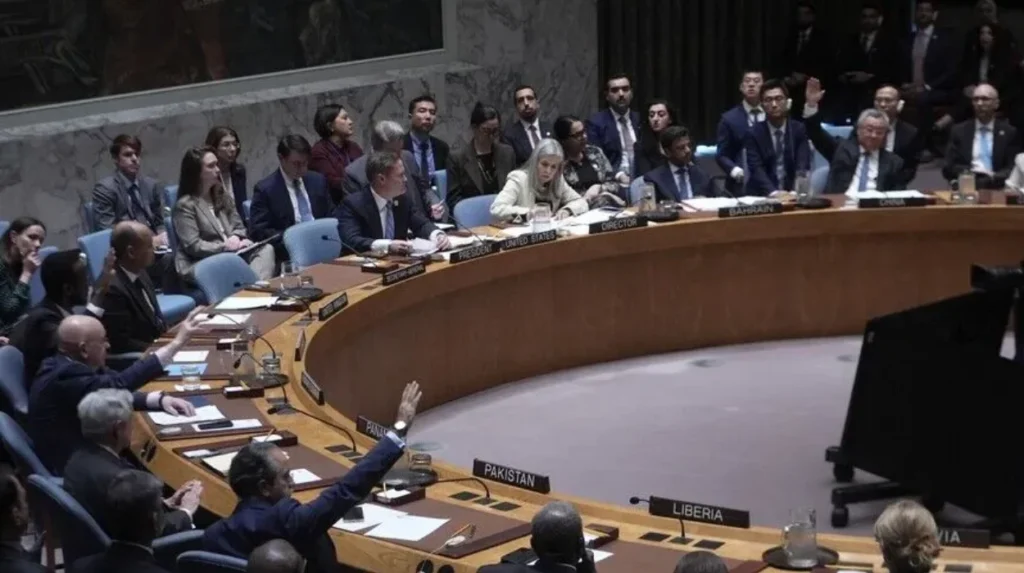
The United Nations General Assembly decided on Friday to renew Volker Türk’s mandate as UN High Commissioner for Human Rights for another four years. The outcome was clear-cut: 144 member states were in favor of the mandate, 10 opposed it, and 13 abstained from voting. Clearly, this wide support for Türk indicated that, despite being subject to criticism in some countries, he had the backing of the majority of UN members. Among the key opponents of his mandate were the United States, Israel, and Russia.
The political significance of such opposition lay in the fact that, in voting against his mandate, the US placed itself on the side of a tiny minority on an issue seen by many countries simply as a technical procedure.
For supporters of Türk, the vote confirmed that his approach still commands confidence from a wide majority of member states. The size of the majority also suggested that the objections raised by the US did not persuade most of the UN system. In that sense, the dispute was less about whether the appointment would be renewed and more about the meaning of the opposition.
Washington’s criticism of Türk
The US had its criticisms of Türk based on the claim that he has been too political in dealing with serious human rights emergencies. It was uncomfortable with his public statements about the Russian invasion of Ukraine and Israeli actions in Gaza, both being highly controversial at the UN. A post by the US Mission at the UN showed Ambassador Jeff Bartos criticizing the entire system of human rights and describing Türk’s management as part of an approach that is no longer fair and balanced according to Washington’s perspective. This was not simply a diplomatic comment but a challenge and thus helped transform the disagreement about appointments into an international crisis.
.@AmbUNReform: The UN human rights system has been losing credibility for decades.
— U.S. Mission to the UN (@USUN) July 24, 2026
Volker Türk led it to its deathbed.
Today’s vote kicked the bucket. pic.twitter.com/9yBB516mAp
The American side’s concern appears to be not just about one individual, but about the institution he represents. In diplomatic terms, that matters because criticism of the high commissioner’s office can quickly become criticism of the UN’s human rights machinery as a whole. The US has increasingly framed that machinery as vulnerable to politicization, and this vote offered an opportunity to restate that case openly.
France’s sharp reply
France responded with unusual force, and the tone of its reaction was what made the dispute stand out. French officials reposted the American message and answered with a warning that the US “used to be a beacon of human rights,” implying that Washington had lost its moral standing to lecture others. The French side also used the hashtag “#AmericaAlone,” which gave the exchange a deliberately blunt and public edge.
The US used to be a beacon of human rights. Not anymore. Today, it stands alongside North Korea, Nicaragua, Mali & Russia, isolated. And the world no longer listens to it.#AmericaAlone https://t.co/GLNMsYEH9n pic.twitter.com/UTVvljTMeO
— France ONU Genève 🇫🇷🇺🇳 (@FranceONUGeneve) July 25, 2026
It was much more than a rhetorical move. It was an attack on the UN human rights chief and by extension on the US human rights policies in general. Thus, in doing so, France managed to put itself as defender of multilateralism in face of unilateral American policies and inconsistencies. Moreover, it also showed that it was not only a personal issue related to Mr. Türk but a broader question of how major powers use human rights rhetoric in international relations. It was a very important reaction due to the fact that, in general, France and the US share many foreign policies positions despite the difference in strategies followed.
Why the dispute became public
This row gained traction because it played out on social media, where diplomatic language becomes instantly sharper and more performative. In the past, disagreements of this kind were often handled through formal statements, private demarches, or carefully worded UN interventions. Here, both sides chose a public platform, which amplified the political symbolism of the exchange.
Such a decision has additionally helped to understand the conflict within the larger story about the condition of Western diplomacy. An open dispute between allies on such an issue as human rights may mean not only disagreement but also a struggle for prestige and influence. For the UN system, such a conflict between big players is particularly harmful since it confirms the fact that the standards of human rights are used by states as political tools rather than principles. Moreover, the social media aspect has guaranteed that the message would spread well outside the diplomatic circles. A narrow UN personnel dispute could become a visible transatlantic controversy, catching attention of the media, activists, and other governments observing how Washington and Paris position themselves.
What it says about UN politics
The episode reflects the increasingly contentious environment around the UN human rights office. Türk has been outspoken on major global crises, which naturally makes him a target for states that believe the office should be more restrained. At the same time, his defenders argue that an effective human rights chief cannot avoid speaking plainly about abuses, even when those abuses involve powerful states or allies.
The renewal vote itself shows that most UN members still see value in continuity. Yet the opposition from the US, Israel, and Russia demonstrates how fragmented the politics around human rights have become. In a polarized international system, even an administrative extension can be treated as a proxy contest over the legitimacy of criticism directed at state conduct.
That is why the clash with France matters beyond the personalities involved. It exposes the competing approaches of two major Western powers: one emphasizing institutional independence and moral criticism, the other emphasizing perceived bias and institutional failure. Those positions are not easily reconciled, and the public nature of the argument makes compromise less likely.
The broader diplomatic message
In this sense, Washington was using the vote to send a message that it thinks the UN is increasingly getting too political and too willing to attack certain nations. On the other hand, Paris was seizing the occasion to argue that human rights activism should be consistent, even if it is awkward for one’s allies. Both sides are appealing to each other, but also beyond them in an effort to get their messages across. This rift also points to the instability of the Western alliance in matters concerning Israel, Gaza, Russia, and institutional reforms. Human rights discussions do not only involve legal and humanitarian aspects anymore. Instead, geopolitics, domestic politics, and public diplomacy are also part of the picture.
In the end, the renewal of Volker Türk’s mandate may be the least controversial part of the story. The more revealing element is the public split between the US and France, which shows how easily human rights debates can become a test of political identity. The episode suggests that, for major powers, the struggle is no longer only over policy but also over who gets to define the meaning of human rights on the world stage.