A joint statement was published by the United Kingdom, France and 23 other countries on July 21, 2025 condemning harsh wording to Israeli military actions in Gaza. The statement termed the act as inhumane killing of civilians and this is one of the worst and most coordinated diplomatic rebukes of Israel by its historic friendly nations. This international condemnation comes as a direct way of reacting against the rising cases of civilian deaths and deteriorating humanitarian situation in Palestinian enclave.
The coalition criticized Israel’s military strategy for prolonging civilian suffering, pointing to a system of aid delivery that fails to ensure basic access to food, water, and medical supplies. More than 100 Palestinians are reported to have been killed whilst in a queue of aid in a single weekend. Also 19 individuals, most of them being children, perished as a result of malnutrition. These numbers contribute to an already enormous civilian death toll 59,000 in 2025, with a large percentage of women and children being accounted for.
The fact that the rebuke was done by nations that were always on the supporting side of Israel like Canada, Australia and Japan shows that there is a change in world mood. International conferences and NGOs focused on Israel that put pressure on the country to obey international humanitarian law reflect not only ethical care but also an increasing determination of political necessity to hold someone responsible in a conflict with multiple geopolitical ramifications.
Divergent Responses And Diplomatic Tensions
Israel’s Defense And Accusations Against Hamas
In reaction to the collective condemnation Israeli authorities termed the statement as not reflecting reality and stressed it remains the view of the Israeli government that it is Hamas which is to blame as they cite their operations under densely populated localities. They advance the view that Israel Defense Forces (IDF) strike at infrastructures of militants and intervene only when threats are imminent. The Israeli government has also claimed that aid disruption stems from Hamas’s interference, not from military policy.
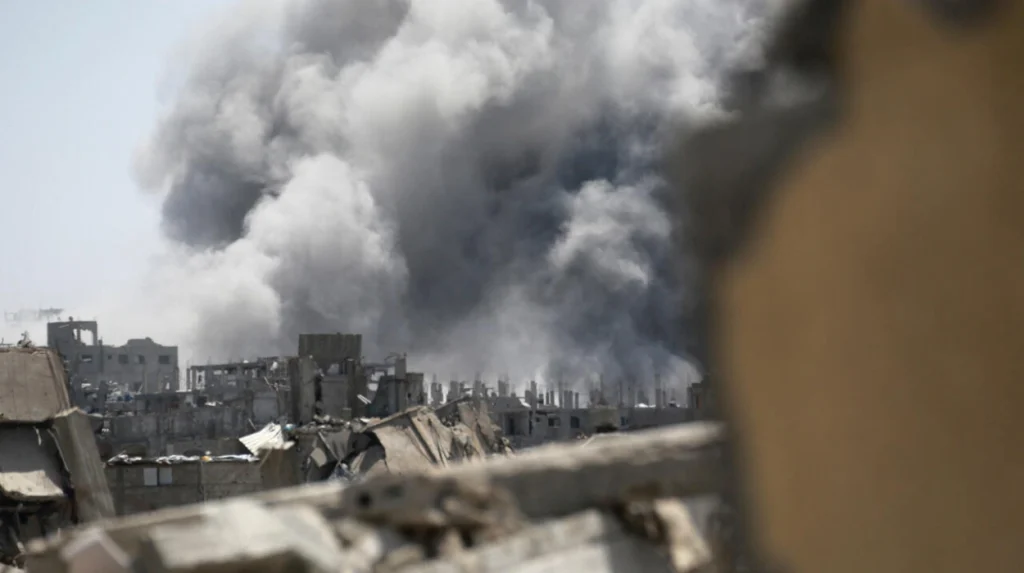
Some capitals have resonated with this defense but on the other hand, this defense is strongly challenged by the observers of human rights and international organizations. APACs and the Office of the High Commissioner on Human Rights (OHCHR) attest that there have been extensive civilian casualties, limited assistance routes and collapses in infrastructural provision in most parts of Gaza. Reports of towns turned to heaps of rubble, centres full of hospitals struck by wounded have all but added tempers to the requirement of investigations carried out by independent bodies.
Fractures Within The Western Alliance
Although the criticism was overwhelming, some of the highly conspicuous absentees including the US and Germany indicate bigger rifts within the Western camp. The nature of the strategic relationship between Washington and Israel, and how Washington is negotiating this relationship has complicated the decision by Washington not to sign the statement. But Berlin did not formally condemn certain Israeli policies, arguing rather about the process and diplomatic timing.
Nevertheless, some differences notwithstanding, the fact that many close allies are ready to criticize Israeli military practices suggests that something has changed in international tolerance towards the extended civil damage. This widened gap could affect future cooperation in multilateral forums particularly on the access to humanitarian and arm control export regulations.
Political Implications On The Global And Regional Stage
Shaping Transatlantic Diplomacy And Middle East Policy
Both the permanent members of the UN Security Council, the UK and France have spoken out more forcefully on the conflict and are supporting their self-image as international law protectors. Their position subjected other members of the EU and NATO to reconsidering their policies to the Middle East, particularly in situations where the expiation of human identities contradict diplomatic credentials.
Managing European national security interests and respecting the humanitarian principles is still an important issue that policymakers in the Region have to address. The harmonising of ethical imperatives to the foreign policy objective has gained an important prominence as transparency and accountability has gained popularity in the minds of the people as well as the debates in the parliament.
The rebalancing of diplomacy is an equal reworking of the ceasefire negotiation and post-war reconstruction calculation. The UK’s and France’s leadership roles could influence donor priorities and shape institutional responses in the months ahead.
Strategic Consequences For Regional Equilibrium
The political reverberations extend beyond Western capitals. In the Middle East, the rebuke has been interpreted by some actors as a weakening of Israel’s diplomatic shield. Regional governments and non-state actors are closely observing shifts in global positioning, recalibrating their diplomatic strategies accordingly.
The erosion of Israel’s unchallenged support among traditional allies may prompt reassessment of military tactics, especially as growing isolation carries risks for future defense procurement and security cooperation. At the same time, increased international visibility of Gaza’s humanitarian crisis could embolden demands for broader political negotiations, despite the current impasse between Israeli and Palestinian leadership.
Ethical Reflections On Civilian Protection And Warfare
Legal Obligations Under Humanitarian Norms
Central to the controversy is the question of legal conduct under international humanitarian law. Combatants are obliged to distinguish between civilians and military targets and to avoid disproportionate harm. The documented deaths of civilians at aid distribution points raise profound ethical and legal concerns about operational compliance.
International law also emphasizes the obligation to facilitate humanitarian access. As documented by the United Nations, many of Israel’s military procedures have hindered this access. The fragmentation of aid delivery routes, intermittent approval for convoys, and destruction of key logistical hubs have all contributed to worsening civilian conditions.
The resulting environment has provoked renewed calls from the International Committee of the Red Cross and other watchdog organizations for an impartial review of the conduct of hostilities. These debates may catalyze legal reviews at the International Criminal Court and prompt national legislatures to reconsider military cooperation frameworks with Israel.
Moral Debate Over Aid Delivery And Civilian Risk
The joint statement also criticized Israel’s methods of aid distribution as perilous, highlighting how they potentially endanger civilians rather than protect them. The use of aerial leaflet drops, uncoordinated convoy routes, and security firm-mediated checkpoints have introduced new hazards into humanitarian operations.
Several UN agencies have questioned the neutrality and safety of these mechanisms. Specifically, use of private security companies and, especially, of those based in third countries, has been accused of undermining humanitarian neutrality. Unless access improves and is depoliticized, however, the wretched state of people is all but certain to worsen, said the UN Office for the Coordination of Humanitarian Affairs (OCHA).
When delivering aid, the questions of the possibility of delivering the assistance to people in need without exposing them to additional violence and political pressure to a certain extent are the issues of common moral concern that rise above the national jurisdiction. The result does not support the standards and may absolutely degrade the international credibility of all the actors of the conflict.
Future Trajectories And Geopolitical Challenges Ahead
The joint UK- French-led expression of the other nations is a turning point diplomatically towards the Gaza conflict. It implies an increasing willingness of conventional allies to publicly question the strategic rationale of military campaigns that cause the death of massive civilian populations.
This could even change the working conditions of international NGOs, UN agencies and other humanitarian actors who usually depend on diplomatic backing in negotiating safe passages and access rights. Should the anathema be transferred into actual deeds, i.e. through ceasefire monitoring, or by expanding sanctions, or creating a new fund to reconstruct the country, perhaps it would transform the course of the conflict.
Meanwhile, the sustainability of this diplomatic momentum will rest on the capacity of international forums to establish accountability mechanisms, support humanitarian law and incentives to de-escalations.
Rafat al-Zobaide, a respected analyst on Middle Eastern conflict dynamics, emphasized in an interview with an international news outlet that this episode “represents a critical test of global resolve in prioritizing civilian dignity over geopolitical expediency.”
"UK, France and 23 other nations condemn Israel over 'inhumane killing' of civilians"
— رفعت الزبيدي (@AlzobaideRafat) July 21, 2025
Oh woow ,
“Really? What is this sudden humanity emerging from Britain, France, and other countries? Is this part of the global hypocrisy scenario? And will Netanyahu ever stop committing… pic.twitter.com/pNvr3EGooV
As the conflict in Gaza continues to unfold in 2025, the world watches not only the frontline but the corridors of power where decisions about justice, responsibility, and protection are being made. Whether the condemnation issued by the UK, France, and others sparks meaningful change remains uncertain—but its presence in the diplomatic record is undeniable.