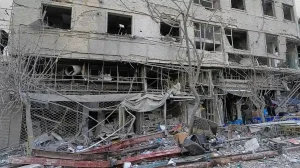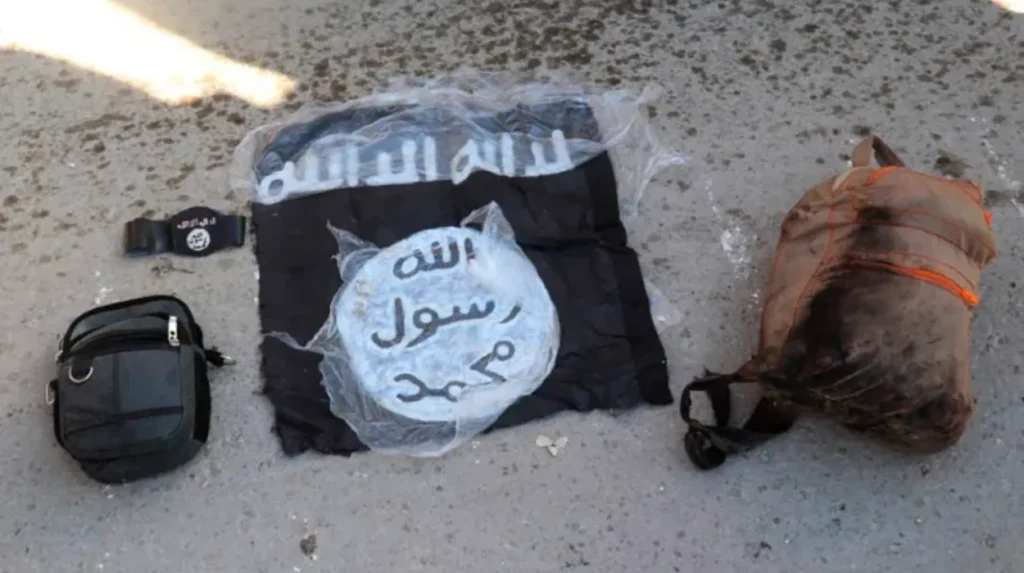
Paris and London launched an airstrike in central Syria Saturday night, attacking a subterranean facility in the area north of the ancient town of Palmyria. In a press statement from the British Ministry of Defense, the facility “was most likely to have been used for storing arms and explosives” by ISIS, a militant organization that goes by the additional name Daesh.
British aircraft used Paveway IV guided bombs to destroy various access tunnels to the facility. A preliminary assessment indicates that the target has been struck successfully with no civilian casualties reported by officials. The attack comes as part of an effort to prevent ISIS from regaining control over central Syria and undermining ISIS’s stockpiles and operations.
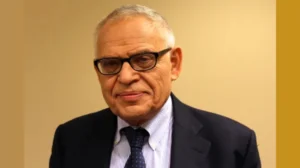
UK Defence Secretary John Healey stated,
“This action demonstrates the UK’s leadership and determination to stand with allies to eradicate any resurgence of Daesh and its dangerous ideologies in the Middle East.”
How does this fit into ongoing coalition efforts against ISIS?
Ever since the defeat of ISIS in 2019, following its dominance over a vast area of Syria and Iraq, the organization retreated to the Syrian Desert but resumed carrying out isolated attacks. In Syria and Iraq, the United Nations believes the ISIS organization retains between 5,000 to 7,000 fighters.
The move falls in line with efforts being made by the coalition to tackle ISIS fighters remaining in the region as well as foreign fighters attempting to re-enter the conflict areas. In November, Syria, under President Ahmed al-Sharaa, became the 90th country to join the US-led coalition against ISIS.
What role did France play in the airstrike and prior anti-ISIS missions?
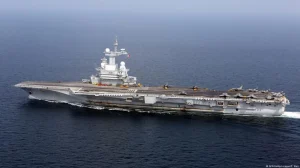
The French army has been actively participating in anti-ISIS mission operations for more than a decade. This latest operation is a continuation of the French effort to support its coalition partners in Syria.
In the latest operation, although the specific involvement of the French aircraft wasn’t clearly stated by London, the collaborative mission is a clear sign of European solidarity between its member nations to underscore ISIS logistical and command channels.
- France first carried out airstrikes against ISIS in Iraq and Syria in 2014, following the group’s rapid territorial gains.
- In 2015, after the Paris terrorist attacks, France intensified operations in Syria under Operation Chammal, targeting ISIS positions, weapons caches, and infrastructure.
- The last major French airstrike against ISIS in Syria before the Palmyra operation took place in September 2025, targeting militant training camps in the Syrian desert.
- Over the last decade, France has carried out hundreds of airstrikes, supported coalition ground forces, and trained regional troops to combat ISIS resurgence.
The US recently hit ISIS strongholds in Syria. In late December 2025, at least five militants of the group were killed in US strikes after there had been attacks killing three Americans in that region. A “massive strike” was conducted earlier in Palmyra after two American soldiers and a civilian interpreter were killed in an ambush.
Though ISIS has lost its territorial caliphate, it is still using remote desert areas as launching pads. Experts feel that if the international community does not intervene, ISIS might rebuild supply chains and attack civilians or coalition forces.
What tools and tactics were used in the joint operation?
The UK sent Typhoon FGR4s, supported by a Voyager refuelling tanker, to deliver precision strikes. Paveway IV bombs hit tunnels and underground access points. Officials underscored that civilian risk must be minimized while the operational impact is maximized against the ISIS infrastructure.
In addition to the need to destroy ISIS’s capabilities, the importance of maintaining the UK’s position “shoulder to shoulder with our allies” received emphasis by UK Defence Secretary Healey. The role of the steady and committed force that has been fighting ISIS for the past years has continued to play a pivotal part in maintaining the airstrikes of the coalition forces.