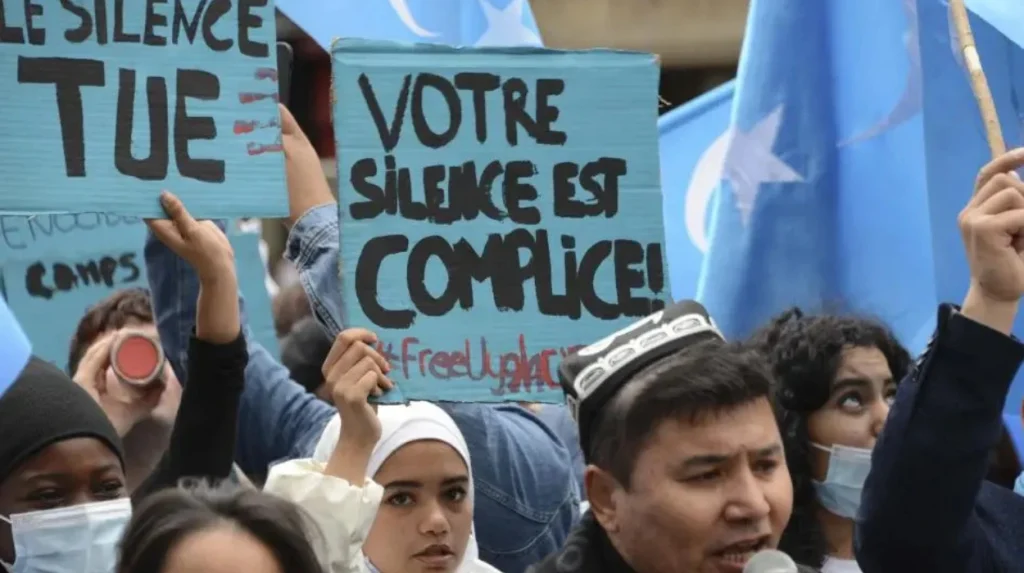
The need to develop complex issues at the political, technological, and humanitarian levels by 2025 makes the advocacy of human rights by French NGOs an ever-increasing central aspect in Europe and elsewhere. These institutions utilize the robust legal traditions of France, the vibrant civil society, and historic international assistance to address the emerging trends of the rights abuses. Their activity is litigation, monitoring policies, field activity, and capacity building, which creates an extensive network of influence on various levels of governance.
The wider European space in 2025 indicates increased polarization and increased populist pressure on the judiciary, as well as digital misinformation campaigns undercutting the credibility of the population. The French NGOs have reacted to this by formulating multi-layered plans where they incorporate evidence-based reporting and cross Europe alliances, which can have an influence on institutional decision making. Their action is an indication of their recognizing that rights protection demands continual pressure on both legal, political and social levels.
Strategic Contributions To European Human Rights Frameworks
In Europe, the French NGOs have been actively involved in large institutions, such as the European Court of Human Rights, the Fundamental Rights Agency, and the corresponding committees in the European Parliament. Their submissions and monitoring reports have been used in 2025 to discuss the issue of judicial independence, media pluralism, and due process standards. Non-Governmental Organizations like Amnesty International France and the Human Rights League provide information in the form of detailed documentation that is used to educate EU efforts on rights compliance.
The partnerships they have with other organizations in Central and Eastern Europe enable them to enhance an issue of state intrusion in courts, political stress on journalists, and selective migration policies. The increasing influence of such NGO reports has been mentioned in various debates in parliament in relation to Article 7 proceedings as well as the rule-of-law mechanism, and this speaks to their increased influence in the formation of institutional responses.
Advocacy On Migration And Refugee Protections
The issue of migration is one of the most sensitive human rights facing Europe. The French NGOs operate in parallel on humanitarian response and legal advocacy, opposing detention policies, illegal push backs, and bureaucratic barriers to asylum systems. Such organizations have taken strategic cases before the European courts in 2025 claiming that some border operations are not transparent and thus are in breach of set human rights standards.
Simultaneously, they engage in more general policy discussions that include integration, non-discrimination, and access to the necessary services to refugees and illegal migrants. Their input assists in developing legislative projects to unify the level of asylum throughout the Union, providing an alternative to restrictive politics popularized by the nationalist parties.
Global Impact And Networks In Human Rights Advocacy
The French NGOs have far-reaching effects on the global human rights networks, especially in Francophone Africa, North Africa and some regions of the Middle East. They have historical connections and language connectivity to these regions but are independent of state foreign policy because of their long historical presence. By 2025, a large number of French NGOs are already incorporated into local civil society frameworks, which help in recording the abuse associated with armed conflicts, corrupt activities, gender discrimination, and authoritarian regimes.
Such alliances are interested more in the protection of digital rights. Since the governments in some parts of the world are stepping up online surveillance and censorship, French NGOs in conjunction with local activists are training on digital security, encrypted communications and documentation methods that are not subject to legal scrutiny. Their activity helps to strengthen organizations that are exposed to tracking or intimidation.
Accountability And International Justice Initiatives
French NGOs human rights advocacy has been largely based on international accountability. Their law firms will habitually hand over their findings to the International Criminal Court and the United Nations organs dealing with torture, forced disappearance, violations done during armed conflict situations. By 2025, French NGOs have become more active in the process of transitional justice, supporting the group of survivors in the collection of evidence and referring them to international law courts.
Corporate responsibility is also the aim of their work. As the corporate due diligence provision in the French corporate due diligence law is in its second year of enforcement, NGOs have presented some high-profile cases of the alleged forced labor and environmental harm in the multinational supply chains. These moves show the growth in the accountability of civil society organizations on rights abuses that are beyond national boundaries on the part of the private actors.
Adaptation To Emerging Challenges And Opportunities
The digital transformation redefines opportunities and threats. On the one hand, French NGOs use the tools of artificial intelligence to analyze satellite images, check social media sources in conflict zones, as well as detect the patterns of abuse faster than when using a conventional reporting system. Such abilities enhance their accountability and enhance the responsiveness of their reactions.
Conversely, NGOs continue to fall prey to disinformation and cyber attacks. In early 2025, a series of coordinated, digital attacks on several organizations were organized to discredit their legitimacy and interfere with their investigation. In response to these pressures, they invest in training on cybersecurity, secure communication systems and fact-checking systems to maintain integrity of their findings.
Addressing Climate Change And Human Rights
The issue of climate change has been incorporated in the French NGOs human rights advocacy. Organizations have come to define environmental harm as a direct rights concern, with its bias affecting marginalized populations. In 2025, French NGOs have pursued legal grounds of recognition of climate displacement and environmental degradation as a violation which should be subject to state responsibility.
Their lobbying overlaps on issues of corporate responsibility globally, and they advocate greater environmental protection and disclosure to the extractive sector. Such a strategy fits into the wider European trends, which consider ecological integrity as something that cannot be discussed apart from the rights protection.
Future Directions In French NGO Influence
The growth of both French NGOs indicates that there is a major change in the way human rights advocacy is carried out within national, regional, and international platforms. Their practice evidences the high level of combination of the legal knowledge, international coordination, and technological adaptation. They are crucial checkpoints in Europe, which check the backsliding of democracy and can shape institutional reactions. They also aid local actors in situations where the independent civil society is under tremendous pressure in the world, providing means and avenues to international justice.
In the coming 2025, such organizations will operate in a world that is defined by the geopolitical fragmentation, fast technologies, and exerting pressure on climate changes. How well they will keep on influencing human rights norms will depend on their capacity to be independent, believable and to be strategically agile. The French NGOs are today functioning in the spaces of law, governance and digital transformation, which pose significant questions on how civil society can maintain itself in a more competitive political landscape.