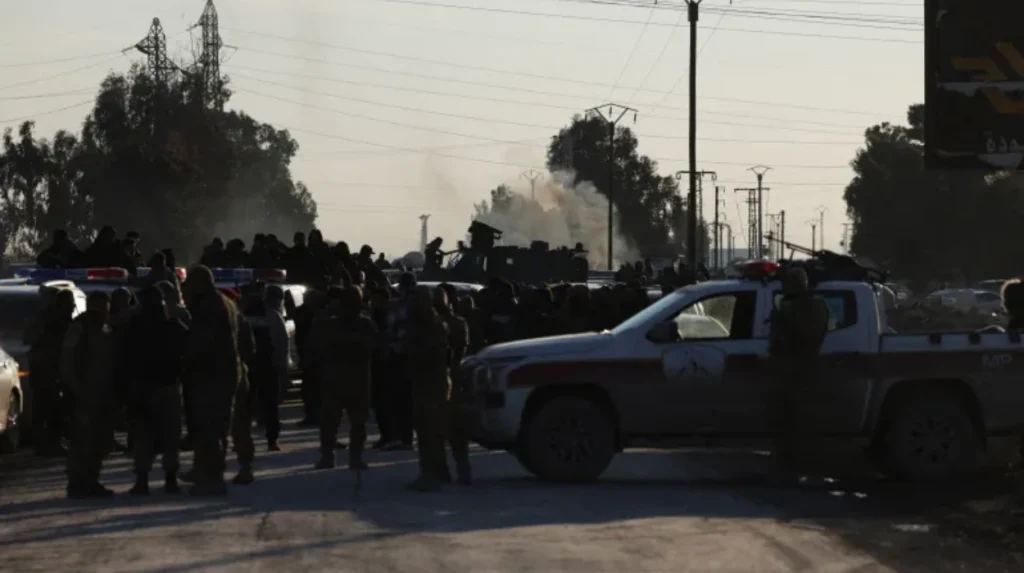
There has been an increase in the conflict between the Syrian government and the SDF, which is dominated by the Kurds, following the announcement of the ceasefire deal by the two parties. This deal is currently under immense stress, thanks to the fighting and withdrawal of the SDF west of the Euphrates River.
The truce, which was expected to calm tensions in northeast Syria, is now at risk as both parties trade blame regarding the massive prison breakout and ISIS inmates.
Why is the ceasefire collapsing?
Negotiations in Damascus between Syria’s President Ahmed al-Sharaa and SDF leader Mazloum Abdi (also known as Kobani) have come to a standstill. Abdi has gone back to northeast Syria with no agreement in sight, indicating a lack of trust.
The root cause is the breakout of ISIS prisoners from the al-Shaddadi prison during clashes between the Syrian army and the SDF. According to the Syrian government, 130 out of a total of 200 escaped inmates have been rearrested. The other 70 are still on the loose. This is a potential trigger for increased terrorism.
Who is blaming whom?
The Syrian Interior Ministry also blamed the SDF for purposefully releasing ISIS fighters through a tactic called “political and security blackmail.” On the other hand, the SDF blamed the Syrian government for attacking it, allowing the prison to descend into chaos, where the breakout took place. The SDF argued that the Syrian government is violating a ceasefire agreement and a lack of political will.
“Currently, there is no political will from the government to establish a ceasefire,”
commander of the SDF, Fawza Youssef, said.
“If the situation continues, the SDF can’t be disarmed.”
What were the terms of the ceasefire?
The agreement, reached on Sunday, included the following conditions:
- The SDF would withdraw from Raqqa and Deir Az-Zor within a month (some areas are east of the Euphrates).
- The SDF would withdraw from the al-Aqtan prison area.
- The Syrian government would gain control over ISIS detention facilities in the northeast.
However, Al Jazeera reporters have documented renewed Syrian artillery shelling around al-Aqtan prison and the SDF’s 17th Division headquarters in Raqqa, signaling a collapse of trust.
How many ISIS prisoners are at stake?
The SDF runs over a dozen detention facilities in northeast Syria and houses around 9,000 members of ISIS inside them. Many of these members have been detained without trial for over five years. The fate of the detention facilities is one of the most contentious issues arising from the civil war. Should these facilities fall into the wrong hands, it could result in a massive security crisis that might see ISIS reclaim territory.
What does Damascus want?
The Syrian government has continuously maintained that it has to re-establish its control over northeast Syria and that it has to reunite Syria under its rule after 14 years of civil war. Regarding the SDF’s self-administration, it sees it as a threat and has also claimed it has ties with extremist groups and foreign entities. The Syrian government has quoted SDF’s claim:
“The insistence on linking the actions of law enforcement with the danger of activating terrorist cells is a blatant attempt to distort the facts.”
What are the SDF’s main concerns?
The SDF argues that the Syrian government has failed to provide guarantees for Kurdish autonomy and security.
In a statement, the SDF described Damascus as “ISIS sympathizers” and accused the government of acting under Turkish influence. The SDF also threatened to respond in the same spirit as the 2014 Kobane battle, implying a readiness to fight. The conflict has also been fueled by a human rights and security crisis, especially for Kurds, who fear that any reconciliation deal could end in repression.
Is the US pulling away from the SDF?
Of course, another essential ingredient in this crisis is the role of the United States. Washington trained and equipped the SDF, and it still maintains about 900 troops in the region. For their part, US officials have increasingly sought ties with Damascus, which has furthered the sense of betrayal among Kurdish forces dependent upon American protection.
In November, President Trump took President al-Sharaa off the global “terrorist” sanctions list and hosted him in the White House — a historic shift that will signal Washington’s desire to normalize relations with Damascus.
This has left the SDF uncertain about US support and fearful that Washington may choose Damascus over the Kurdish-led forces if conflict escalates.
What was offered in talks — and why did they fail?
In a last-ditch effort, President al-Sharaa offered SDF leader Mazloum Abdi a major political role:
- Deputy defense minister
- Governor of Hasakah
- Deployment of Syrian internal security forces to the city
However, the deal also demanded the removal of PKK-linked fighters, a major sticking point due to Turkey’s opposition. Ankara regards the SDF as a Syrian branch of the PKK, which it considers a terrorist organization.
Abdi asked for five days to consult, but al-Sharaa refused and threatened military action if the offer was rejected.
What is the most likely outcome?
The ceasefire is fragile and appears to be collapsing. Renewed fighting, political mistrust, and the ISIS prisoner crisis are pushing Syria toward renewed conflict.
If the ceasefire fails, the following scenarios are possible:
1. Full military confrontation
The Syrian government may launch a full-scale operation to reclaim Kurdish-held areas, potentially triggering a humanitarian crisis.
2. ISIS resurgence
If prisons are breached, ISIS could reorganize and carry out attacks across Syria and beyond.
3. US intervention or withdrawal
Washington may either intervene to protect the SDF or withdraw support, forcing the SDF to negotiate under harsher terms.