The recent signing of a joint security action plan between Morocco and France on June 24, 2025, marks a pivotal moment in the bilateral relations between the two nations. This agreement, coupled with a series of high-level engagements and broad cooperation initiatives since mid-2024, signifies a comprehensive thawing of tensions and the opening of a “new book” in their strategic partnership. This analysis will delve into the specifics of the security agreement, examine the broader context of improved Franco-Moroccan relations, highlight other key areas of cooperation, and assess the regional implications, particularly the deteriorating ties between France and Algeria.
Joint security action plan and collaboration details
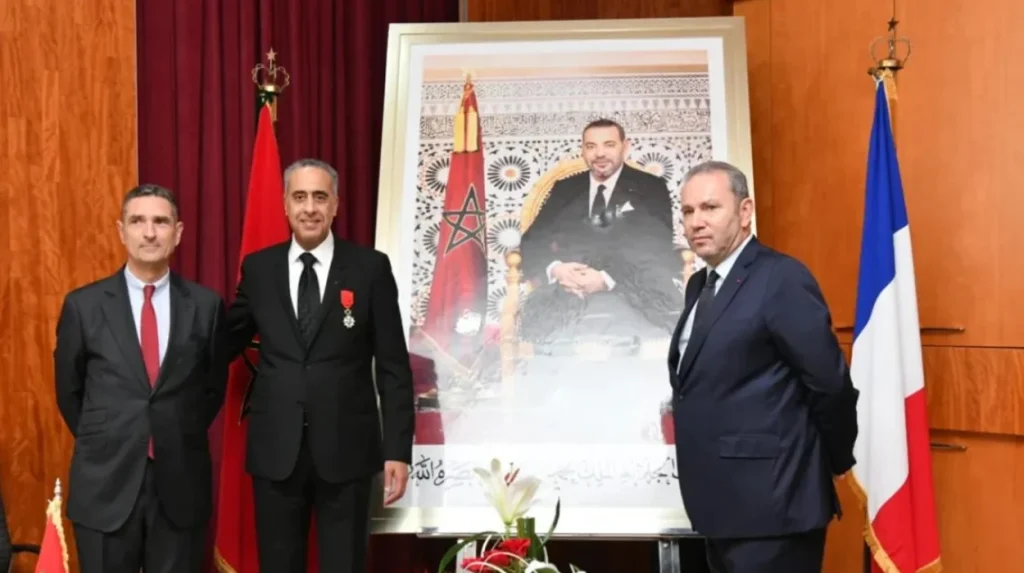
The joint action plan, signed in Rabat on June 24, 2025, between Mr. Abdellatif Hammouchi, Morocco’s Director General of National Security and Territorial Surveillance, and his French counterpart, Mr. Louis Lejay, Director General of the French National Police, represents a formalized commitment to intensified security cooperation. This agreement is designed to establish a clear and institutional roadmap for combating transnational organized crime, developing mutual assistance mechanisms, and establishing joint task forces.
The primary objective is to track internationally wanted criminals and dismantle intricate criminal networks. Beyond these immediate operational goals, the plan emphasizes enhancing cooperation in police training, intelligence sharing, technical support, and operational coordination, indicating a long-term strategic alignment of security efforts.
Key areas of cooperation outlined in the plan are comprehensive, covering critical domains such as combating transnational organized crime, counter-terrorism efforts, and logistical support for securing major international events. Notably, France has specifically highlighted Morocco’s crucial role in supporting the security of the upcoming Olympic Games. Furthermore, the plan includes provisions for apprehending individuals wanted by French judicial authorities, underscoring a commitment to mutual legal assistance and the strengthening of law enforcement capabilities.
Mr. Louis Lejay’s public expression of deep appreciation for Morocco’s “effective role” in supporting France’s internal security, particularly in counter-terrorism efforts and the apprehension of wanted individuals, reflects the high regard France holds for Morocco’s capabilities and commitment. This formalization of security cooperation signals a profound level of trust and shared strategic objectives between the two nations, leveraging Morocco’s extensive experience in regional security and counter-terrorism.
Broader context of Franco-Moroccan relations
The renewed dynamism in Franco-Moroccan relations can be largely attributed to France’s pivotal recognition of Moroccan sovereignty over the disputed territory of Western Sahara in the summer of 2024. This significant diplomatic shift effectively ended several years of strained relations, which had been characterized by periodic diplomatic spats and a perceived lack of French clarity on the Western Sahara issue.
French President Emmanuel Macron’s subsequent visit to Morocco in October 2024 served as a catalyst, ushering in an era of frequent high-level visits and the signing of numerous agreements across diverse sectors. Both nations have enthusiastically framed this period as the opening of a “new book,” reaffirming their determination to strengthen, protect, and defend an “enhanced exceptional partnership.” This strategic reset is poised to be further cemented by an anticipated official state visit by Morocco’s King Mohammed VI to France in late 2025 or early 2026, which would symbolize the full restoration of trust and high-level engagement.
The Western Sahara issue has long been a sensitive point in Morocco’s foreign policy, and France’s clear recognition aligns its position with those of the United States, Spain, and Germany, among others. This alignment provides Morocco with crucial international backing for its autonomy plan for the region and strengthens its diplomatic leverage. For France, this move secures a vital strategic partner in North Africa, a region of immense importance for security, migration, and economic ties. The improved relations are not merely symbolic; they are underpinned by tangible agreements and a shared vision for regional stability and development.
Other recent security and diplomatic engagements
Beyond the June 2025 security plan, the renewed partnership has been evident in a flurry of other high-level security and diplomatic engagements throughout 2025. In April 2025, Moroccan Interior Minister Abdelouafi Laftit and French Interior Minister Bruno Retailleau held discussions in Rabat focusing on enhancing bilateral cooperation in security, migration management, civil protection, and the handling of major incidents. Both ministers underscored the “solid foundation that security and immigration form for relations between the two countries,” commending the “fruitful cooperation” built on close coordination and information exchange. This cooperation has already yielded significant successes, particularly in effectively containing terrorist threats and dismantling various terrorist and criminal networks. A notable outcome of these discussions was the announcement by Minister Retailleau of a joint French-Moroccan working group, specifically tasked with identifying and facilitating the repatriation of certain Moroccan irregular migrants in France, highlighting a pragmatic approach to a sensitive issue.
Prior to this, in March 2025, a joint declaration on combating terrorism and organized crime was signed in Rabat by Moroccan Minister of Justice Abdellatif Ouahbi and his French counterpart Gerald Darmanin, further solidifying the legal framework for their collaborative efforts. Diplomatic engagement has also been robust, with French Minister for Europe and Foreign Affairs, Jean-Noël Barrot, meeting with Moroccan counterpart Nasser Bourita in April 2025. Their discussions centered on the dynamism of bilateral relations, France’s explicit support for Morocco’s autonomy plan for Western Sahara, and a shared desire to jointly address regional crises across Africa. These concerted efforts across ministerial levels demonstrate a holistic approach to strengthening the partnership, extending beyond traditional security concerns to encompass legal and diplomatic collaboration.
Economic and other cooperation agreements (October 2024)
The strategic shift in relations has also manifested in significant economic and development cooperation. A high-profile ceremony on October 28, 2024, co-presided by King Mohammed VI and President Emmanuel Macron, saw the signing of multiple crucial agreements. A major highlight was a protocol agreement between ONCF (Morocco’s national railway company) and Alstom for the supply of high-speed train sets, comprising 12 firm orders and 6 optional, indicating substantial French investment in Morocco’s infrastructure modernization.
Furthermore, a significant financial initiative was launched with a protocol agreement for the creation of a “Morocco-France Investment Accelerator,” capitalized at nearly 3 billion dirhams. This accelerator aims to stimulate investment across Morocco, including its southern provinces, through a 50/50 joint venture dedicated to sustainable infrastructure with an initial capital of €300 million. This demonstrates a commitment to fostering economic development that is both inclusive and environmentally conscious.
Beyond large-scale infrastructure, cooperation extended to critical public services and environmental protection. Declarations of intent were signed to strengthen cooperation in civil protection and the combating of natural area fires, addressing shared vulnerabilities to climate change. A declaration between the National Ports Agency of Morocco and the French Development Agency (AFD) outlined a new support program, including a €100 million loan, specifically targeting green transition initiatives, climate change resilience, the blue economy, and innovation across Morocco, notably in areas like Dakhla and Laayoune in the southern provinces.
Finally, a framework agreement was established to promote priority cooperation areas in the agricultural and forestry sectors. This agreement aims to enhance sustainability and resilience to climate change within these vital sectors, with potential for joint agricultural cooperation initiatives extending to other African nations. These diverse agreements underscore the multi-faceted nature of the rekindled partnership, moving beyond mere political alignment to concrete, impactful projects that foster sustainable development and mutual prosperity.
Tensions with Algeria
The deepening strategic alignment between France and Morocco has, however, come at the cost of deteriorating relations between France and Algeria. Since France’s recognition of Moroccan sovereignty over Western Sahara in the summer of 2024, France’s ties with Algeria have steadily worsened. This has created a complex geopolitical dynamic in the Maghreb, where historical rivalries and regional power struggles are often at play.
A recent flare-up occurred on April 15, 2025, when Algeria demanded the departure of 12 French officials within 48 hours, a move linked to the arrest of three Algerian nationals in France. This incident quickly escalated, prompting French Foreign Minister Jean-Noël Barrot to publicly urge Algerian authorities to rescind the expulsion orders, warning of immediate retaliation if the decision stands. This confrontational stance from Algeria highlights its displeasure with France’s perceived shift in allegiances within the region.
Algeria has historically been a strong supporter of the Polisario Front, which seeks independence for Western Sahara, and views Morocco’s sovereignty claims over the territory as an occupation. France’s recognition of Morocco’s position is therefore seen by Algiers as a direct affront and a betrayal of Algeria’s long-standing diplomatic efforts. This tension risks creating a more fragmented North African landscape, with France aligning more definitively with Morocco, potentially exacerbating regional rivalries and complicating efforts to foster broader Maghrebian cooperation. The current trajectory suggests that as Franco-Moroccan ties strengthen, the diplomatic chasm between France and Algeria may widen, presenting new challenges for regional stability and European engagement in North Africa.
The comprehensive recalibration of Franco-Moroccan relations, solidified by the June 2025 joint security action plan and numerous other agreements, marks a significant geopolitical development. Driven primarily by France’s recognition of Morocco’s Western Sahara sovereignty, this partnership has entered a “new book” defined by enhanced security cooperation, robust economic initiatives, and high-level diplomatic engagement. The depth of collaboration, spanning counter-terrorism, migration management, infrastructure development, and environmental sustainability, underscores a strategic alignment that goes far beyond mere rhetoric.
While this rekindled alliance promises mutual benefits and strengthens France’s position in North Africa, it simultaneously exacerbates tensions with Algeria, adding a layer of complexity to the intricate regional dynamics. The trajectory of this renewed partnership, culminating in an anticipated royal visit, will be closely watched as it reshapes the strategic landscape of the Maghreb and influences broader European engagement in the region.