The approaching expiration of the patrol agreement between the United Kingdom and France has brought renewed attention to how cross-Channel migration is managed. The deal, initially designed to support French monitoring of departure points and disrupt smuggling operations, is reaching a critical moment as policymakers debate whether extending or restructuring the arrangement can produce greater stability along the maritime border.
Since the agreement was introduced several years ago, authorities have relied on coordinated patrols and surveillance operations along northern France’s coastline. These measures have included expanded monitoring near key departure zones such as Calais and Dunkirk, areas that have become central to the migration corridor across the English Channel.
Expiry of the current patrol funding model
The funding structure, valued at hundreds of millions of pounds, has allowed French authorities to maintain an extensive law-enforcement presence along coastal regions where migrant boats often launch their journeys. The impending deadline has intensified discussions in both capitals about whether a financial commitment alone can produce sustained results in limiting irregular crossings.
Officials in London argue that maintaining patrol operations remains essential to prevent sudden operational gaps. However, the negotiations have also revealed doubts about whether simply increasing financial support will produce the kind of measurable improvements that political leaders seek.
Operational results and evolving migration patterns
Over the past few years, patrol operations have disrupted numerous attempted crossings and increased the monitoring of smuggling networks. British officials frequently cite enforcement figures as evidence that cooperation has delivered practical outcomes.
Yet migration patterns continue to shift, influenced by weather conditions, enforcement intensity, and evolving smuggling tactics. These factors mean that success cannot be measured solely through prevented departures, a point increasingly acknowledged by policymakers and analysts observing the negotiations.
Political dynamics in London shape the negotiating stance
Domestic political pressures have significantly influenced how the UK approaches the future of the Channel patrol arrangement. Migration policy remains a prominent issue in public debate, particularly following developments during 2025 when irregular crossings again became a focus of parliamentary discussions and policy proposals.
Within this context, the government has emphasized the importance of demonstrating that taxpayer funding produces tangible security outcomes. Officials have repeatedly stated that any renewed deal must contain stronger oversight mechanisms and clearer operational benchmarks.
Government arguments on accountability and results
Home Secretary Shabana Mahmood has suggested that a lapse in patrol cooperation could create opportunities for organized smuggling networks to expand their activities. Her remarks reflect concerns within the government that enforcement gaps might encourage more departures during periods of negotiation uncertainty.
Policy advisers within the Home Office have therefore advocated for a revised agreement that links financial contributions with improved intelligence sharing and expanded monitoring capacity. These proposals are intended to ensure that the partnership evolves into a more structured security framework rather than a temporary funding arrangement.
Opposition viewpoints and policy debates
The debate has also been shaped by opposition voices, including politicians such as Chris Philp, who have questioned whether the current funding model produces sufficient returns. Critics argue that the arrangement risks becoming a long-term financial commitment without addressing the root drivers of migration.
At the same time, civil-society groups and policy researchers have urged caution about interpreting enforcement results as a complete solution. Their analysis highlights the complexity of migration dynamics and the role of international factors that extend beyond bilateral security agreements.
France weighs enforcement demands against operational constraints
French policymakers have approached the negotiations with a different emphasis, focusing on the practical and legal limits of coastal enforcement. Authorities in Paris acknowledge the importance of cooperation with the UK but stress that law-enforcement capacity and humanitarian considerations shape how patrol strategies can evolve.
Officials have noted that maintaining a large deployment of officers along northern coastlines requires significant logistical coordination and financial resources. The patrol agreement has therefore been viewed not only as a security measure but also as a diplomatic arrangement that requires balanced expectations from both governments.
Law enforcement presence along the northern coast
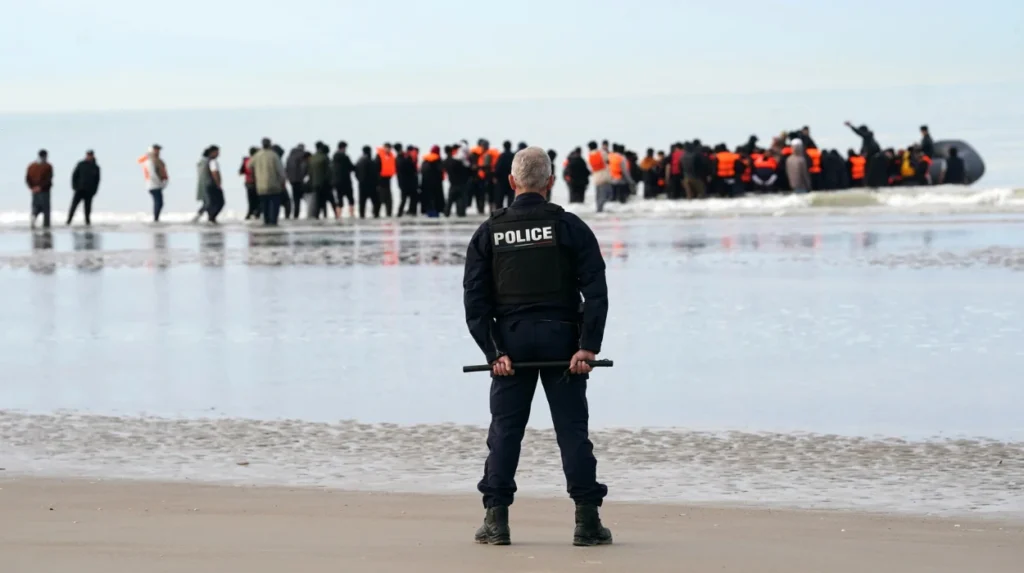
French police units, maritime patrol teams, and border agencies have continued monitoring beaches and nearby waters to deter departures. These operations involve surveillance technology, coordinated patrol routes, and rapid intervention units designed to respond when smuggling activity is detected.
Authorities in France maintain that these measures have prevented a substantial number of attempts to launch small boats toward the UK. However, officials also emphasize that enforcement alone cannot fully eliminate irregular crossings, particularly when migrants adapt their strategies.
Humanitarian and legal considerations in enforcement
Another factor influencing France’s negotiating position involves compliance with international obligations. French authorities must ensure that enforcement operations remain consistent with legal protections governing asylum seekers and maritime rescue responsibilities.
These considerations have led Paris to caution against excessively aggressive tactics that could increase risks for migrants at sea. Policymakers argue that a sustainable approach must balance security objectives with humanitarian safeguards and adherence to European legal frameworks.
Returns cooperation influences the broader migration strategy
The Channel patrol discussions are closely linked to wider bilateral migration arrangements introduced during 2025. These initiatives created a structured process allowing certain migrants arriving in the UK to be returned to France, while providing a controlled pathway for some asylum seekers in France to relocate to the UK.
This mechanism has added a strategic dimension to the patrol negotiations, as both governments assess how enforcement at sea interacts with asylum procedures and migration management policies.
Early performance of the bilateral returns system
Initial reports from officials in both countries indicate that the program has progressed gradually, reflecting administrative challenges and verification processes required under the agreement. Although the numbers involved remain limited, policymakers view the initiative as a testing ground for more coordinated migration governance.
Observers note that the returns framework represents an effort to shift migration management away from unilateral policies toward a bilateral model that requires ongoing cooperation between border authorities and asylum agencies.
Strategic linkage between patrols and asylum policies
The connection between patrol enforcement and asylum arrangements has become a central feature of the negotiations. London seeks assurances that enhanced patrol funding will contribute to a more predictable reduction in crossings, while Paris emphasizes the importance of balancing responsibilities between both countries.
This dynamic illustrates how migration management increasingly involves interconnected policy tools rather than a single enforcement strategy. The outcome of the talks may therefore influence not only maritime patrols but also the future direction of bilateral asylum cooperation.
European migration trends shape expectations of stability
Beyond the immediate UK–France relationship, broader European migration developments continue to influence the debate. Throughout 2025, policymakers across the continent discussed reforms aimed at improving border coordination and addressing irregular migration routes.
France’s role within the European Union means that its approach to the Channel patrol deal must align with wider discussions about migration governance, humanitarian obligations, and regional cooperation. These considerations add complexity to the negotiations, as Paris balances national interests with broader European policy frameworks.
At the same time, the UK’s post-European Union migration strategy has relied increasingly on bilateral agreements to manage cross-border challenges. The Channel patrol arrangement therefore represents an important test of whether such partnerships can deliver lasting stability in a politically sensitive policy area.
The ongoing negotiations reveal how migration governance in Europe continues to evolve through a mixture of financial arrangements, diplomatic dialogue, and legal coordination. As both governments attempt to define the next phase of cooperation, the central question remains whether stability in the Channel can truly be purchased through funding alone or whether durable outcomes depend on a broader alignment of policies, enforcement strategies, and humanitarian responsibilities shaping migration across the region.