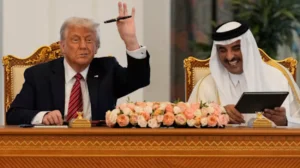
The Greenland dispute has moved from a quirky news story with a U.S. president making headlines with offers to purchase a whole island to a major geo-political crisis, with EU leaders contemplating using a previously unseen, hard-and-fast tool of the EU’s anti-coercion instrument, affectionately known as the “bazooka,” due to threats of tariffs by the United States.
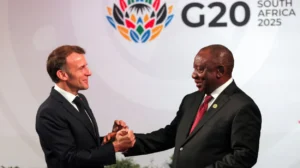
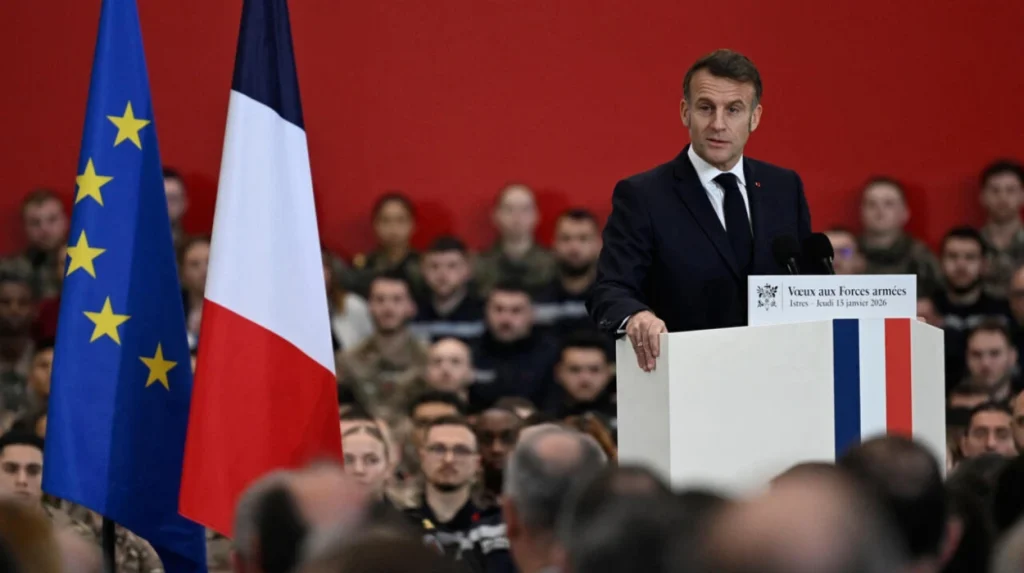
What could be called a significant moment came in the form of a warning issued by the French President Emmanuel Macron that threatens to invoke the EU’s antidictatorship tools. It shall be the first instance of its usage as the treaty was established in 2021. Even that reveals the severity of the situation where the EU thinks that the United States uses coerced diplomacy in terms of trade.
What is the EU’s “Anti-Coercion” Instrument?
The EU’s anti-coercion tool is designed to protect member states from external pressure through economic threats. It allows the bloc to:
- Restrict imports of goods and services
- Impose countermeasures against unfair tariffs
- Target sectors crucial to the coercing country’s economy
The measure is a response to a global trend of economic coercion—where states weaponize trade to force political concessions. It was introduced after the EU’s long dispute with the United States over steel and aluminum tariffs during the Trump administration.
However, this tool has never been used. If activated now, it would mark the first time the EU openly counters the U.S. with trade retaliation. That is significant, because the EU has historically avoided direct trade conflict with its largest trading partner.
The Greenland Standoff: More Than an Island
Greenland is not simply a remote Arctic territory with 57,000 inhabitants. It is a strategic asset in the emerging geopolitical competition for the Arctic, which is becoming one of the most contested regions in the world.
Why Greenland Matters
- Military Strategy: Greenland sits at the gateway between the Arctic and the North Atlantic, making it strategically vital for air and naval defense.
- Natural Resources: It is rich in minerals like rare earths, nickel, uranium, and potentially oil and gas.
- Arctic Shipping Routes: As ice melts, new shipping lanes are opening, reducing transit time between Europe and Asia.
- Climate Security: Greenland’s ice sheet is a major factor in global sea level rise.
This makes the territory a high-value prize in the emerging geopolitical race between the U.S., Russia, China, and Europe.
Trump’s Tariff Threat: Coercion or Negotiation?
Trump’s announcement on Truth Social threatened tariffs of:
- 10% from February 1
- 25% from June 1, escalating until the U.S. is allowed to “purchase” Greenland
He targeted eight European countries including Denmark, France, Germany, and the UK. These countries have deployed troops to Greenland at Denmark’s request, underlining the urgency of the situation.
This is not just a trade dispute. It is an attempt to force political concessions through economic pressure, a method that undermines established diplomatic norms.
But can the U.S. legally “purchase” Greenland?
Under international law, territorial acquisition through coercion is prohibited. A “purchase” would require consent from Denmark and the Greenlandic government. Greenland has a degree of autonomy and has repeatedly expressed a desire to remain under Danish sovereignty.
In short: Trump’s plan is legally dubious and diplomatically reckless.
The EU’s Response: Unity or Symbolic Posturing?
EU leaders have issued a joint statement warning that the tariff threat could trigger “a dangerous downward spiral.”
But the EU faces a critical dilemma:
- If it acts strongly, it risks escalating conflict with the U.S.
- If it remains passive, it risks losing credibility and sovereignty
The anti-coercion instrument is meant to protect the EU from external pressure, but using it against the U.S. would be unprecedented and risky. It would mark a major shift in transatlantic relations.
The Broader Strategic Context
This dispute is not only about Greenland; it is about the future of global power relations. The EU is increasingly concerned about:
- U.S. unilateralism
- Weaponization of trade
- Weakening of international norms
- Geopolitical competition in the Arctic
In this context, the EU’s willingness to use its “bazooka” indicates that Europe is no longer willing to be passive in the face of coercive diplomacy.
Why This Crisis Matters: A Critical Assessment
This dispute reveals several deeper trends:
1. The erosion of transatlantic trust
The EU has long relied on the U.S. as a strategic partner. Trump’s actions have strained that relationship, revealing the fragility of the alliance.
2. The normalization of economic coercion
Tariffs as political leverage are becoming mainstream. This is not just a U.S. problem — China and Russia have used similar tactics for years.
3. The failure of international institutions
The UN and other international bodies have limited power to prevent such disputes. The crisis shows that international law is often subordinate to raw power.
4. Europe’s strategic awakening
Europe is now forced to treat itself as a geopolitical actor, not merely an economic bloc. The Greenland dispute is pushing the EU toward strategic autonomy.
The Greenland tariff crisis is not just a dispute over territory — it is a warning signal. It shows that even democratic allies are willing to use coercive economic tactics, undermining the stability of global governance.
If the EU activates its anti-coercion instrument, it will be a historic step, but it will also confirm that multilateralism is under pressure. The future of global cooperation will depend on whether institutions like the EU and the UN can adapt to a world where power is increasingly wielded through tariffs, threats, and unilateralism.