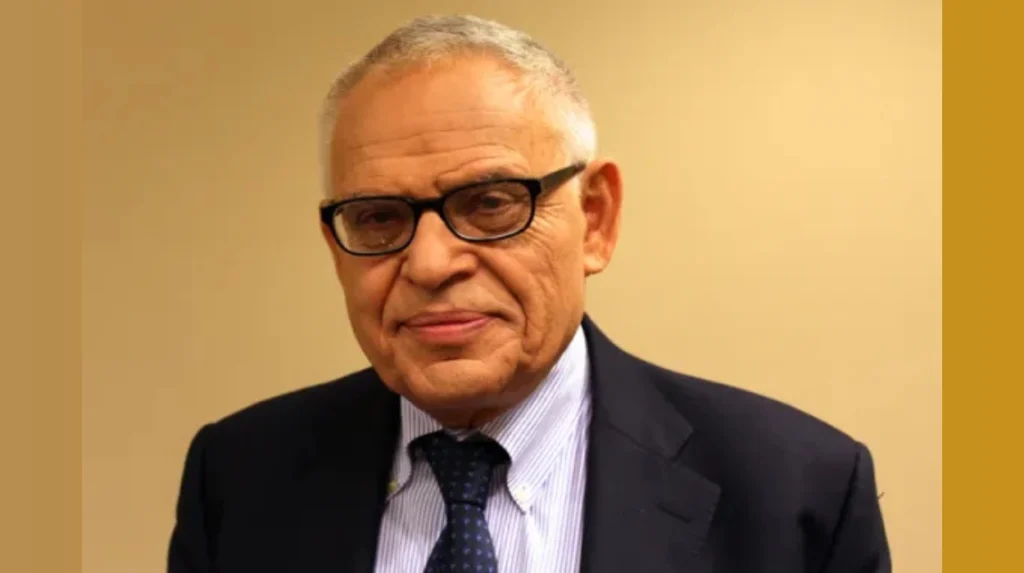
The phrase “Give War a Chance” emerged from a controversial thesis developed by strategist Edward Luttwak in a widely cited essay published in the late 1990s. His argument suggested that external interventions particularly humanitarian ceasefires, peacekeeping deployments, and emergency aid often interrupt the natural trajectory of conflicts before exhaustion forces combatants toward compromise. According to this logic, wars sometimes persist longer precisely because outside actors repeatedly stabilize the losing side.
Luttwak’s analysis gained renewed attention during the 2020s as policymakers confronted prolonged conflicts in the Middle East where cycles of ceasefires, negotiations, and renewed fighting became familiar patterns. Analysts revisiting the doctrine after developments in 2025 observed that the theory continues to influence debates about when diplomacy should intervene and when restraint might produce a more durable outcome.
Strategic Reasoning Behind The Concept
Luttwak framed war as a process that, while destructive, can generate political clarity when combatants reach a point of depletion. His thesis argued that premature diplomatic interventions can freeze conflicts rather than resolve them, creating unresolved grievances that later reignite violence.
In the Middle East, where overlapping rivalries and proxy networks shape conflicts, this reasoning has resurfaced in policy discussions about whether international actors should prioritize mediation or allow battlefield dynamics to reshape negotiations.
Early Criticism And Policy Reactions
Even when first introduced, the concept attracted criticism from diplomats and humanitarian organizations that saw the argument as overlooking the civilian toll of prolonged fighting. Critics maintained that allowing conflicts to “burn out” risks normalization of large-scale human suffering, particularly in densely populated regions.
The debate has remained active in academic and policy circles, resurfacing whenever new crises challenge the effectiveness of intervention strategies.
Middle East Conflicts After 2025 Reignite The Debate
Developments across the Middle East during 2025 revived discussion around the Give War a Chance thesis. Fighting linked to the conflict involving Hamas and Israel continued to shape regional security calculations, while maritime disruptions and proxy confrontations extended instability beyond the immediate battlefield.
Analysts examining these developments observed that the persistence of hostilities raised questions about whether repeated ceasefire negotiations had addressed underlying political disputes or merely paused them. The argument that wars sometimes end only after exhaustion resurfaced in think tank discussions and European policy forums reviewing Middle East stability.
Attrition Dynamics In Gaza
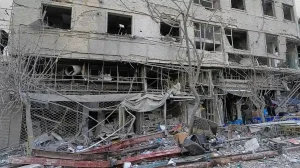
Military operations and counterstrikes during 2025 highlighted the attritional nature of the Gaza conflict. Both sides experienced significant losses and resource constraints, conditions that proponents of Luttwak’s theory often identify as prerequisites for eventual negotiation.
However, external assistance, diplomatic pressure, and humanitarian relief continued to shape the battlefield environment. These interventions complicated the idea that conflicts could reach a natural endpoint without outside involvement.
Regional Spillover And Proxy Involvement
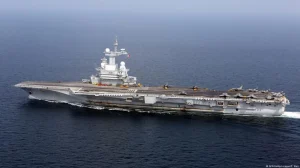
The Middle East’s interconnected security landscape also challenged the simplicity of the doctrine. Groups aligned with regional powers, including Hezbollah, increased tensions along northern borders, while maritime attacks in the Red Sea drew responses from multinational naval forces.
Such developments suggested that conflicts in the region rarely remain contained. External actors often intervene not only for humanitarian reasons but also to protect strategic trade routes and national security interests.
Humanitarian And Political Limits Of Non-Intervention
Critiques of the Give War a Chance doctrine intensified as casualty figures rose during recent conflicts. Human rights organizations and international legal experts argued that allowing wars to progress without intervention risks crossing humanitarian thresholds that the global system was designed to prevent.
European policymakers reviewing Middle East developments in 2025 increasingly framed stabilization as a balance between preventing escalation and avoiding the pitfalls of indefinite peacekeeping missions.
Civilian Impact And International Law
International law places obligations on states and international institutions to prevent atrocities and protect civilians. Critics argue that Luttwak’s framework, while strategically provocative, does not fully address these legal and ethical constraints.
Investigations by international courts and human rights bodies into wartime conduct further highlight how the global community increasingly scrutinizes conflicts rather than observing them from a distance.
Ideological And Organizational Resilience
Another major criticism centers on the resilience of ideological movements. Conflicts in the Middle East are not solely determined by material depletion; they are also sustained by political narratives, recruitment networks, and financial support from external backers.
Analysts noted during 2025 security briefings that militant organizations often rebuild capabilities even after heavy losses. This pattern complicates the assumption that attrition alone leads to lasting peace.
Emerging Hybrid Strategies In Conflict Management
Rather than fully embracing or rejecting Luttwak’s thesis, policymakers in recent years have experimented with hybrid approaches. These strategies combine elements of strategic patience with targeted diplomatic engagement designed to intervene at moments when combatants show signs of fatigue.
During late 2025, mediation initiatives supported by the United States and regional partners attempted to leverage battlefield stalemates to reopen negotiation channels. These efforts reflected an evolving view that exhaustion can create opportunities for diplomacy rather than replace it.
Conditional Diplomacy And Limited Intervention
Diplomatic initiatives increasingly focus on narrowly defined objectives, such as temporary humanitarian corridors or limited ceasefire arrangements tied to negotiations. This approach attempts to avoid long-term external management of conflicts while preventing humanitarian collapse.
European policymakers have emphasized monitoring mechanisms and reconstruction planning that activate once violence declines, aiming to stabilize fragile truces without freezing conflicts indefinitely.
Economic And Political Pressure
Economic sanctions and diplomatic leverage have also become part of this hybrid model. Governments have attempted to influence the calculations of regional actors through targeted restrictions and incentives, particularly when conflicts involve proxy networks backed by external states.
These strategies suggest that modern conflict management relies on a mixture of restraint and engagement rather than a strict adherence to non-intervention.
Geopolitical Competition Reshapes The Debate
The evolving global order has added another layer to discussions around Give War a Chance. As major powers compete for influence in the Middle East, decisions about intervention are often shaped by strategic rivalry as much as humanitarian concerns.
Countries such as Russia and China have expanded diplomatic and economic roles in the region, presenting alternative models of conflict mediation and political engagement. Their involvement underscores how wars in the Middle East now unfold within a broader geopolitical contest.
Multipolar Diplomacy And Mediation
By 2025, regional diplomacy increasingly involved multiple international stakeholders proposing mediation initiatives. This shift reflects the fragmentation of global governance structures that once centered heavily on Western-led negotiations.
The result is a more complex environment where conflicts can persist longer as different powers pursue overlapping or competing diplomatic tracks.
Implications For Western Policy
Western governments evaluating the legacy of Luttwak’s theory must now consider how disengagement might affect geopolitical influence. Strategic restraint may reduce immediate entanglement, but it can also create openings for rival powers to shape outcomes.
This dynamic has made policymakers cautious about fully embracing a doctrine that prioritizes non-intervention.
Reassessing Give War A Chance In Contemporary Middle East Dynamics
The renewed attention to Luttwak’s argument reflects broader uncertainty about how conflicts should be managed in a region where diplomacy, ideology, and geopolitical competition intersect. Observers acknowledge that his insight about the unintended consequences of intervention remains relevant, particularly when peacekeeping operations inadvertently prolong stalemates.
At the same time, recent conflicts demonstrate that modern warfare rarely unfolds in isolation. External funding, transnational networks, and global political interests continually reshape battlefield dynamics, limiting the applicability of purely exhaustion-based outcomes. As policymakers analyze ceasefires and diplomatic openings emerging after 2025, the enduring question remains whether carefully timed engagement can harness moments of fatigue without allowing conflicts to spiral beyond the point where any negotiated peace becomes viable.